

Segway GT3 Review: Not the Craziest Power, But the Smartest Scooter I’ve Ridden in a While
August 1, 2025
Some links in this article may be affiliate links. If you buy through them, we may earn a small commission at no extra cost to you.
Segway has a certain way of making a scooter feel like it came from the near future. After getting hands-on with the GT3—setting it up, digging through the app, and riding it on pavement, hills, and a little bit of “you probably shouldn’t” grass—I walked away thinking the same thing over and over:
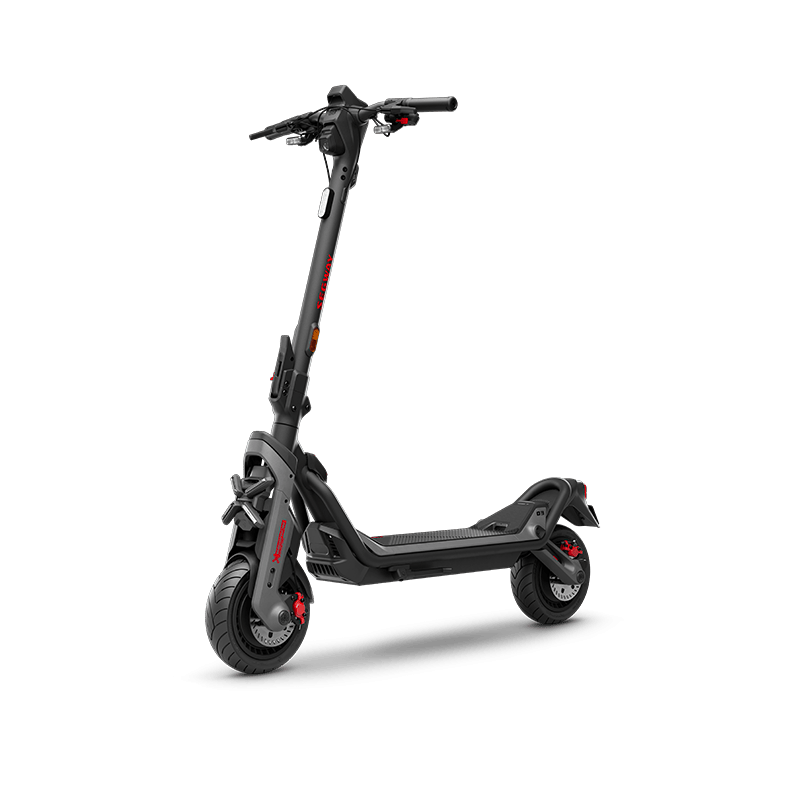
This isn’t the most powerful scooter out there, but it might be one of the smartest, most complete packages you can actually live with.
Unboxing and build quality: very “Segway”
Right away, the GT3 feels premium. The packaging, the finish, and the overall fit-and-finish all give that high-quality impression Segway usually nails.
Design-wise, it has that sharp, futuristic look with a chunky stance. It reminded me a lot of the Max G3 in vibe and layout, but the GT3 feels more substantial when you’re standing on it.
One practical note: when I’m moving a scooter around the garage or lifting it into a vehicle, I always look for a natural grab point. On the GT3, that isn’t as obvious as I’d like—there’s a tube section that looks like it should help, but it’s not really shaped for lifting.
The stuff you notice before you even ride
A few highlights that stood out immediately:
11-inch self-sealing tubeless tires: The street tread makes the intent pretty clear (this is a pavement-first scooter), but tubeless/self-sealing is a big win for flat anxiety.
Suspension front and rear: The front end looks like a mini fork setup, and the rear is hydraulic as well. It’s a comfort-focused ride.
Mechanical disc brakes: I typically prefer hydraulics, but I wanted to see how these felt in real stops.
Deck and stance: Big deck, grippy rubber, and a rear footrest that genuinely helps you lock in your body position when turning.
Lighting and visibility: integrated and actually useful
This is one of those scooters where the lighting doesn’t feel like an afterthought.
The headlight has low and high beam modes, and the turn signals are integrated front and rear. The front signal placement is especially good—right under the bars where traffic can actually see it.
The rear lighting gets bright when braking, and overall the system feels like it was designed for real street riding instead of “technically it has lights.”
Controls and display: clean, with one quirky learning curve
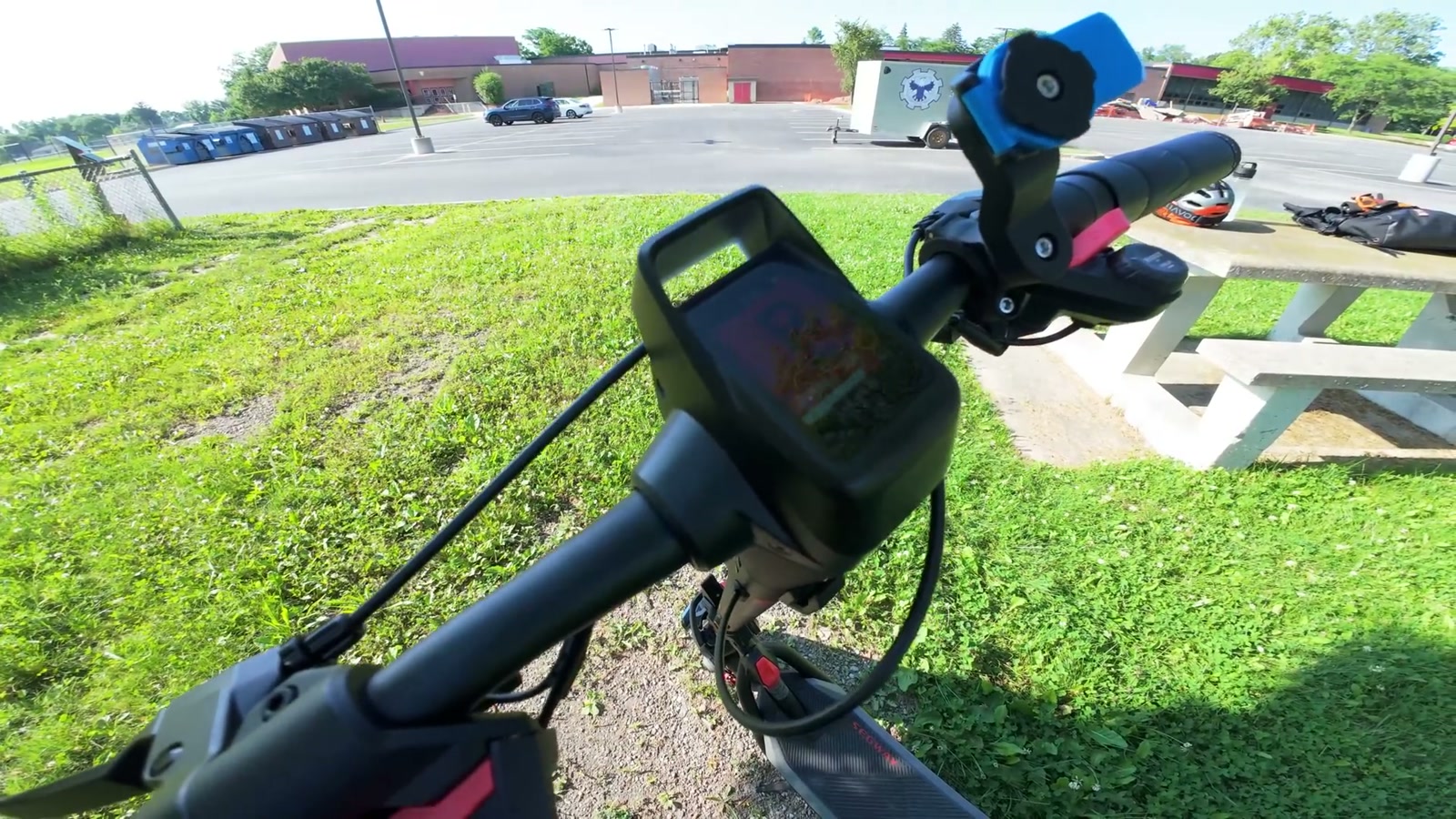
Up top, the center-mounted 2.4-inch TFT display is easy to read and gives you the basics you care about: speed, battery, trip info, and more.
The control layout is tidy—signals, a headlight selector (including auto headlight), horn, and a mode dial.
The mode dial works fine, but it’s backwards from what my instincts want. Dialing down moves you up through modes (walk/eco/sport/race). It’s not a dealbreaker, just a “retrain your thumb” moment.
Smart features and the app: the GT3’s secret weapon
The app integration is deep, and it’s the main reason the GT3 feels “smart” rather than just “connected.”
Here’s what felt most useful in real life:
AirLock and anti-theft behavior
AirLock is wild the first time you try it. With it enabled, the scooter resists movement—if you try to roll it, the motor engages against you and it escalates to a loud alarm if the motion continues.
It’s obnoxious in the best way. If someone tries to casually walk off with it, it’s going to be a scene.
Passcode/app unlocking
You can require unlock via passcode/app. I didn’t want that friction for every ride, but if you park outside a lot, it’s a strong option.
Apple Find My support
If you’re on iPhone, Find My integration is a huge value add for peace of mind.
Battery management that feels grown-up
You can set a charging limit (like 80% or 90%) to help battery longevity. I love seeing this becoming more common—especially on EVs we actually use frequently.
Ride mode customization
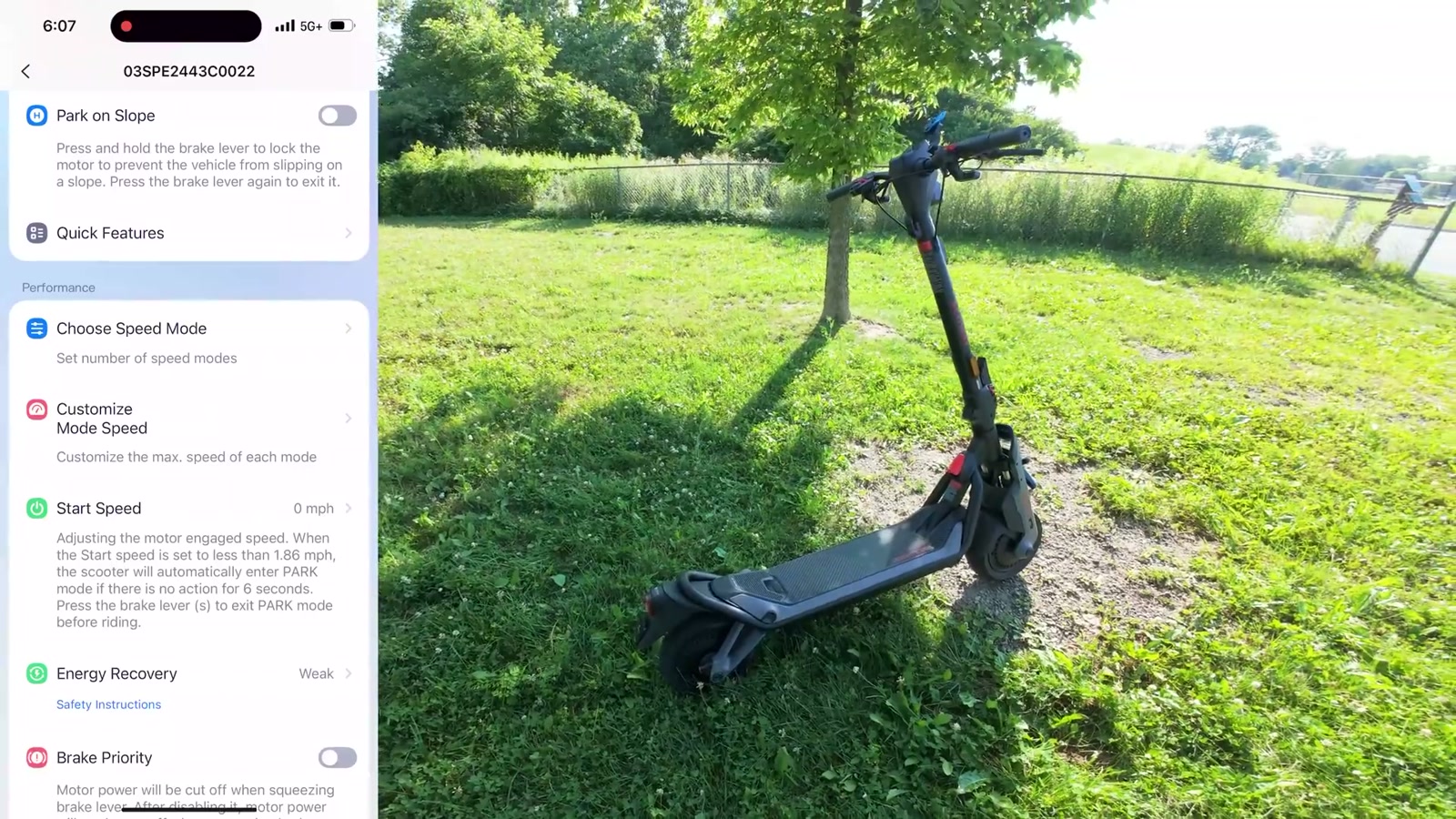
You can enable/disable modes and customize speed limits per mode. That’s perfect if you’re trying to stay within local rules, or if you want a more predictable scooter for commuting.
Real-world riding: smooth, quiet, and confidence-inspiring
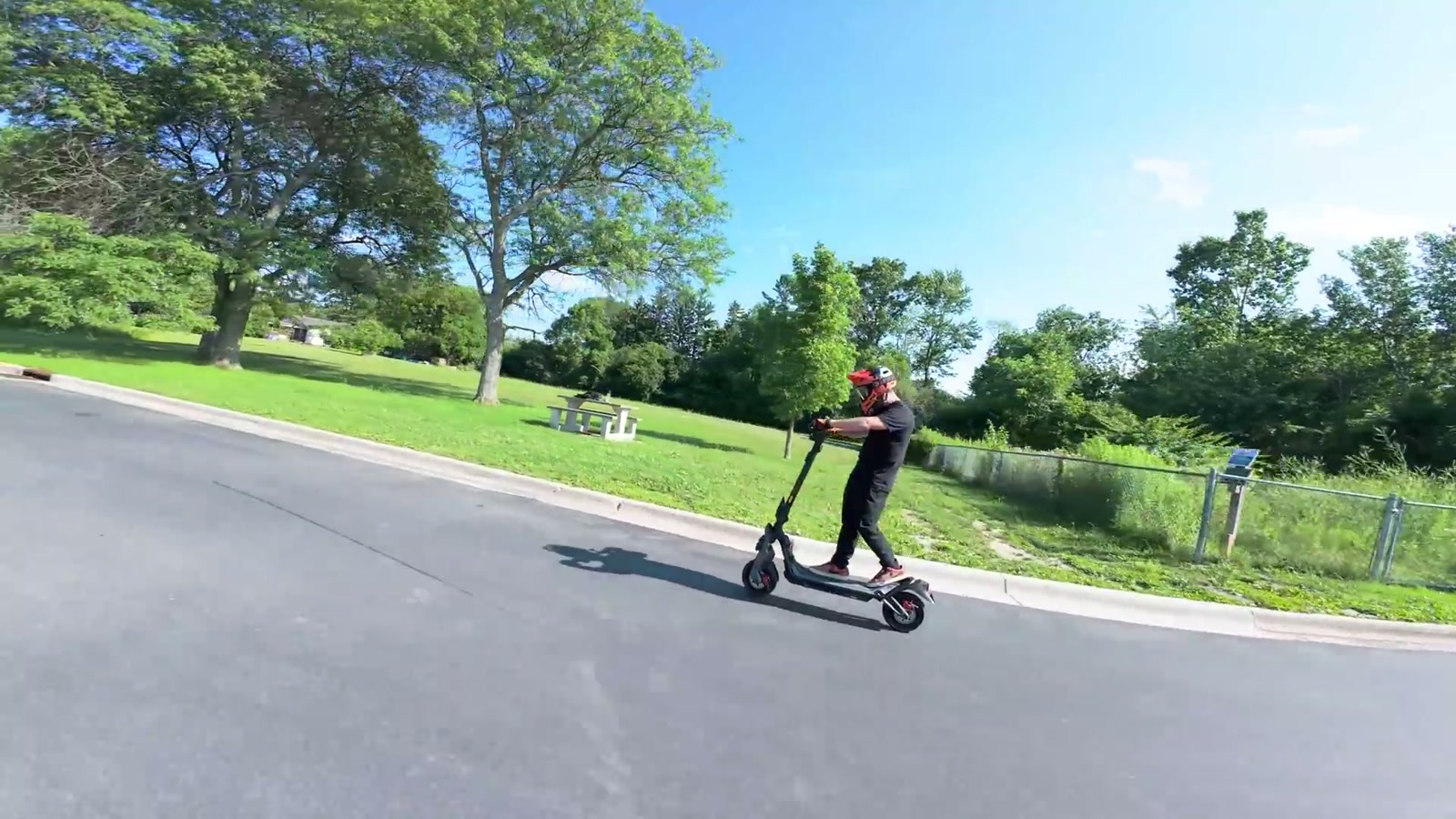
The standout ride impression is the tuning. The power ramp is smooth and controllable, even when I’m asking for a lot. It never felt twitchy or unpredictable.
It’s also very quiet—classic Segway feel.
Eco mode: calm commuter energy
Eco topped out around 15 mph for me. It’s a relaxed, steady mode that feels ideal for bike paths and crowded areas.
Sport and Race: the modes you’ll actually use
Sport mode immediately feels more alive, and Race mode adds that extra responsiveness that makes the scooter feel fun.
The GT3 is easy to maneuver, and that rear footrest helps a ton with body positioning. I naturally ended up planting my foot there to stabilize through turns.
Boost mode: fun, but limited on purpose
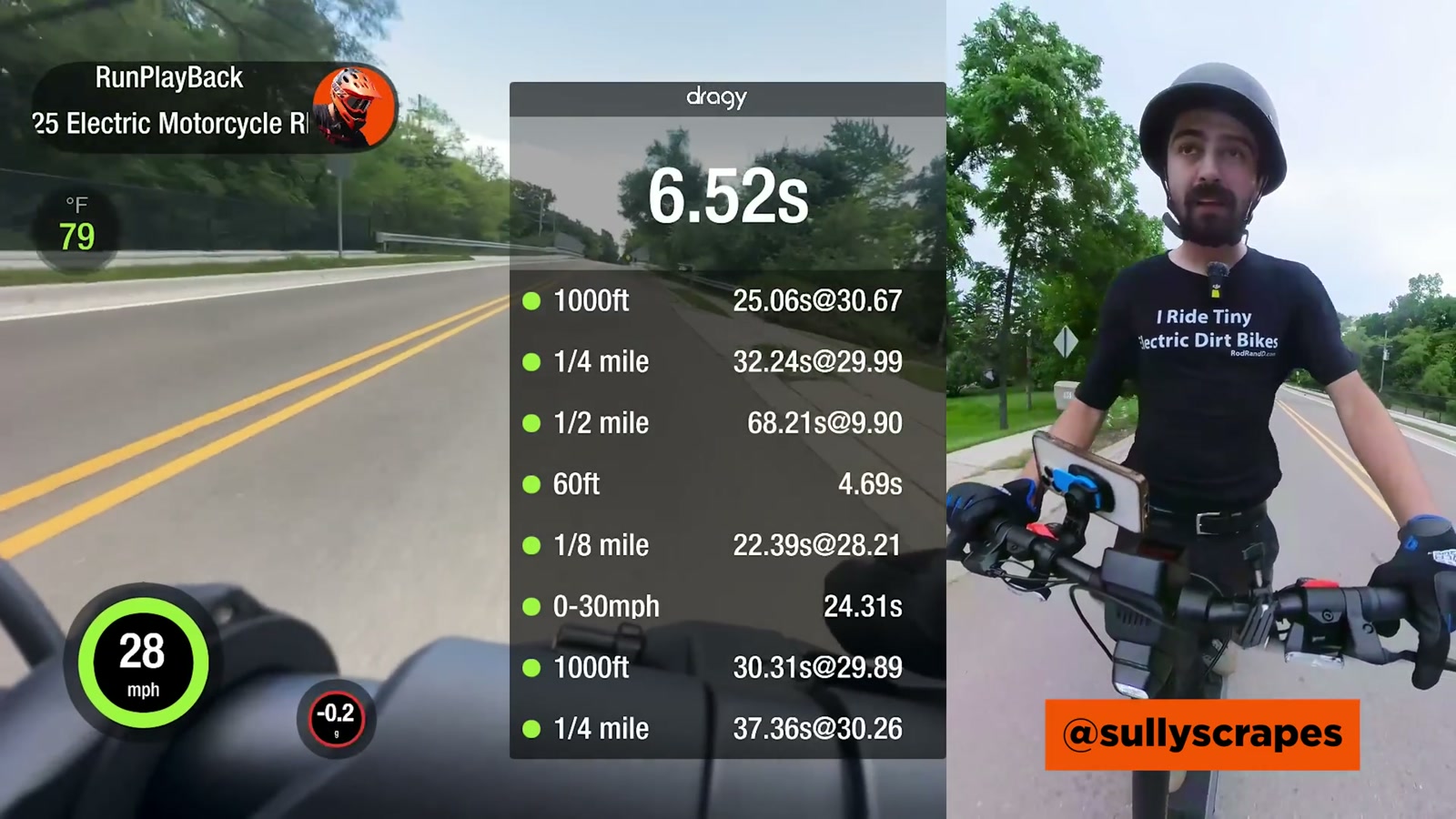
Boost gives a temporary bump and let me touch around 30 mph. The catch is you can’t just stay in boost—after a short burst it disengages, and then it won’t always be “ready” again right away.
I get why Segway does it, but it does make boost feel like a quick tool instead of a true “extra mode.”
Speed and hill behavior: capped, and sometimes overly protective
On straight runs, I consistently saw a top speed of about 31 mph. Even downhill, it didn’t want to go past that. It honestly feels like the scooter has more in it, but it’s limited.
And I’m fine with 31 mph on a scooter. That’s already plenty for street riding.
The more interesting part was what happened on bigger bumps during an uphill pull: I noticed moments where the power cut briefly after hitting a harsh bump, dropping a couple mph. It felt like a safety behavior stepping in.
That kind of intervention can be reassuring, but it can also be frustrating if you’re trying to maintain momentum on rough pavement or a broken-up hill.
Off-road reality: it can do it… but it’s not the point
I turned traction control off for off-road messing around, because with it on, the scooter can get overly cautious and cut power when it senses slip.
On grass and uneven terrain, the GT3 surprised me by making it up short hills (boost helped), and the suspension did absorb more than you’d expect.
But after a few minutes, the message was clear:
This scooter belongs on pavement.
Packed dirt paths could be okay.
Soft grass and bumpy terrain will beat you up, and it doesn’t have the power/travel to keep speed comfortably.
If you need to cut across a lawn or handle a rough shortcut, you can. It’s just not where the GT3 feels happiest.
Braking: better than I expected for mechanical discs
I did a quick braking run from the high 20s mph and the stop felt controlled and solid. It’s not the same feel as hydraulic brakes, but for mechanical discs (and without doing any tuning/adjustment), I came away impressed.
The “not quite zero start” thing
This is my biggest day-to-day nitpick.
You can set the start speed to 0 mph in the app, but it still isn’t a true zero-start experience. In practice, I had to pull the brake lever to exit park mode before the throttle would respond.
That’s one extra step—and if you forget it at an intersection, it’s annoying. I understand it’s likely safety-driven, but I’d rather have a true, predictable zero-start option.
Who I think the GT3 is for
If you want a scooter that feels like a refined EV—not just a raw motor and battery—the GT3 makes a strong case.
It’s especially appealing if:
You commute and care about being seen (lighting/signals)
You want smart anti-theft features built in
You like app control, tuning, and battery care options
You prefer smooth power delivery over punchy, chaotic torque
If you’re chasing maximum speed, maximum torque, or that “barebones me-and-the-machine” vibe, the GT3 might feel a little too managed.
What We Like
Smooth, confidence-inspiring power delivery
Integrated lighting system with high/low beam and bright turn signals
Smart anti-theft features (AirLock/alarm, passcode/app unlock)
Apple Find My support for iPhone users
Charging limit option for better long-term battery health
Comfortable ride with front and rear suspension
Easy to maneuver, stable stance with a usable rear footrest
Things To Consider
Top speed felt capped around 31 mph (even downhill)
Boost is temporary and not always immediately available again
Not a true zero-start experience (brake lever step required)
Mechanical disc brakes (they worked well for me, but some riders will still prefer hydraulic)
Safety systems can cut power in situations like big bumps, which may feel intrusive
It’s heavy at 87.1 lb, so plan accordingly if you carry/lift your scooter often
Final Thoughts
The Segway GT3 doesn’t win by being the most extreme scooter. It wins by feeling complete.
The ride is smooth, quiet, and controlled. The visibility and signaling setup is genuinely street-ready. And the smart features aren’t just gimmicks—they add real security and day-to-day usability.
If you want a commuter-plus scooter that feels like a thoughtfully designed EV, the GT3 is an easy recommendation.