
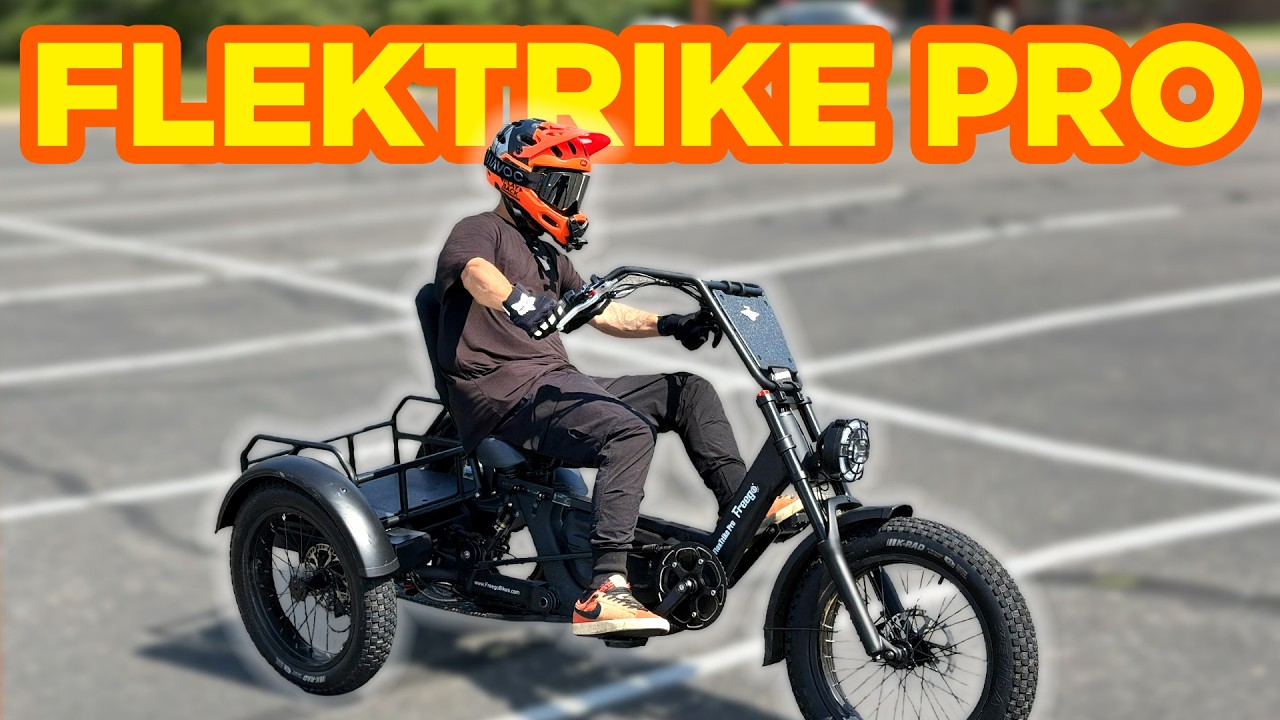
Freego FlekTrike Pro Review: The Tilting Electric Trike That’s Equal Parts Comfy and Wild
July 26, 2026
Some links in this article may be affiliate links. If you buy through them, we may earn a small commission at no extra cost to you.
The Freego FlekTrike Pro is one of those rides that sounds a little questionable on paper… right up until you try it.
A semi-recumbent electric trike is usually all about stability and comfort. This one still does that, but then Freego added a lockable tilting system that lets the whole frame lean left and right like a bike. The result is a trike that can cruise like a lounge chair and then, with one quick shift, turns into something that feels weirdly playful through corners.
I’ve spent time on a lot of e-bikes and a few trikes, and I can honestly say I’ve never ridden anything that feels quite like the FlekTrike Pro when the tilt mode is enabled.
Note on naming: when this trike first showed up, it was branded “FlexTrike.” The branding has since shifted to “FlekTrike.” Same machine.
First impressions: big, wide, and not apartment-friendly
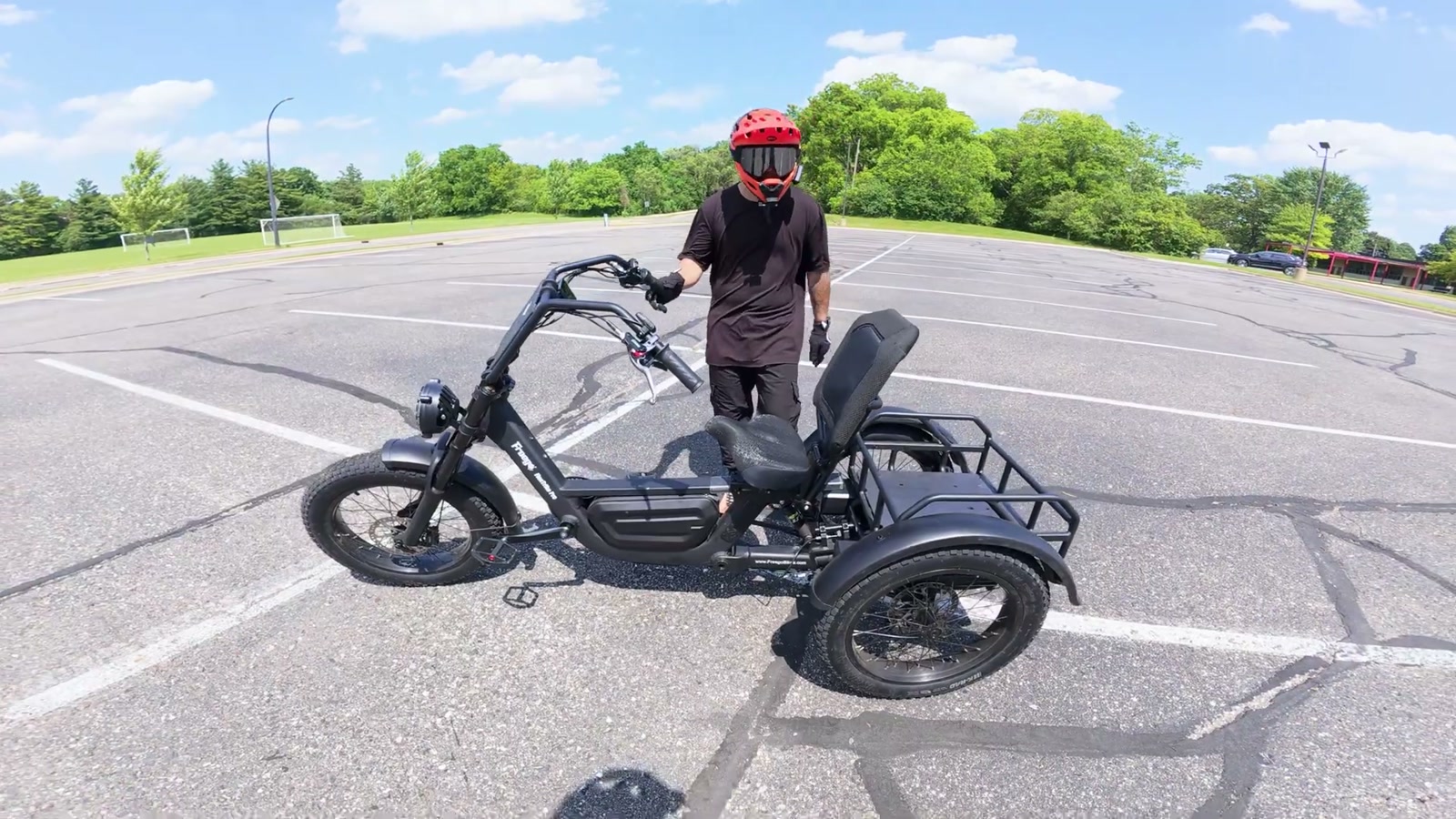
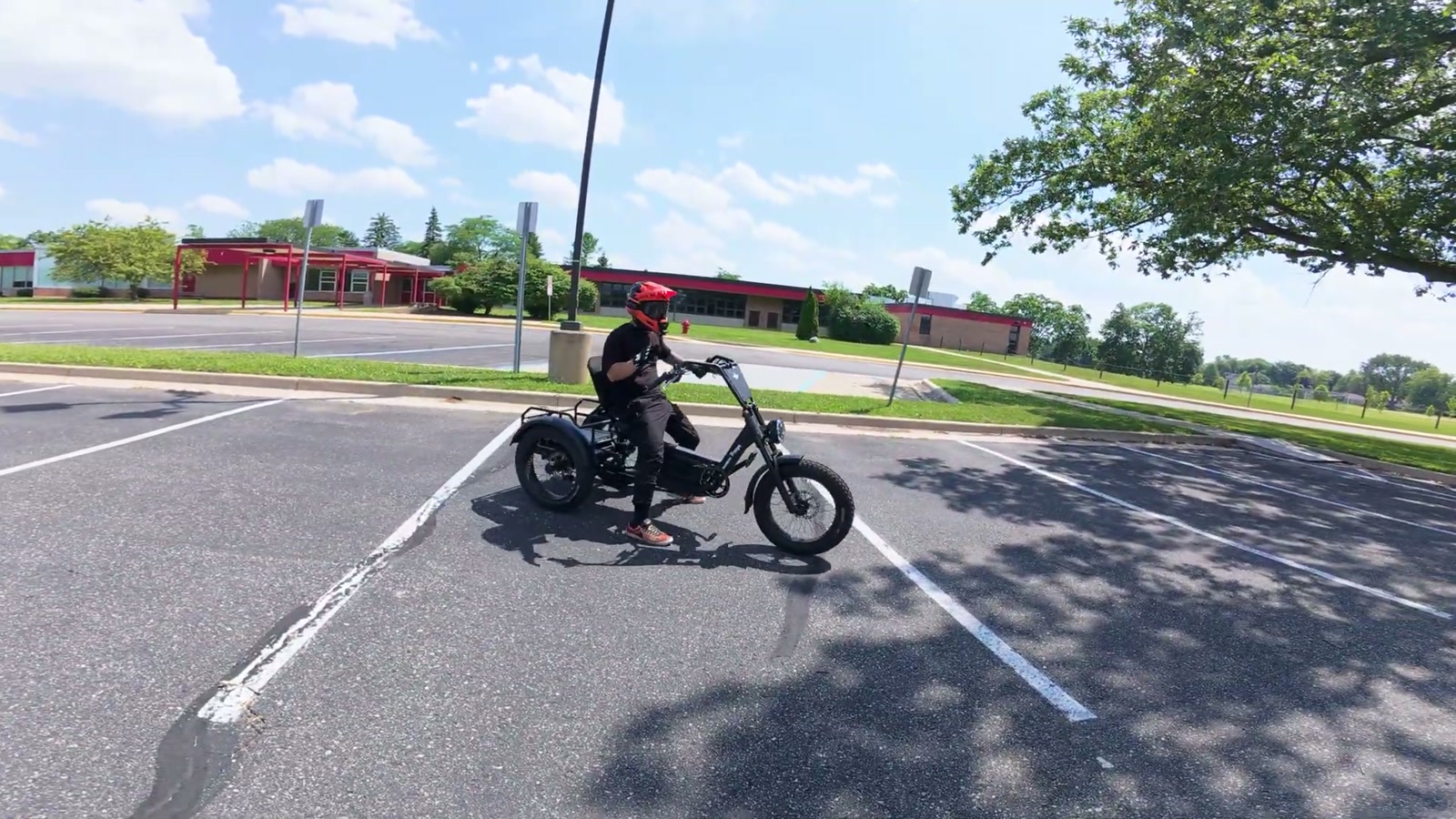
The first thing you notice is the stance. The wheelbase is wide, and the whole trike has a planted, substantial look. It’s also genuinely heavy. With both batteries installed, it’s around 154 lb, and that’s not “carry it up the stairs” heavy—it’s “this needs a garage, shed, or dedicated storage spot” heavy.
The vibe is part mobility-friendly cruiser, part performance experiment. And somehow, it works.
The semi-recumbent seating is the comfort story here
The seating position is the backbone of the whole experience. You’re not fully laid back like a true recumbent, but you’re reclined enough that it takes pressure off your back compared to a typical upright bike.
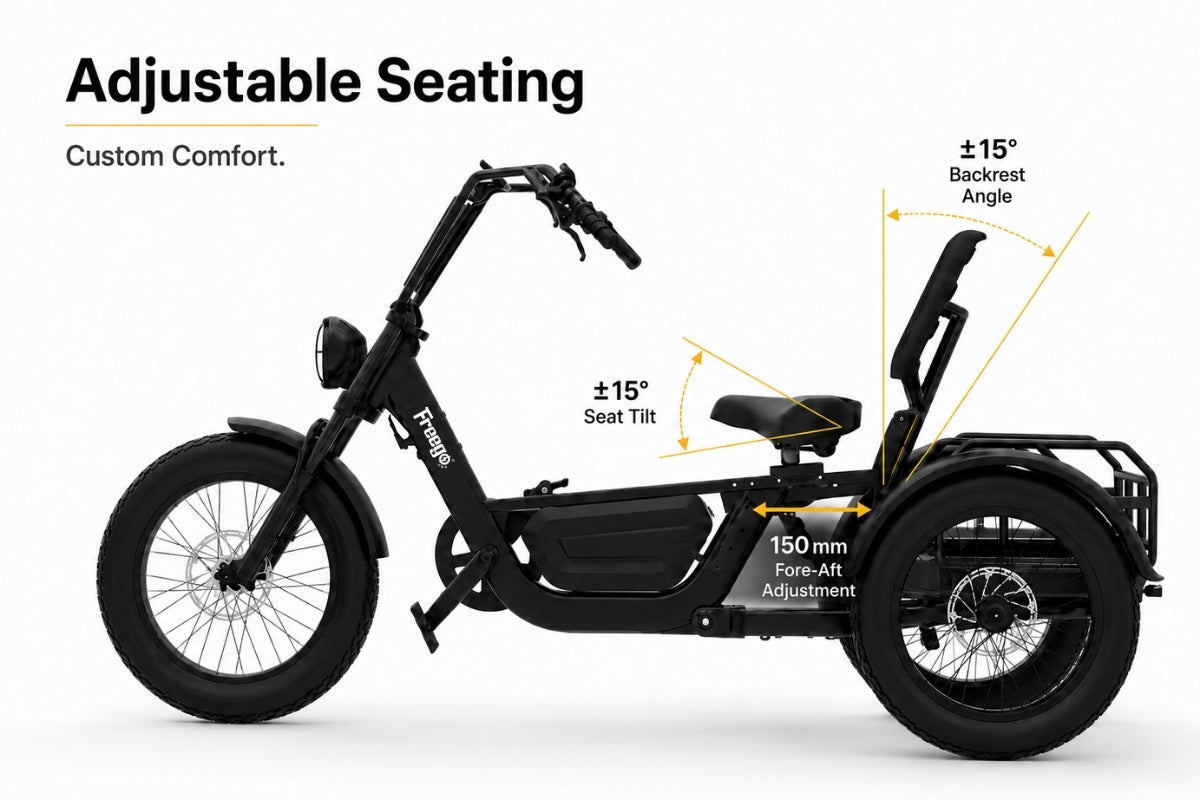
The seat setup is adjustable in the ways that actually matter:
The seat slides forward/back to fit different heights
The seat angle can be adjusted
The backrest angle feels thoughtfully chosen
I’ve ridden trikes where the backrest pushes you forward in a way that never feels natural. Here, it felt more like sitting in a recliner—supportive without forcing me out of position.
The bars match the posture too: tall rise, swept-back cruiser style. Everything lands where you want it to when you’re sitting slightly reclined.
Build and components that matter in real life
This is a comfort-and-utility platform at heart, so I paid attention to the stuff that changes day-to-day riding.
Tires and suspension
It rolls on 20x3.3-inch Kenda Krad tires, a tire I already trust as a solid all-terrain option. It’s got that dual-sport tread that’s happy on pavement but won’t panic on hardpack paths.
Up front there’s a dual crown suspension fork with preload and compression adjustment. Out back, a coil spring shock handles rear movement.
On smoother roads the suspension just takes the edge off like you’d expect. But it’s still a trike, and trikes transmit bumps differently than bikes—especially with a wide rear stance. You feel impacts more distinctly because you’ve got three contact patches and a big frame.
Brakes and parking brake
Hydraulic disc brakes are a must on something this heavy, and the FlekTrike Pro delivers. It uses hydraulic discs on all wheels, and it also includes a parking brake.
The parking brake is one of those features you don’t care about… until you’re parked on an incline and you really, really care about it. Squeeze, click it in, and the trike stays put.
Lights, signals, and the little safety wins
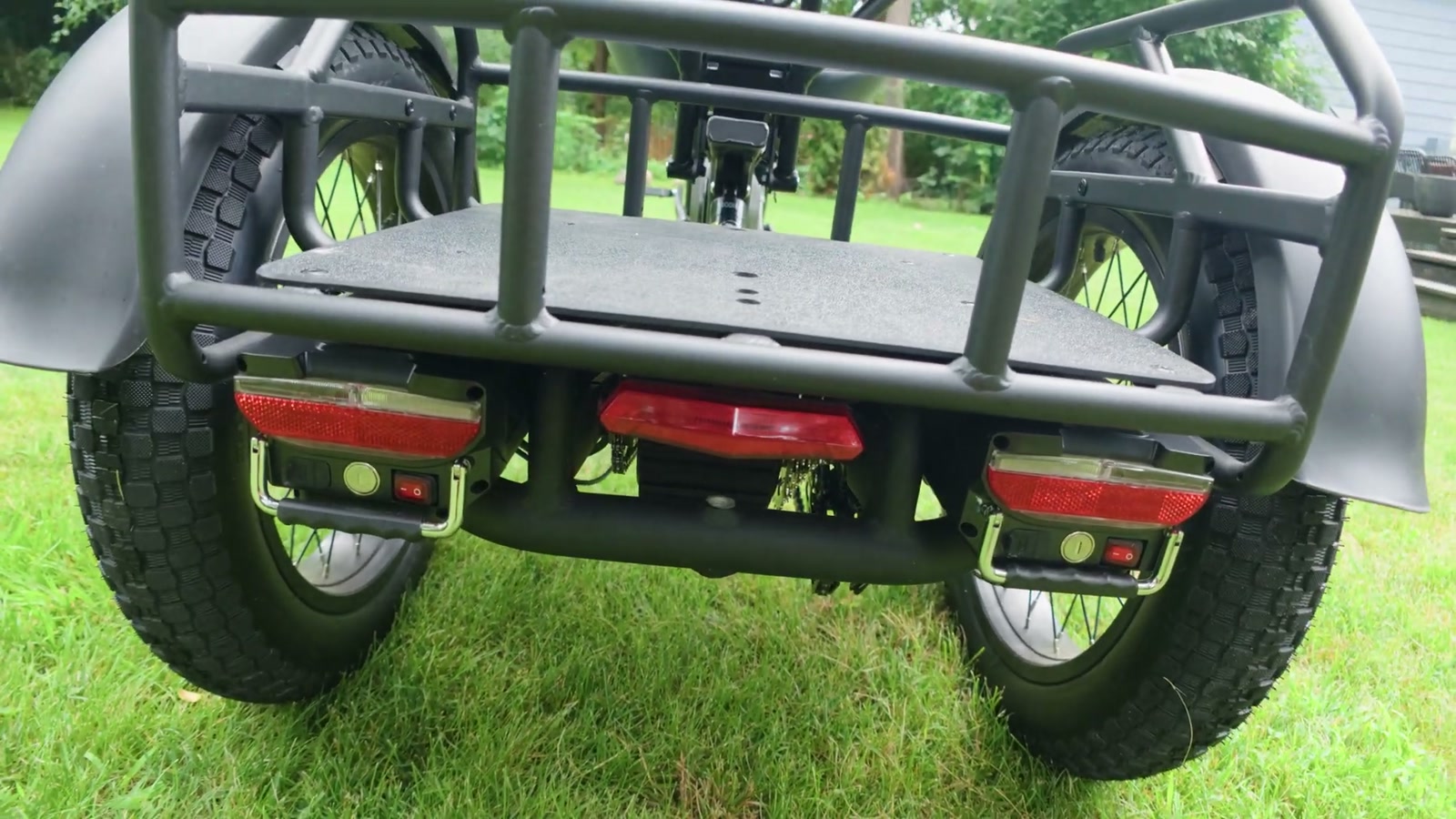
There’s a bright, retro-styled headlight up front and a rear tail light with turn signals. The turn signals are rear-only (no front indicators), but the rear visibility is still a nice touch for a vehicle that’s likely to be used for cruising around neighborhoods and running errands.
The headlight control is a little quirky: there are two headlight buttons—one on the left bar and one on the right—that control different portions of the light. It’s unusual, but once I found a setting I liked, I mostly just left it on.
The headline feature: the lockable tilting system
This is the reason to pay attention to the FlekTrike Pro.
There’s a simple shifter labeled 1 and 2:
1 locks the frame (no tilt)
2 unlocks it so the frame can tilt left and right
It looks sketchy at first. Your brain sees “tilting trike” and imagines tipping over. But the way it’s implemented makes more sense the moment you’re rolling.
When tilt is unlocked, it stops feeling like “a trike that might fall over” and starts feeling like “a bike that happens to have two rear wheels waiting to catch you.” The big difference is that you can lean the frame into turns instead of fighting the flat, upright geometry of a typical trike.
And yes—there’s a learning curve.
The trick that made it click for me was to ride it like a regular bike: keep it centered, use your body, and stay intentional with the bars. Once I stopped treating it like a normal trike and started treating it like a leaning bike, it got fun fast.
Power and performance: not a rocket, but steady and usable
The FlekTrike Pro uses a rear-mounted motor rated at 750W nominal and 1,400W peak, powered by dual 48V 30Ah batteries.
Out on the road, the power delivery felt smooth—especially on throttle ramp-up. That matters on a three-wheeler because you don’t need (or want) an aggressive hit of torque that upsets the chassis.
Real-world top speed
On my Dragy run, I saw about 26 mph on flat, and I could touch around 27 mph slightly downhill. The display read about 1 mph higher than the measured speed.
It’s not a drag racer. It’s more like a big cruiser with enough speed to feel legitimate on faster bike paths and wide roads where you want to keep pace.
Pedal assist feel
Pedal assist behaved like a cadence sensor setup—easy and predictable, not ultra-refined. Levels 1 and 2 didn’t feel wildly different, but bumping up through the assist levels and mixing in throttle made it feel more awake.
The rear differential is doing real work
If you’ve ridden trikes before, you know turning can get weird. Depending on the design, you can get tire scrub, awkward cornering behavior, or that uneasy feeling like a wheel might lift.
The FlekTrike Pro uses a rear differential to vary wheel speed left-to-right as you turn, and in practice it made the trike feel more natural and planted.
With the tilt system enabled, the differential feels even more important because the trike is asking you to corner in a more bike-like way. Between leaning the frame and the differential smoothing out the rear end, the turning experience is the defining character trait here.
Ride experience: locked vs tilted
With tilt locked (Mode 1)
Locked mode is what most people think of when they imagine an electric trike.
Stable
Predictable
Relaxed
It’s a great mode for riders who want maximum confidence, riders with mobility limitations, or anyone who simply doesn’t want the trike to lean.
In this mode, the seat and bar setup really shine. It’s comfortable, easy to settle into, and it encourages cruising.
With tilt enabled (Mode 2)
This is where the FlekTrike Pro turns into its own category.
Once I got used to it, I could hold the trike at an angle and carve turns more smoothly. It felt like I wasn’t relying solely on three wheels to keep me upright. Instead, I was actively riding it—balancing and leaning—while the extra rear wheel was there as a safety net.
It also made the whole experience more fun. Not “stunt ride” fun, but “why is this a trike and why am I grinning?” fun.
Practicing small side-to-side maneuvers helped me get comfortable quickly. After a few minutes, it started to feel intuitive.
Braking and control
The hydraulic brakes felt like the right match for the weight. I also appreciate that every wheel has a disc brake, because this isn’t a lightweight machine where you can get away with marginal stopping power.
The full twist throttle is another choice that tells me Freego wasn’t building this purely as a slow mobility trike. I prefer full twist on rides where I expect to use throttle often—it’s more natural for modulation over longer stretches.
Off-road: possible, but not where it shines
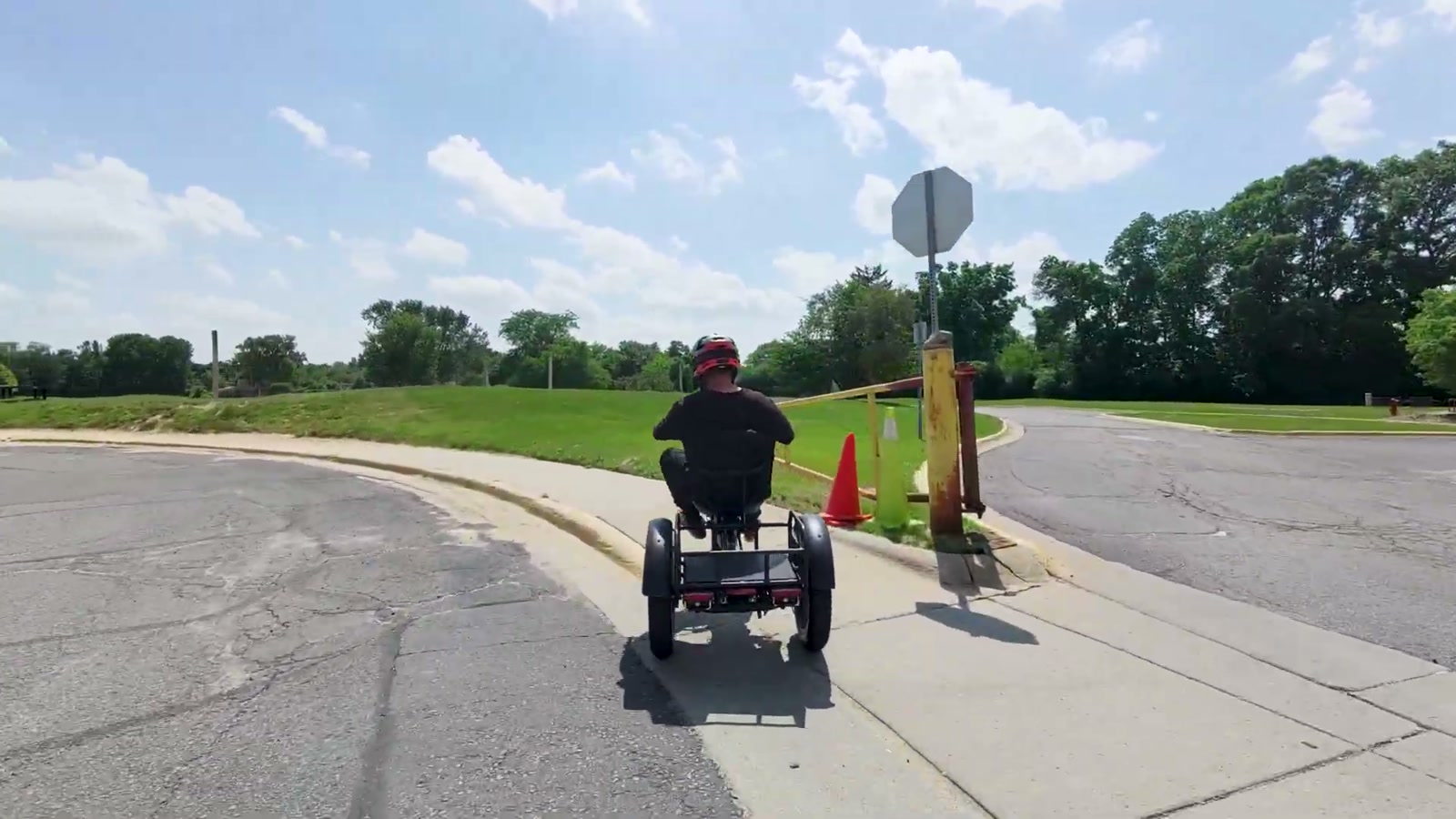
The Kenda Krads and suspension make it tempting to try dirt, grass, and light off-road exploring. I did, and here’s the honest takeaway: it’s not a trail machine.
On loose terrain and especially on grass climbs, it got challenging quickly. The size and weight work against it, and the ride can get choppy. I found myself wanting to lock the tilt when things got awkward.
For hardpack paths or mild surfaces, it’s fine. For anything that looks like “real off-road,” this isn’t the tool.
Real-world use cases
Comfort cruising and long rides
This is the obvious win. The semi-recumbent posture, supportive backrest, and relaxed cockpit make it easy to spend time in the saddle.
Cargo runs and errands
The rear rack is large, and the overall platform feels like it wants to haul stuff. Groceries, a bag of gear, a cooler—this is the kind of trike that makes “quick errand” rides practical.
There’s also a frame-mounted storage bag in the center that’s genuinely useful for carrying a charger or smaller essentials.
Family sharing: stability for one rider, fun for another
This is a niche point, but it’s real. In tilt-locked mode, it can work for someone who wants three-wheel stability and easy on/off access. But if someone else in the family wants to experiment with the tilting ride feel, that option is always there.
What We Like
The tilting system makes cornering feel more natural and turns the trike into something genuinely fun
Semi-recumbent seat and backrest are comfortable and adjustable in the right ways
Rear differential helps it stay composed in turns
Big rear cargo rack and useful center storage bag
Hydraulic disc brakes plus a parking brake (a must-have on a heavy trike)
Things To Consider
It’s heavy (around 154 lb), so storage and transport are real challenges
The tilting system has a learning curve; it’s not “hop on and instantly master it”
Off-road and grassy climbs aren’t its strong suit
Turn signals are on the rear only (no front indicators)
Final thoughts
The Freego FlekTrike Pro is a weird mashup in the best way: part comfort cruiser, part utility trike, part “I can’t believe this leans” experiment.
If you want a three-wheeler mainly for stability, you can keep it locked and enjoy a relaxed, semi-recumbent ride with real cargo capability. If you want something that makes riding a trike feel less like steering a flat platform and more like riding a bike through corners, tilt mode is the entire point—and once it clicks, it’s hard not to smile.
Who should buy it? Riders who want stability and comfort but also want a unique, more engaging handling experience than a traditional trike.
Who should skip it? Anyone who needs something lightweight to carry upstairs, anyone without a good storage spot, or anyone who expects true off-road capability.