

2021 Onyx RCR (SHRTY/DRT) Review: The Electric Moped That’s Not for Everyone
May 8, 2021
Some links in this article may be affiliate links. If you buy through them, we may earn a small commission at no extra cost to you.
The Onyx RCR is one of those EVs that people love, hate, argue about online, and still can’t stop staring at in traffic. After living with it, I get why.
Read more: Get $100 off your Onyx order with our referral code: RUNPLAYBACK
Read more: Get $100 off your Onyx order with our referral code: RUNPLAYBACK

This isn’t a “first e-bike” kind of purchase. It’s heavy, fast, attention-grabbing, and it expects you to have patience (both financially and mechanically). But if your lifestyle matches what the RCR is good at—short city rips, confident acceleration, and endless tinkering potential—it’s one of the most thrilling electric two-wheelers I’ve ridden.
Who the Onyx RCR is really for
I’ve spent a lot of time on lighter, more approachable e-bikes (like my modded 52V Super73 Z1), and the Onyx feels like the opposite end of that spectrum.
The RCR makes sense for riders who:
Want moped-style power and presence, not a “bicycle with assist” vibe
Have the maturity to ride something that can get you in trouble fast
Have storage space and a decent tool setup
Actually enjoy DIY, troubleshooting, and community-driven modding
If you’re looking for something you can casually share with friends or family, this isn’t it. I was honestly a little intimidated the first time I threw a leg over it—and that’s kind of the point.
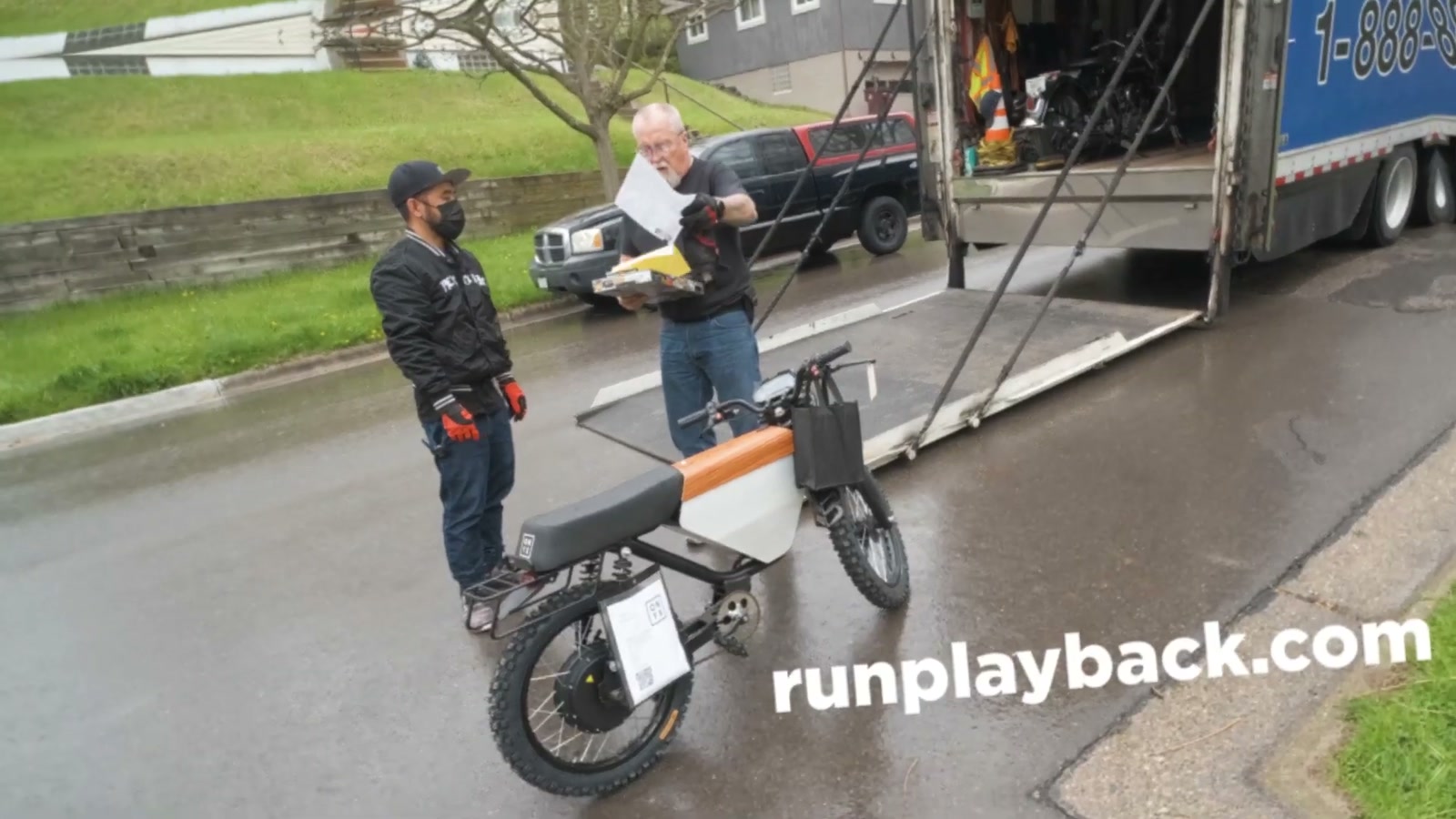
Ordering and delivery: patience required
From payment to delivery, my timeline was roughly four months. That’s a long time to have a big chunk of money tied up, and it’s the kind of delay that can be a dealbreaker depending on where you are in life.
Once the shipping carrier had possession, it took another stretch of waiting before it finally arrived. Delivery itself went smoothly, and I did a basic walk-around inspection on arrival (tires, headlight, display, obvious damage). Nothing stood out.
If you’re the type of person who needs instant gratification, this kind of waiting can feel brutal. If you’re the type who plans purchases far ahead and can let it ride, it’s manageable.
My setup: SHRTY/DRT kit + a few essentials
I ordered the SHRTY/DRT kit, which lowers the bike and leans into a more aggressive, off-road-ready look with the included bits (fenders, rack, and the DRT tire setup). The lower stance ended up being a big part of why the bike feels controllable for me.
Before doing any serious riding, I installed a couple of basic, practical items:
Mirrors (I wouldn’t ride this without them)
Pedals (simple, functional)
A small cosmetic decal
Nothing complicated—just the minimum I wanted for safety and day-to-day usability.
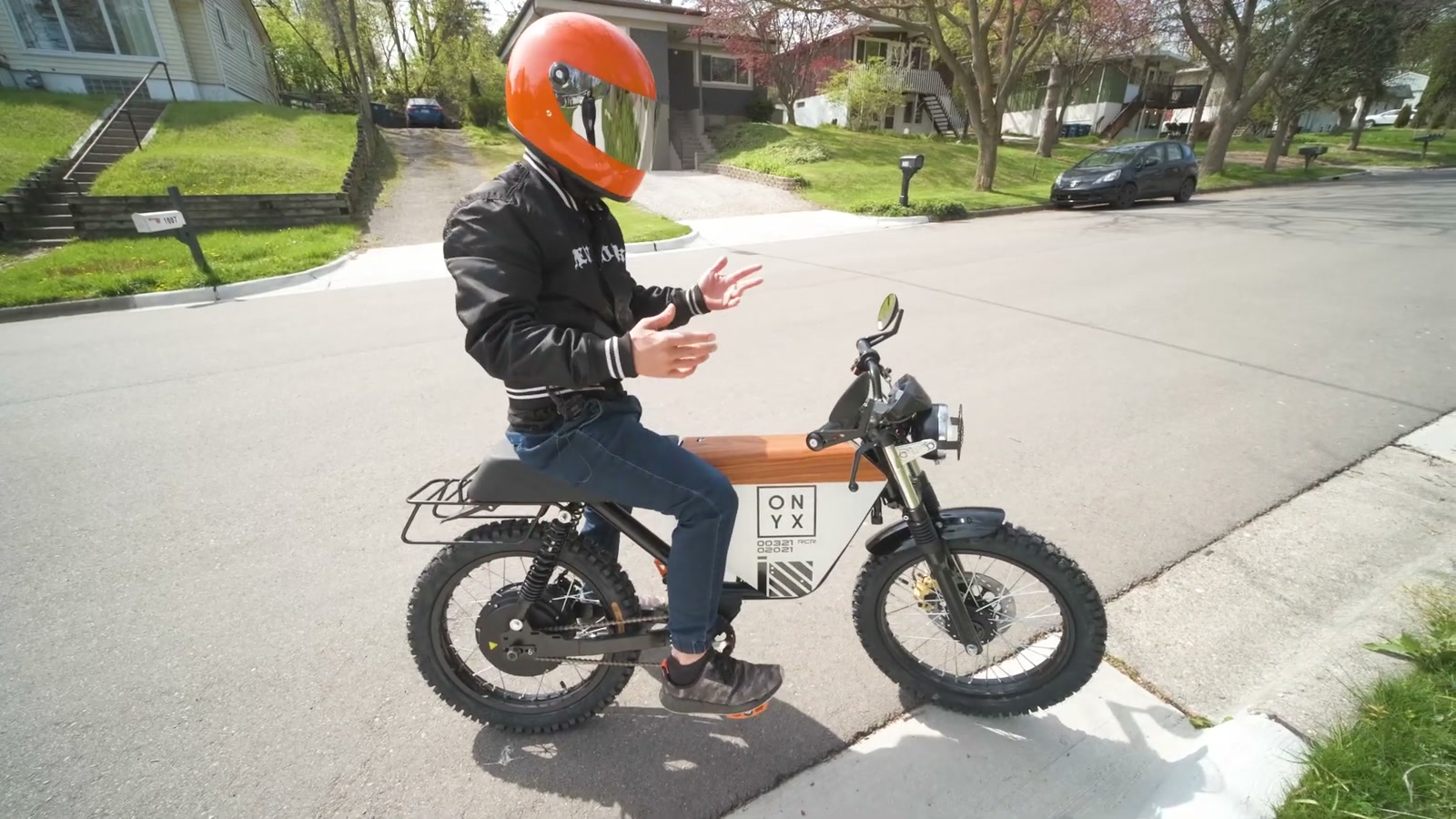
First ride: the torque hits different
The first block told me everything I needed to know: the torque is intense.
Even in Normal mode, the Onyx launches harder than anything I was used to on my smaller e-bike. It’s that “tuck in and get stable” kind of acceleration. You don’t lazily roll into the throttle the way you might on a mild commuter—this bike rewards control and punishes sloppy inputs.
The weight is immediately noticeable too. At roughly 150 pounds for the bike, it’s not something you casually flick around like a bicycle. Turning felt wider than what I’m used to, and I had to be more deliberate with my lines.
Riding modes in real life (how I actually used them)
The RCR has three modes: Economy, Normal, and Sport.
Economy felt too sluggish for what this bike is. I can see it being useful if you’re trying to keep it calm in certain areas, but it didn’t match the personality of the machine.
Normal was the mode I kept coming back to. It still gives that satisfying shove off the line, but it feels more manageable and traffic-friendly.
Sport is where the RCR reminds you it’s basically an electric moped in e-bike clothing. Fast, fun, and something I only want to use when I’ve got space and visibility.
Comfort and handling: heavy, but planted
The SHRTY setup (lowered about three inches) gave me a better center of gravity. For my height/weight, that mattered. The bike feels more planted, and the “moped-like” handling makes sense once you stop expecting bicycle behavior.
Suspension felt fine for me out of the box, but I’ll be real: I’m light (around 127 lbs), so my experience isn’t a perfect match for heavier riders. Still, over mixed pavement and rougher sections, the bike stayed composed.
Off-road and sketchy surfaces: the DRT tires help
I took it onto dirt/gravel and it handled better than I expected. The knobby DRT tires added confidence off pavement.
That said, wet painted lines and slick surfaces still made me back off. This bike has enough power to make traction mistakes expensive, so I rode conservatively any time the surface looked questionable.
Speed test reality: I topped out around 50 mph
On Sport mode, with a GPS speedometer running, I pushed it in a safe, low-traffic stretch. I hit about 50 mph and didn’t feel the need to chase more.
At that speed, I started to feel some wobble, and that was my cue. I’m not buying this to live at top speed anyway. For where I ride, the sweet spot is more like 30–40 mph—quick enough to flow with traffic when needed, but not so fast that the ride turns into a constant risk calculation.
The look: beautiful, but not subtle
The RCR looks like a small motorcycle at a glance. The moped-inspired frame, side panels, and the overall stance make it stand out instantly.
That attention can be fun… or annoying… or risky… depending on your city and your local enforcement culture. On smaller scrambler-style e-bikes, I can blend in a bit more. On the Onyx, I ride with the awareness that I’m more visible and more noticeable.
Ownership mindset: lifestyle choice, not an “investment”
Spending over $5K on something like this only makes sense if it fits your lifestyle. E-bikes depreciate like cars—every ride is “using it up,” not “building value.”
For me, the Onyx doesn’t replace my Super73 Z1. It complements it. The Z1 is nimble, lightweight, and more casual. The Onyx is the one I grab when I want that electric-moped punch and a more substantial ride.

Modding potential: this is where the Onyx shines
This is one of the biggest reasons people buy the RCR: the modding community is huge.
The bike is built in a way that invites tweaking—controller settings, accessories, comfort changes, and personalization. But that also means you should be prepared to learn and wrench, or be prepared to pay someone else to do it.
If you want a true out-of-the-box experience with minimal DIY, I don’t think this is the best match.
What We Like
The torque and acceleration are genuinely thrilling
Normal mode is an excellent “daily” balance of control and punch
SHRTY lowered stance improves confidence and feel (especially for smaller riders)
Handles gravel/dirt well with the DRT tire setup
Big modding community and tons of customization potential

Looks incredible if you’re into moped-inspired design
Things To Consider
It’s heavy, and it doesn’t handle like a bicycle
Not a great first e-bike—experience and situational awareness matter
Delivery wait can be long, and you need patience with the buying process
Draws attention everywhere; that can change how/where you feel comfortable riding
Top-speed chasing isn’t the point (and stability at higher speeds deserves respect)
Best experience comes with DIY comfort (or paying someone who has it)
Final Thoughts
The Onyx RCR is a serious electric moped experience disguised in the e-bike world. It’s not universally practical, and it’s definitely not for everyone—but for the right rider, it’s a blast.
I’d recommend it if you want something powerful, stylish, and customizable, and you’re willing to approach it like a lifestyle machine: ride responsibly, plan for DIY, and accept that you’re buying an experience more than a spreadsheet.