

Freedare Saiga Review: A Smart, Fat-Tire Cruiser That Commutes Better Than It Trails
April 16, 2025
Some links in this article may be affiliate links. If you buy through them, we may earn a small commission at no extra cost to you.
Fat-tire e-bikes love to market themselves as “all-terrain,” but in the real world most of them end up living a commuter life: bike lanes, rough pavement, potholes, shortcuts through grass, and the occasional dirt path.
That’s exactly where I think the Freedare Saiga makes the most sense.
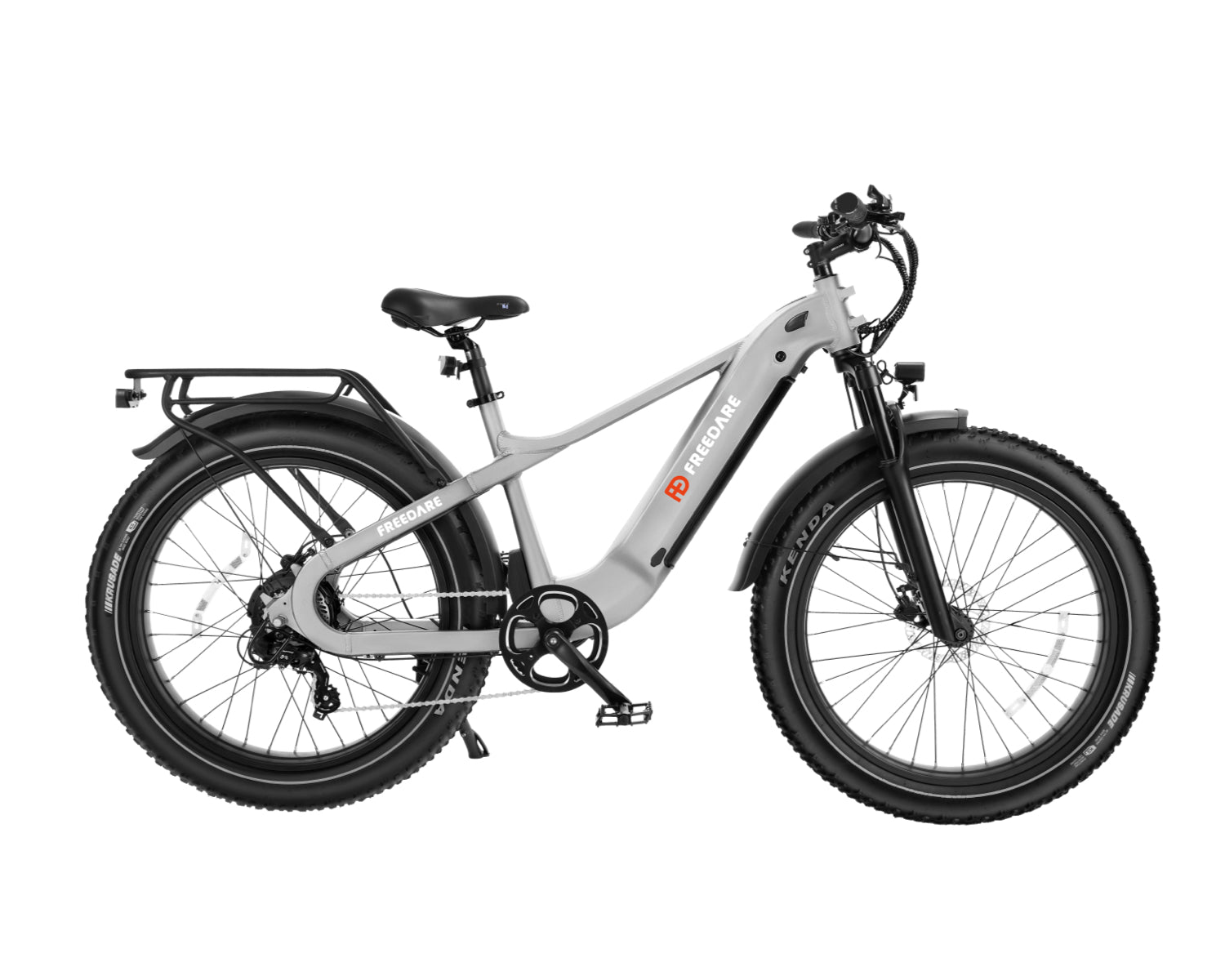
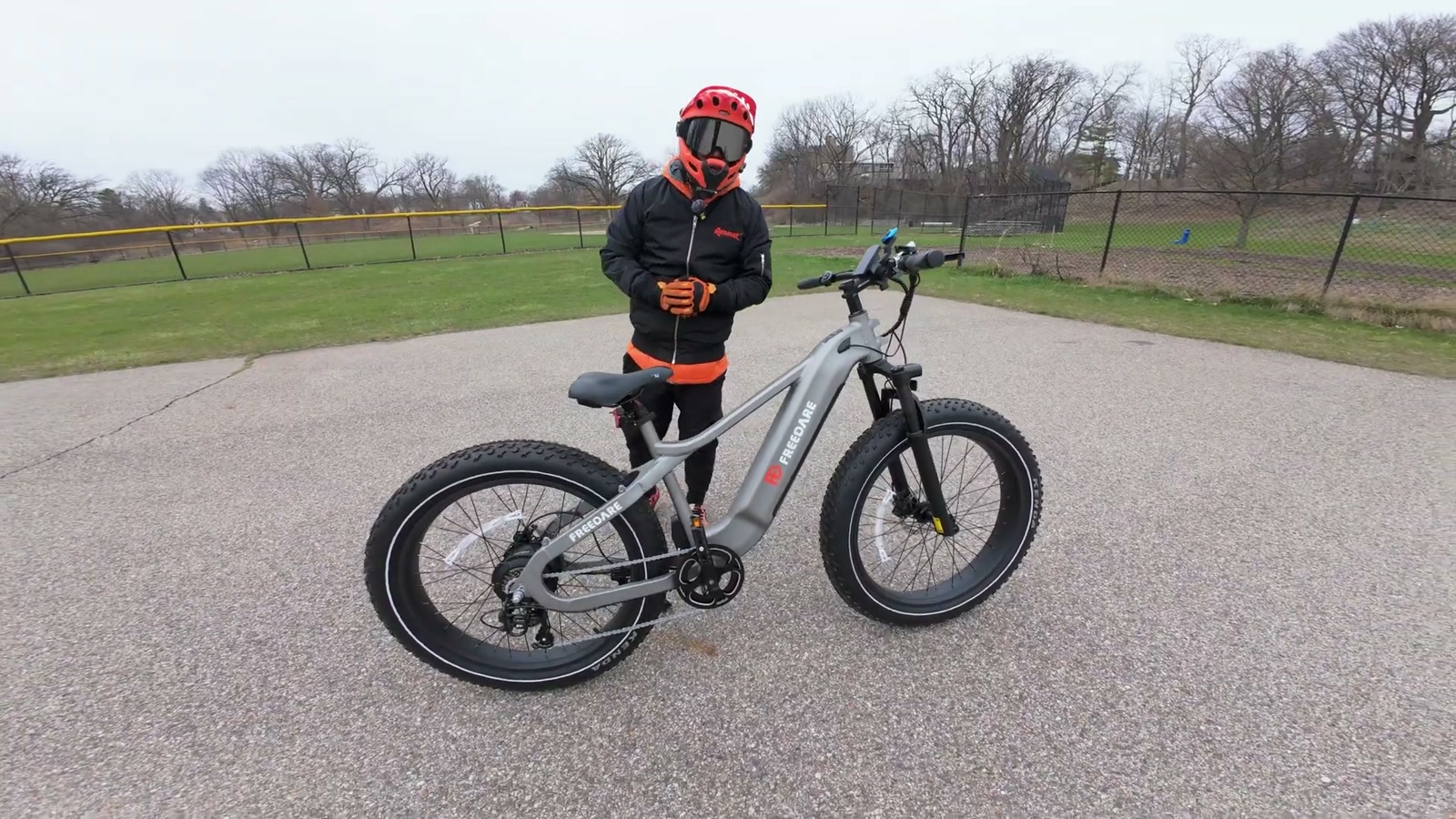
After getting time on it across pavement and loose surfaces, my takeaway is pretty simple: the Saiga is a hardtail fat-tire bike that rides like an all-terrain cruiser, and it stands out most because the torque sensor tuning feels genuinely dialed.
The quick setup: what the Saiga feels like at first glance
The Saiga’s 6061 aluminum frame feels solid immediately—also, it feels big. With the fat 26x4 tires and an overall weight of 79.3 lb, it has that “park it in the garage and grab it for rides” vibe more than “carry it up stairs and tuck it into a hallway.”
If you need to lift an e-bike regularly or load it into a car often, that weight is going to be part of your daily relationship with this thing.
The frame is a hardtail (no rear suspension). There are mounting points if you want to add a rear rack, which is a big deal if you’re planning to use it like a utility commuter.
Fat tires: stability first, agility second
The 26x4 Kenda fat tires give the Saiga a very planted feel. On broken pavement and mixed surfaces, that extra volume smooths out a lot of chatter and makes the bike feel stable and confidence-inspiring.
At very slow speeds, though, I can feel that tire weight and size when I’m trying to do tight maneuvers. Once I’m rolling, it becomes much easier to manage.
If you ride through sketchy city streets, debris, uneven shoulders, or you like cutting through parks and hardpack paths, the tire choice makes a ton of sense.
One miss for everyday use: I really wish it came with front and rear fenders. With tires this big, wet roads are basically a splashback generator.
The star of the ride: that torque sensor tuning
This is the part that surprised me.
The Saiga uses a rear hub motor paired with a torque sensor, and the assist feels responsive and natural. Instead of the “on/off blast” you get from a lot of cadence-sensor fat bikes, the Saiga responds to subtle pedal pressure in a way that feels calibrated, not gimmicky.
It’s the difference between:
“The bike is deciding for me,” and
“The bike is amplifying what I’m doing.”
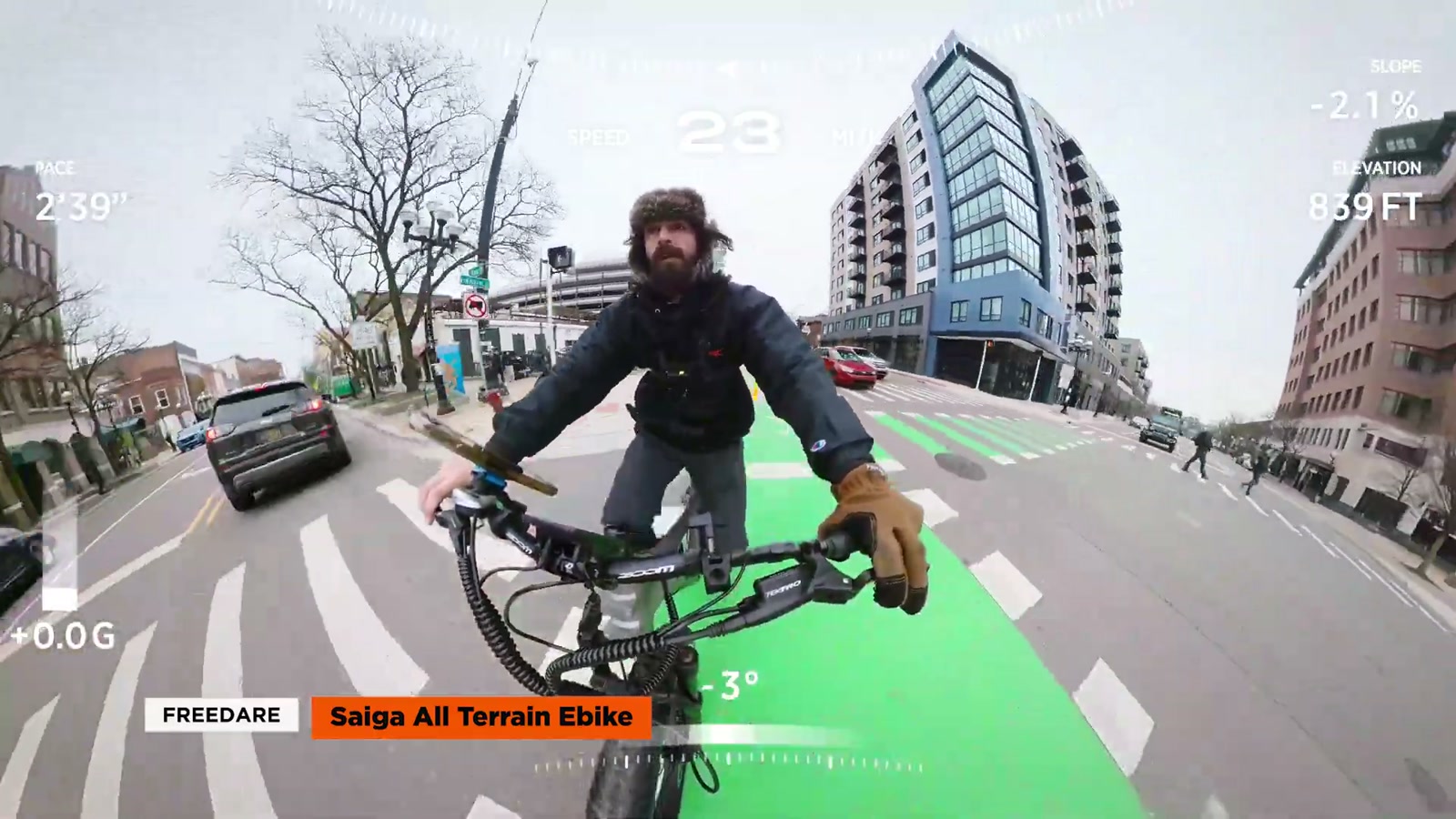
That makes it easier to ride smoothly in bike lanes, around pedestrians, or in traffic where little adjustments matter.
There are only three pedal assist levels, and I felt the gaps between them. I prefer more steps (because I like fine control), but level 1 was actually usable—which isn’t always true on heavy e-bikes.
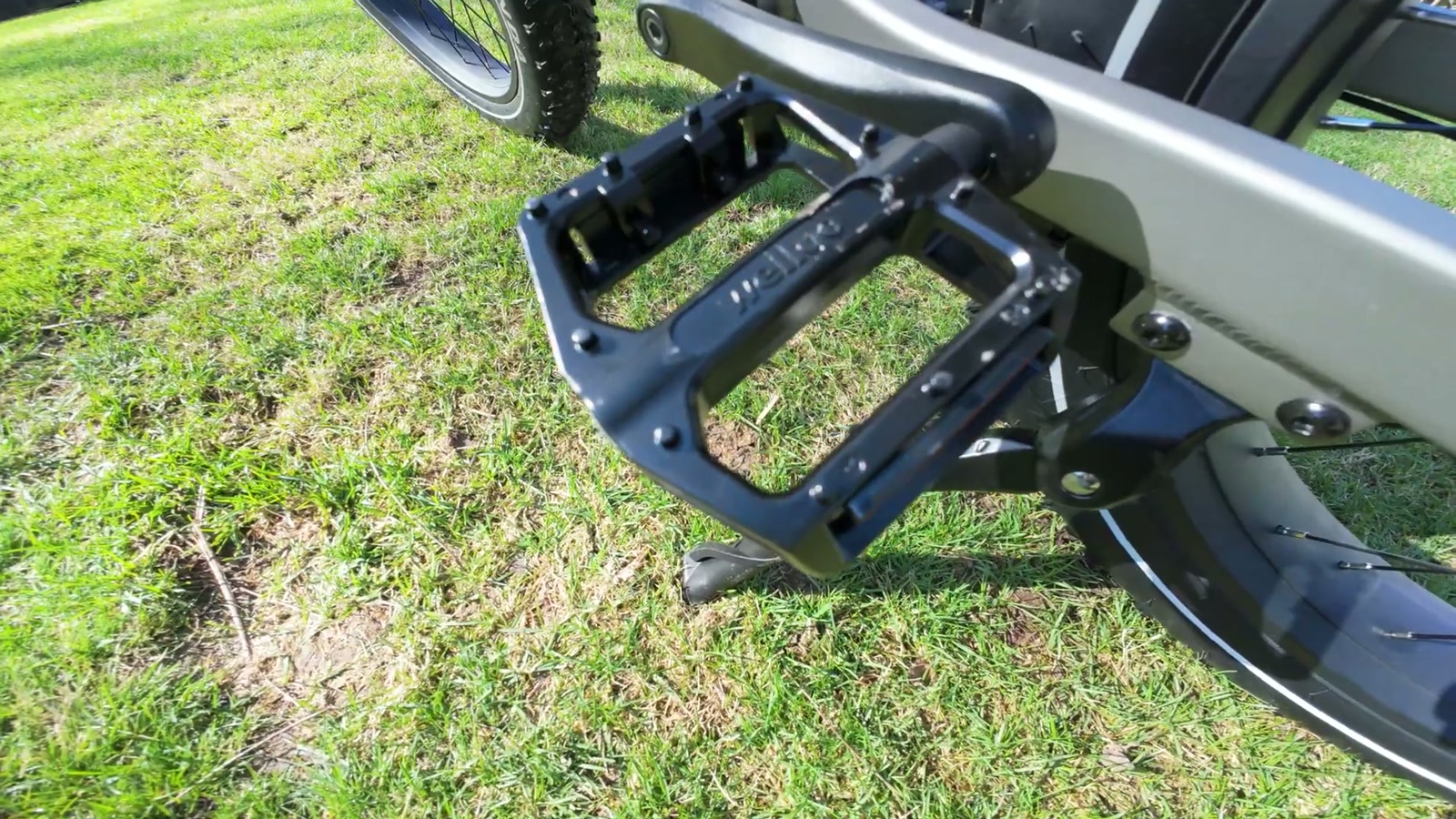
The right-hand thumb throttle is there when I want a quick boost or when I just feel like cruising.
Power delivery on real roads (and real hills)
On open pavement, it’s easy to get into the mid-20s without the bike feeling strained. The assist comes on strong in the highest mode, and it feels like it wants to cruise rather than crawl.
Hills are where expectations matter.
On steeper climbs, it’ll get up—especially if I help it with pedaling—but it’s not the kind of bike that rockets uphill without effort. It’s more “steady and determined” than “effortless.” If your daily ride includes sustained steep climbs, that’s something to keep in mind.
Suspension and comfort: hardtail reality check
Up front, the fork has 45 mm of travel with preload adjustment and lockout. Out of the box it can feel a bit stiff (especially for lighter riders), but with some adjustment it improves noticeably.
Out back, there’s no suspension—so off-road comfort depends on:
fat tires,
the front fork,
and how willing I am to stand up when the trail gets bumpy.
On grass, dirt, and light uneven terrain, it’s manageable. On rougher trails, the hardtail rear end reminds you what it is. For snow, sand, mud, and other softer terrain, the hardtail drawback matters less because the surface itself is doing some of the absorbing.
The saddle is wide and cushy, which helps on mixed surfaces and casual cruising.
Braking: solid, with room to fine-tune
The Saiga uses Tektro hydraulic disc brakes with 160 mm rotors (front and rear). Stopping power felt decent for a bike of this weight, and I was comfortable doing speed-up-and-stop tests.
If you’re picky about lever feel and bite point, you may want to do some basic adjustment after break-in, but the foundation is good.
Lights and commuter details
The integrated front headlight is convenient but not super bright. I’d call it “be seen” lighting more than “light up a dark trail.”
There’s also an integrated rear tail light, but it’s battery operated and not wired into the bike. It works, but it’s one more thing to remember and maintain.
The Freedare app: genuinely useful, not just fluff
A lot of e-bike apps feel like a novelty. Here, I actually like what Freedare is trying to do.
The app includes:
dashboard info (speed, distance, etc.)
ride modes shown in the app
anti-theft features (including a lock mode)
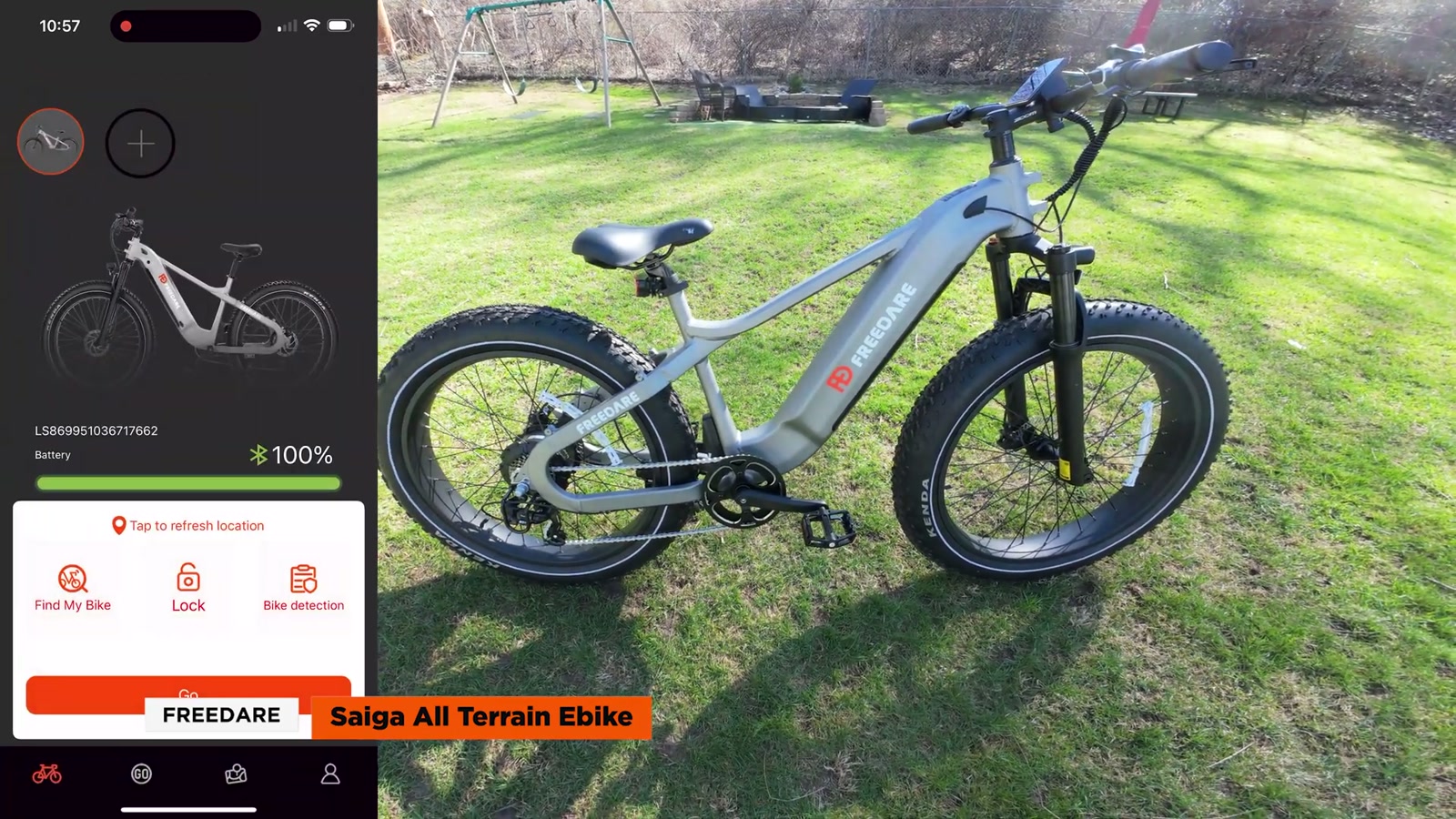
“find my bike” style tracking
route history
and a diagnostic tool that checks components (controller, brake lever, throttle, motor)
That diagnostic feature is a standout. It’s a practical way to troubleshoot without guessing.
The tradeoff: you do have to create a login, and that brings the usual privacy considerations. If you’re not into connected features, you may not care. If you like smart tech baked in, it’s a nice value add.
What We Like
Torque sensor tuning feels smooth and responsive, not jerky
Fat tires add stability and comfort on rough pavement and mixed surfaces
Thumb throttle is useful for quick boosts and relaxed cruising
Solid braking performance for a nearly 80 lb e-bike
App features are more practical than most, especially diagnostics and anti-theft tools
Rack mounting points make commuter/utility setups more realistic
Things To Consider
79.3 lb is manageable, but it’s not convenient if you carry bikes upstairs or load into vehicles often
Hardtail rear end can get jarring on bumpy trails; standing up helps, but it’s not a plush off-road ride
Only three pedal assist levels; I felt the jumps between modes
No included fenders, which is a miss for real commuting in wet conditions
Rear tail light is battery operated instead of wired into the main battery
The integrated headlight is fine for visibility, but I’d want more brightness for dark routes
Final Thoughts
If you want a true trail-focused fat bike, the Saiga’s hardtail layout is the limiting factor. You can absolutely take it onto dirt, mud, grass, and loose terrain, but it’s at its best as a stable, comfortable all-terrain cruiser that just happens to be ready for commuting.
The reason I’d consider it over a lot of similar-looking fat-tire e-bikes is simple: the torque sensor feels right. It delivers assist in a way that makes me want to ride longer because it feels natural instead of overly “motorized.” Add the smart diagnostics and anti-theft features, and it lands in a really practical middle ground.
For the way most people actually ride—streets first, shortcuts second, trails occasionally—the Freedare Saiga fits.