

Lacros Thunder Review: A Fat-Tire E-Bike That’s Comfortable Off-Road (With Limits)
March 1, 2026
Some links in this article may be affiliate links. If you buy through them, we may earn a small commission at no extra cost to you.
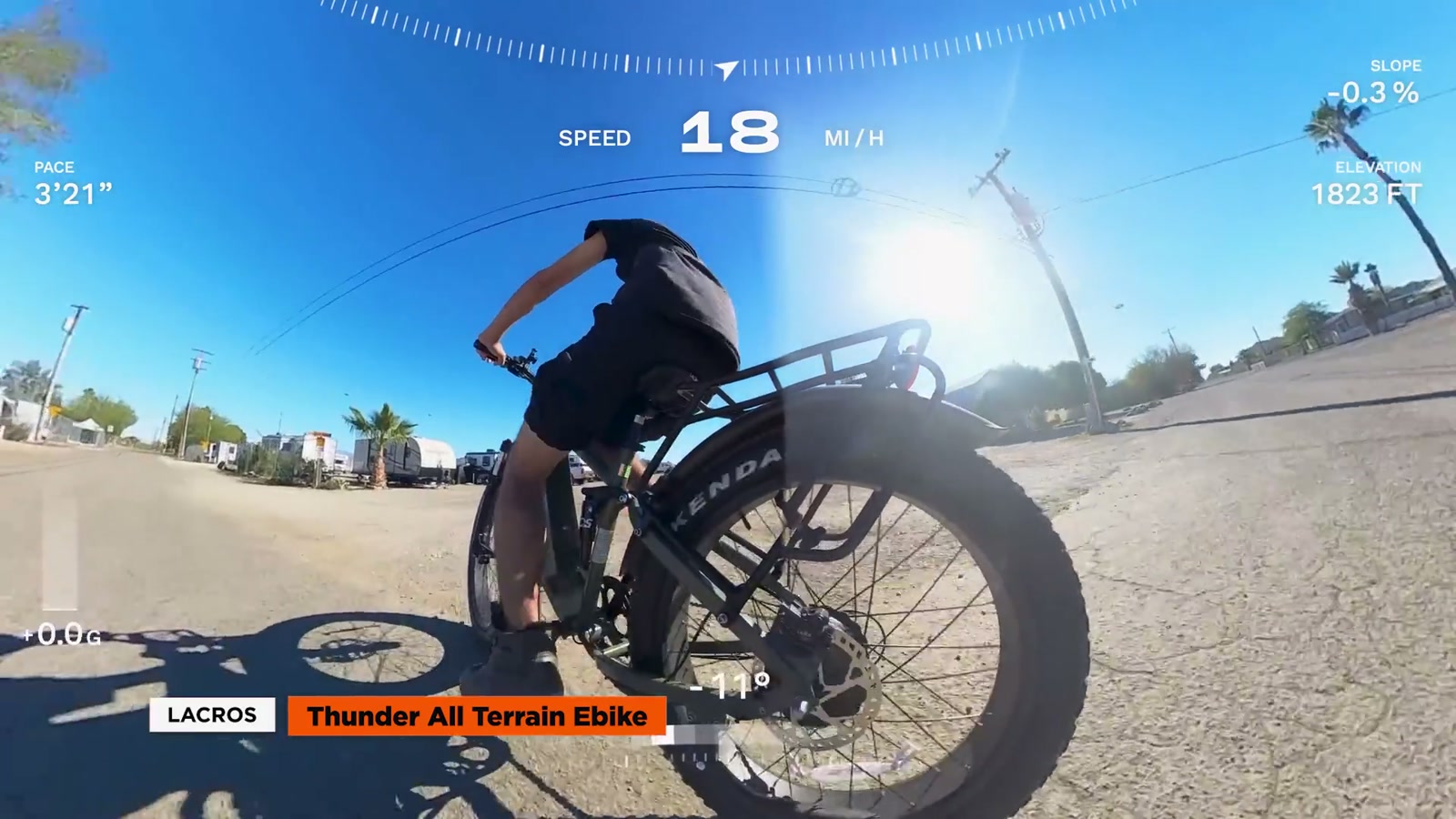
The Lacros Thunder is one of those fat-tire e-bikes that looks like it’s ready for anything: 26-inch fat tires, full suspension, rear rack, lights, and a simple cockpit that doesn’t overwhelm you.
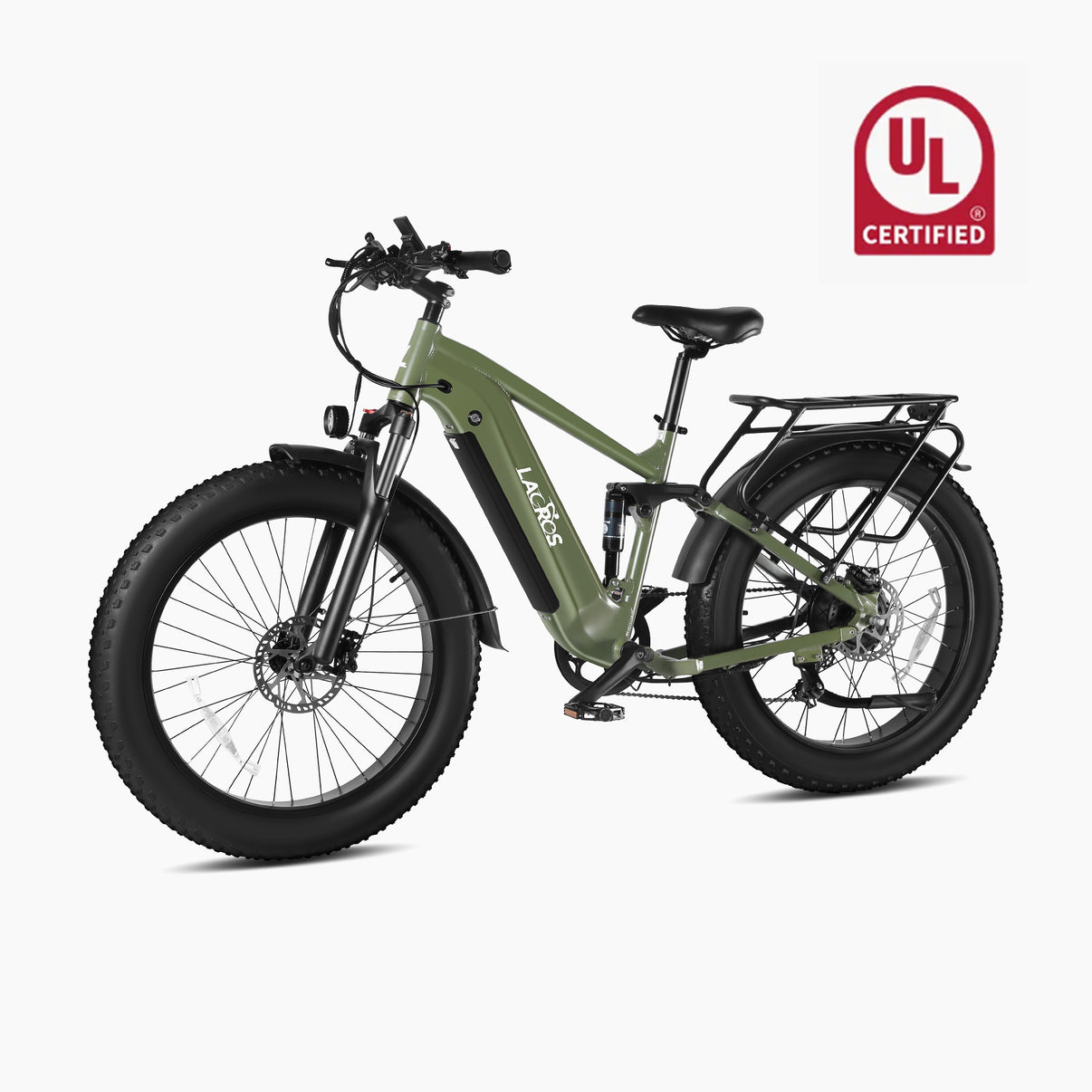
So I did what I always want to do with a bike like this: I set it up, poked around the controls and suspension, then took it straight into real dirt—rocky washes, loose climbs, and the kind of chunky trail that quickly exposes weak suspension and weak low-end torque.
Here’s how it went.
Setup and first look
Right away, the Thunder feels like a familiar “fat-tire all-terrain” layout. The controls are straightforward: a simple control pad (up/down/mode), a clean display, and a half-twist throttle. Nothing fancy, but it’s the kind of simplicity I like when I’m bouncing around off-road.
Up front there’s an adjustable suspension fork. On one side I can adjust it, and on the other there’s preload adjustment. That’s helpful because the stock feel is on the soft side, and I ended up wanting to firm it up once I started hitting rougher sections.
Braking is handled by 2-piston hydraulic brakes, and the levers felt firm—like the system was properly bled. That matters off-road, where squishy brakes can get sketchy fast.
It also comes with practical stuff I actually use: a bright headlight, fenders that do a solid job keeping dirt and spray under control, and a rear rack with a brake light. For an “all-terrain” bike, I appreciate that it doesn’t forget the daily-ride utility side.
Power delivery: quick assist, easy cruising
The pedal assist engagement stood out immediately. When I rolled out in assist level 1, it kicked in quickly without that annoying delay some cadence-sensor bikes have. On loose terrain, that responsiveness makes the bike feel more predictable.
As I stepped through assist levels, the boost felt progressively stronger, especially when I got up into the higher modes. In the top assist level, it moved out nicely and felt like it had plenty of “go” for typical trail cruising and getting around town.
One thing I always pay attention to on fat-tire bikes is stability. Some of them get that nervous front-end feel (especially if you take a hand off the bars), but this one felt stable and composed.
Speed test: better than I expected
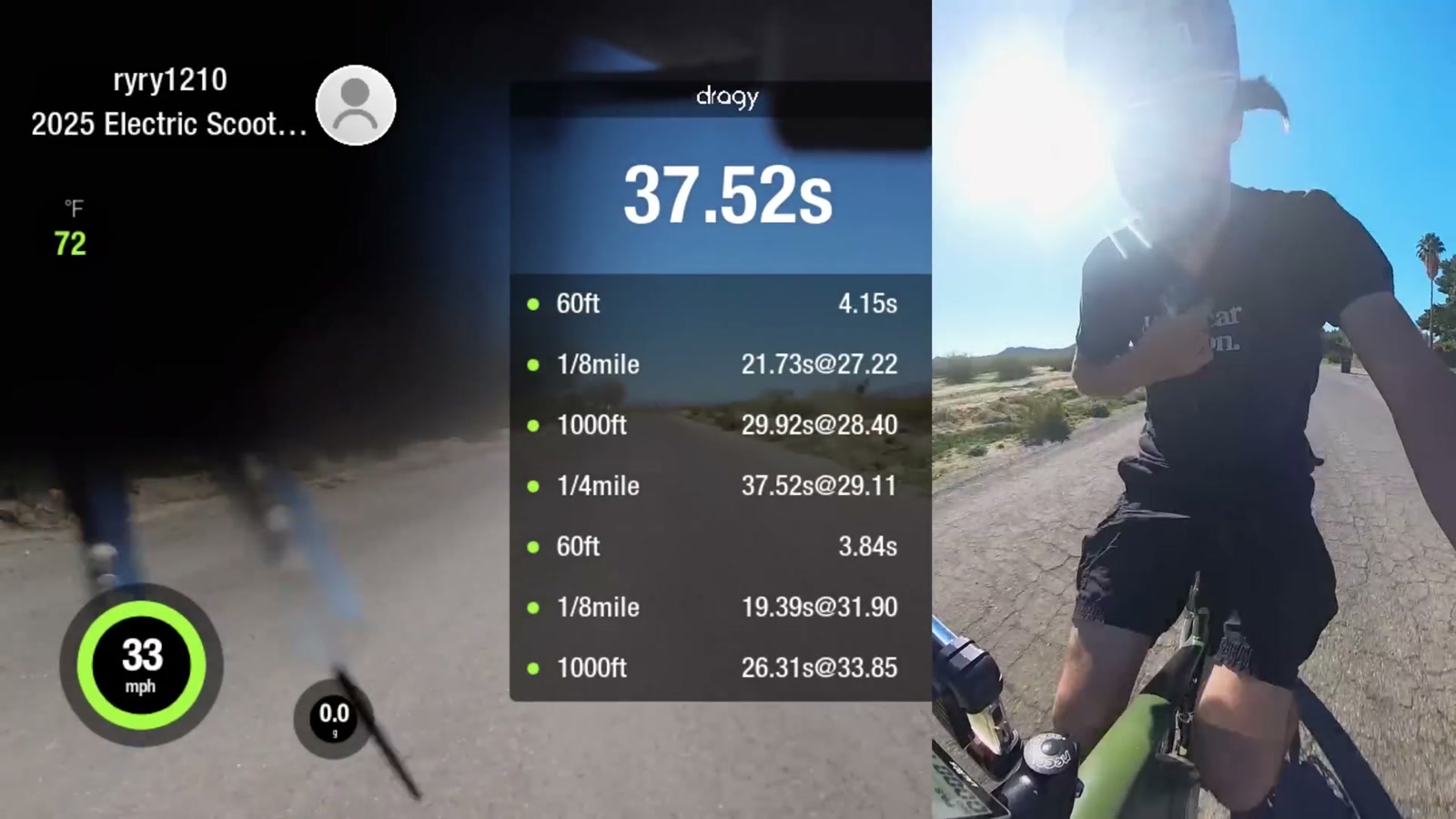
On throttle-only, it pulled up to speed confidently. The display readout also felt accurate compared to what I’m used to seeing, which was honestly refreshing.
After going into the P settings and nudging the limiter, I was able to push beyond the advertised top speed on flat-ish runs. With pedal assist and effort, it climbed even higher.
I’m not calling this a “speed bike,” but it has enough top-end to feel genuinely fun on open paths—just remember that higher speeds on fat tires and budget suspension can get rowdy fast.
Off-road ride feel: comfortable, sturdy, and fun
This is where the Thunder makes its best case.
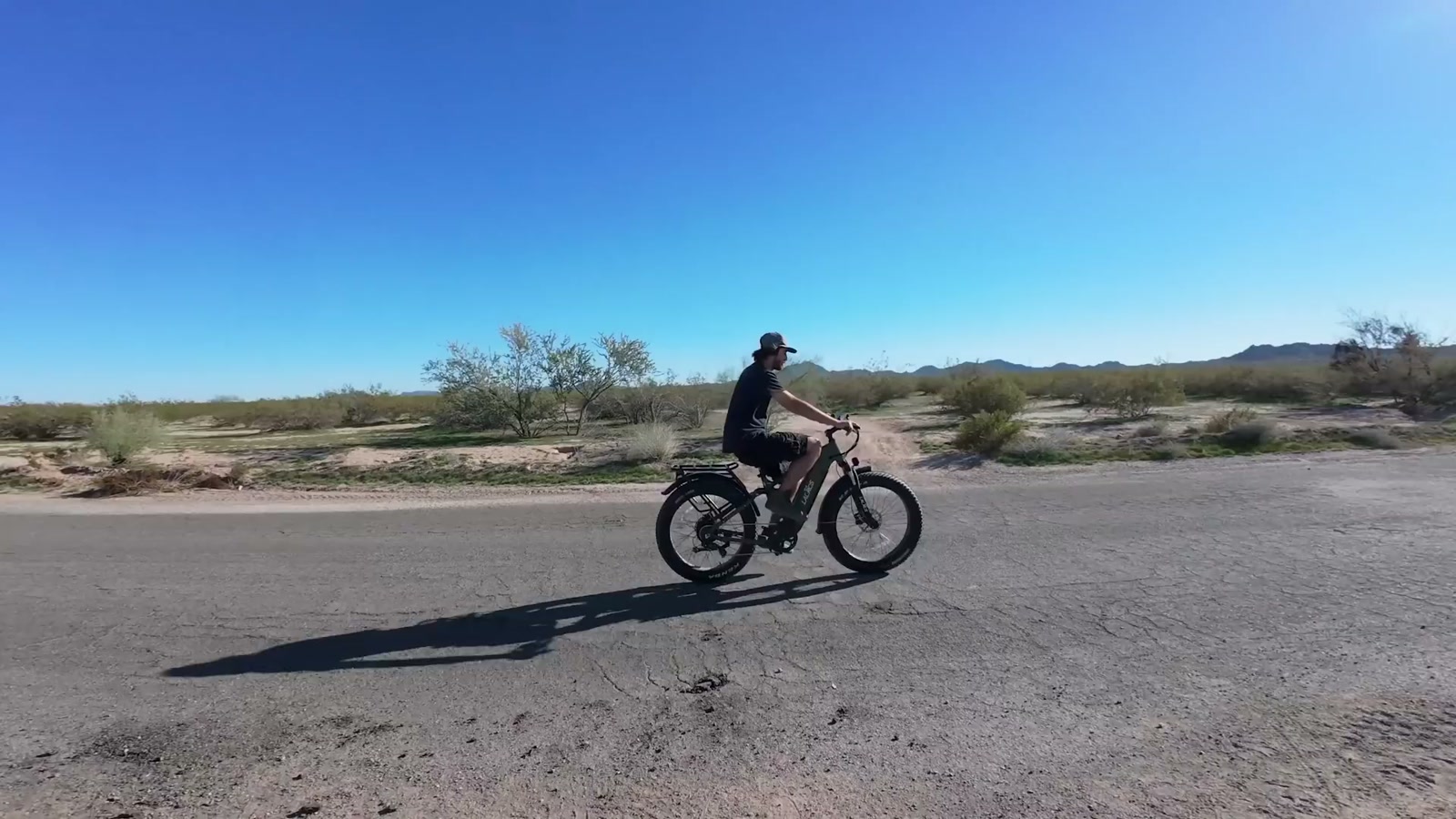
The combo of full suspension and 26x4 fat tires does exactly what most people want from this category: it smooths out chatter, takes the sting out of rocks and washboard, and makes imperfect terrain feel more rideable. The frame also felt solid—no shakiness up front, no weird flexy feeling when I pushed it through rough sections.
On small jumps and dips, the rear shock actually felt pretty good. It helped keep the bike from feeling like a total hardtail back there, and it added comfort when the trail got bumpy.
The limit: steep, loose hill climbs from a stop
Here’s the honest truth: on steep, loose, technical climbs, the Thunder is still a single rear-hub fat-tire e-bike.
With momentum, it can scramble up a lot. But on really steep grades—especially where rocks and washouts kill your speed—the bike runs out of low-end grunt. The rear tire will spin, and if you lose momentum you’re often done.
I tested it on climbs where it could make it with a run-up, but a dead stop start on an incline was rough. Full throttle from a stop on a steep pitch felt underpowered, and I had to pedal hard to keep it moving.
That doesn’t mean it’s bad—it means it’s being exactly what it is.
If your “off-road” is fire roads, desert hardpack, gravel, beach cruising, mild-to-moderate climbs, and messy weather commuting, the Thunder fits.
If your “off-road” is slow-speed technical climbing on loose rock where torque is everything, you’re going to find the limit.
Suspension reality: rear helps, front bottoms easier
The rear shock felt more useful than I expected when the trail got playful, but overall suspension travel is still limited. Up front, I managed to bottom out the fork on chunkier hits. That’s the main reason I’d call the Thunder more of an all-terrain explorer than a true aggressive trail machine.
If you plan on riding hard off-road, you’ll likely want to slow down a bit in the rough stuff and treat the fork with some respect.
Brakes and drivetrain: solid stopping, some noise
The hydraulic brakes did their job well. They felt firm and stopped the bike confidently in a quick brake test.
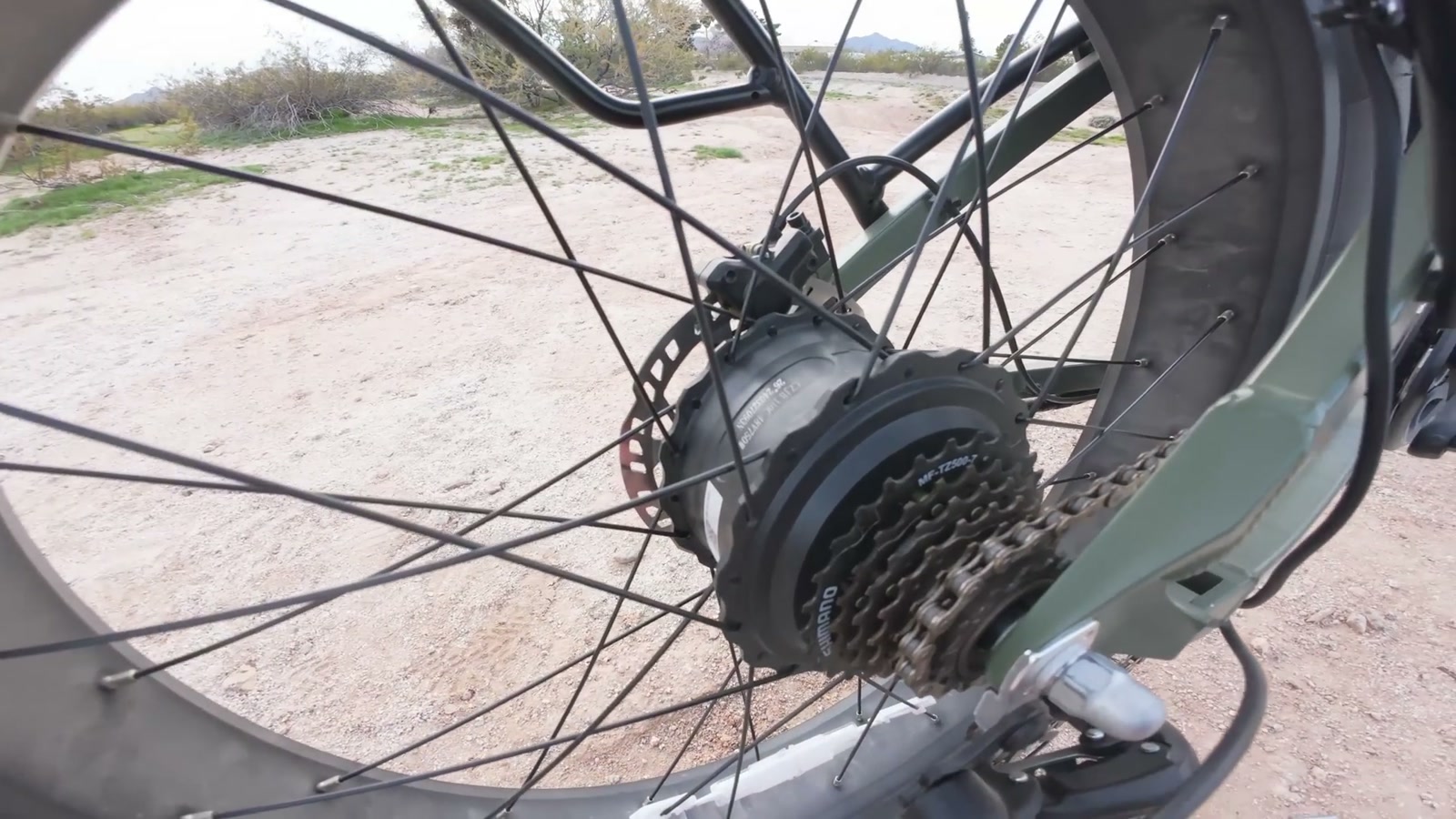
The Shimano 7-speed setup is the familiar, simple drivetrain most of us have used on these bikes. Under off-road chatter, I did notice drivetrain noise that I didn’t love—more the kind of sound that makes you wonder if a chain is going to get slapped around.
Sizing and day-to-day practicality
This is a big, robust-feeling fat-tire bike, and I can see shorter riders feeling like it’s a lot of bike to manage.
On the flip side, that overall size and sturdiness is part of what makes it feel stable. Add the rear rack, lights, and fenders, and it’s easy to picture this as a do-it-all ride that can commute during the week and hit dirt on the weekend.
What We Like
Comfortable ride across most terrain thanks to full suspension and 26x4 fat tires
Stable, sturdy feel with a confidence-inspiring front end
Quick pedal assist engagement (doesn’t feel laggy)
Firm, well-feeling hydraulic brakes
Useful extras like fenders, bright headlight, and a rear rack with brake light
Things To Consider
Front fork bottoms out fairly easily if you ride aggressively off-road
Low-end torque isn’t the strongest on steep, loose hill climbs, especially from a stop
Big overall size could feel like a lot for shorter riders
Like many fat-tire single-motor bikes, it’s happiest with momentum on climbs
Final Thoughts
After putting real dirt miles on the Lacros Thunder, I came away thinking it’s an enjoyable, comfortable fat-tire e-bike that feels robust and practical—and it can absolutely handle off-road riding in the way most people actually ride.
Just don’t confuse “all-terrain” with “steep technical climbing machine.” If you keep your expectations in the right place, it’s a fun, capable ride that works for exploring, commuting, and getting off the pavement without feeling fragile.