

Segway Xyber Dual Battery Test: The Upgrade That Changes the Whole Bike
March 10, 2025
Some links in this article may be affiliate links. If you buy through them, we may earn a small commission at no extra cost to you.
I’ve been curious about the Segway Xyber since the first time I threw a leg over it—because the styling screams “futuristic moto-bike,” but with the stock single-battery setup, the bike always felt like it was holding something back.
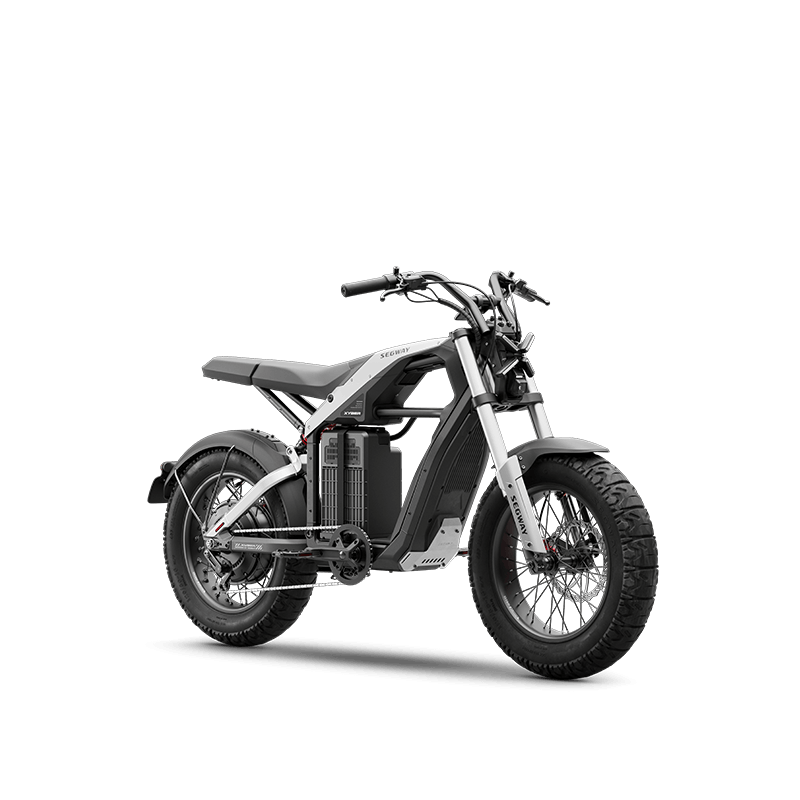
So I added the second battery, set the bike up for dual-battery mode, and put it through the kind of riding I’d actually do: stop-and-go streets, bike paths, a proper hill pull, and some wide-open throttle when it was safe.
The short version: dual battery doesn’t just reduce range anxiety. It changes the whole personality of the Xyber.
Installing the second battery: not hard, but not “plug-and-play”
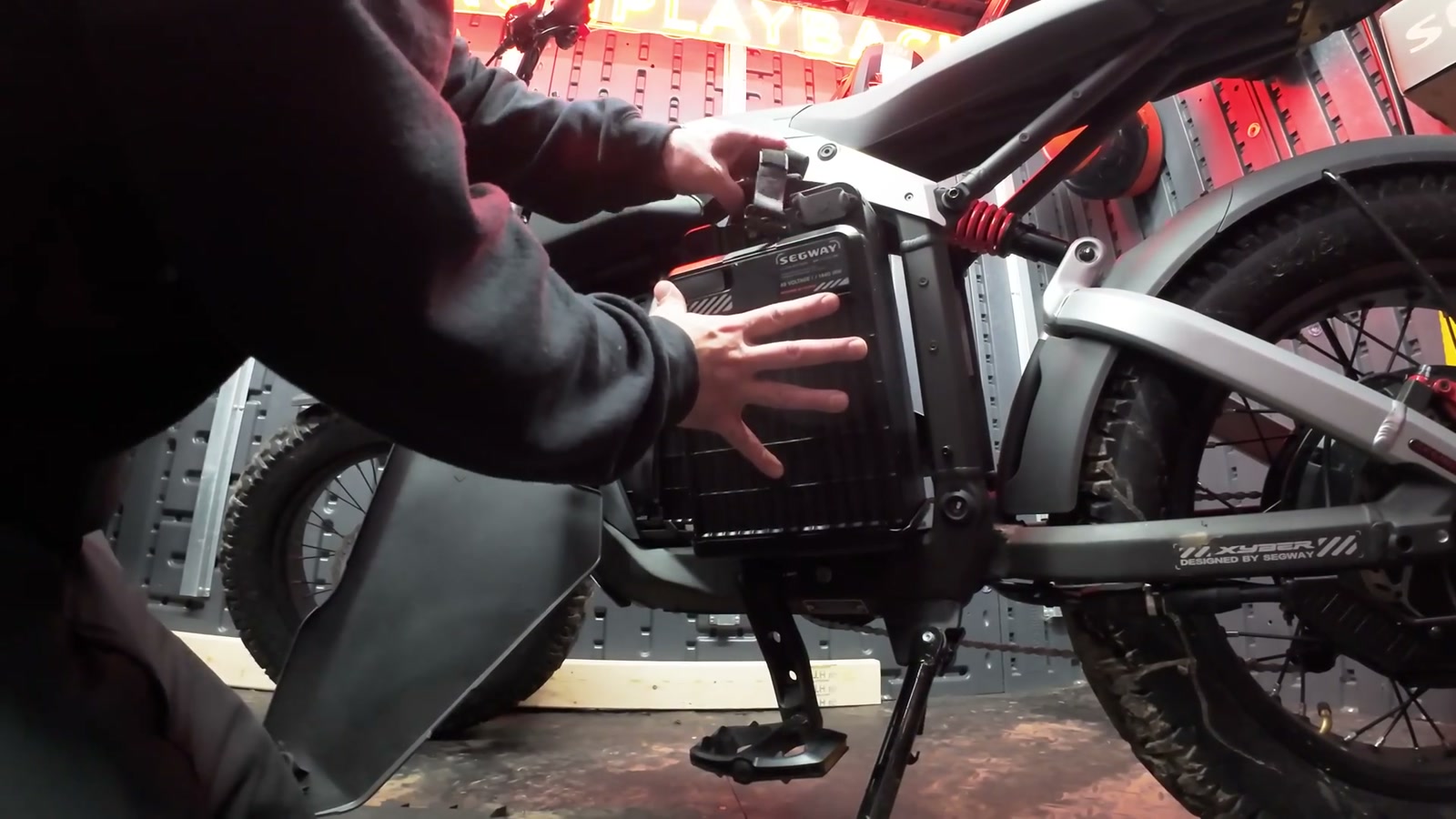
Segway’s dual-battery kit comes with a second battery and the parts that make the system work: mounting hardware, a dual-battery discharge harness (the big cable that ties into the controller), and a dual-charging expansion cable so you can charge both batteries from one charger.
I expected this to be a quick swap. It wasn’t.
The install required getting into the controller area, removing plastics, and routing a thicker harness cleanly so everything fits back together without pinching wires. Nothing was technically difficult, but it was the kind of job where rushing is how you break tabs, strip hardware, or create an electrical headache.
It took me about an hour because I moved slowly and double-checked everything.
A few practical install tips I learned the hard way:
Routing the thicker harness takes patience. You’ll want to plan the path before forcing plastics back into place.
The battery plate orientation matters. I initially had the grooves oriented wrong and the battery wanted to bind up inside the frame.
There’s a small zip tie detail on the front strap that can trip you up. If you use a bulky zip tie, it can interfere with the battery sliding in.
Once everything was installed, I paired the bike to the app and bound the battery so both packs showed up with their own stats (percentage, voltage, temperature). That’s a nice touch for keeping an eye on what’s going on.
Dual-battery charging: one charger, both batteries
With the expansion cable installed, I could plug one charger in and feed both packs. After connecting the splitter and plugging into both charge ports, the bike’s display gave me an estimated time remaining (I saw about 3 hours and change at one point).
Convenience matters here—because two batteries can easily turn into a “mess of chargers” situation on a lot of e-bikes. This setup felt clean.
Accessory I actually liked: the in-frame hardshell bag
The Xyber doesn’t come with a rack, and it’s not the kind of frame where random bags fit perfectly.
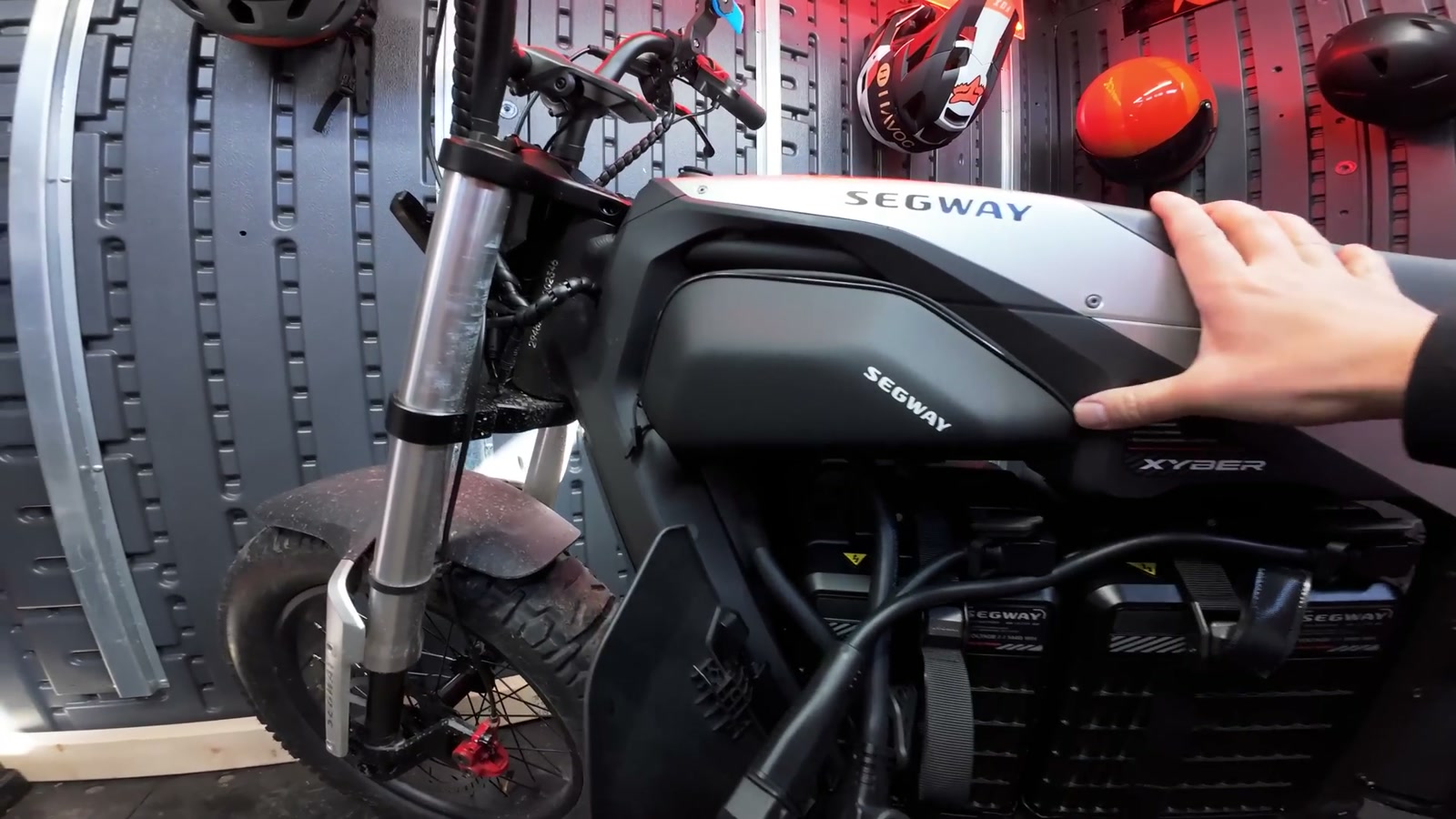
Segway’s in-frame hardshell bag sits right in that open frame section above the batteries. In person, it looks more like part of the bike than an add-on. It has zippers on both sides and enough space for the kind of pocket-dump items I always end up carrying: wallet, sunglasses, small tools, maybe a compact pump.
If you’re planning to daily this bike, I’d call it a high-value accessory.
First ride feel: the Xyber finally wakes up
The first thing I noticed in dual-battery mode wasn’t top speed.
It was throttle response.
With two batteries installed, the bike feels like it “unlocks” the drive system. The ramp into power is quicker and more confident, and the motor responds with less hesitation when I ask for acceleration.
Yes, the bike gets heavier with the second battery installed (these packs are substantial). But the payoff is that the power-to-weight balance makes a lot more sense. Instead of feeling like a heavy bike trying to be quick, it feels like a heavy bike that actually has the punch it needs.
Acceleration testing: the big win isn’t 1 mph, it’s the mid-range hit
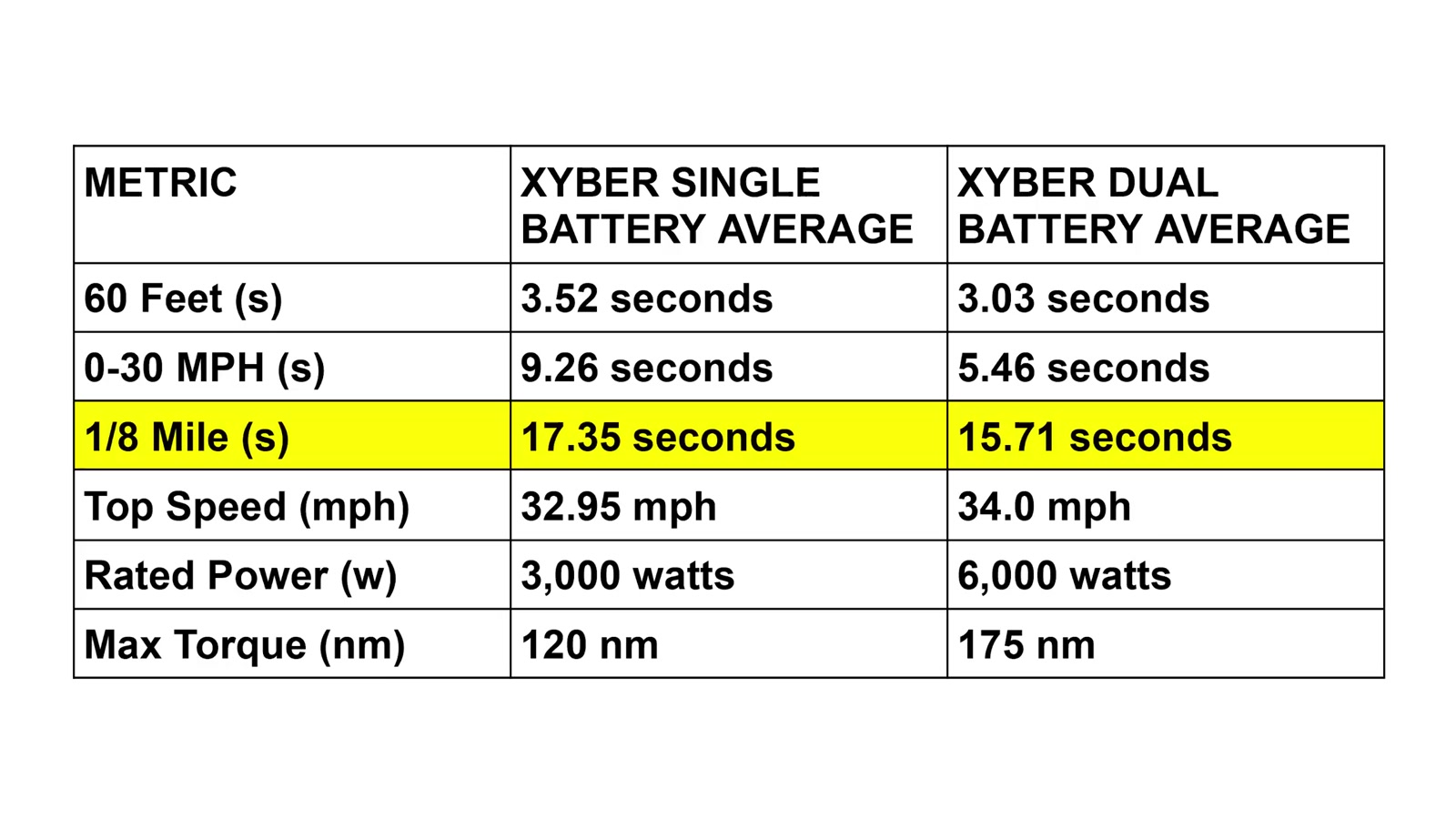
To put numbers to what I was feeling, I ran GPS-based acceleration tests.
Here’s what mattered in the real world:
Off the line, dual-battery mode consistently launched harder.
The jump in 0–30 mph time was the headline. Dual-battery runs were dramatically quicker to 30 mph than the single-battery runs.
Top speed didn’t change much. I saw the bike cap in the low-to-mid 30s on the display, and the dual-battery setup only nudged that slightly.
On the road, that translates into something you feel constantly: merging, crossing intersections, and getting up to cruising speed takes less time and less distance. It’s not about going way faster. It’s about getting to speed sooner.
Hill climbing: dual battery turns “slows down” into “keeps pulling”
I also did a hill test where the grade ramps up significantly as you climb.
On a single battery, the bike made it up—but it ran out of steam at the top and topped out in the mid-20s mph.
With dual batteries installed, it climbed harder and carried speed much better. The difference at the top of the hill was obvious: instead of fading and settling, it kept accelerating and reached a notably higher speed by the crest.
If you live somewhere hilly, this is the most convincing reason to go dual.
Range test: real-world riding, no range anxiety
For range, I ran a ride that mirrors how people actually use this bike:
Stop-and-go sections
Bike paths where I kept things tame
Street segments where I clicked into Race mode and pinned the throttle when it was safe
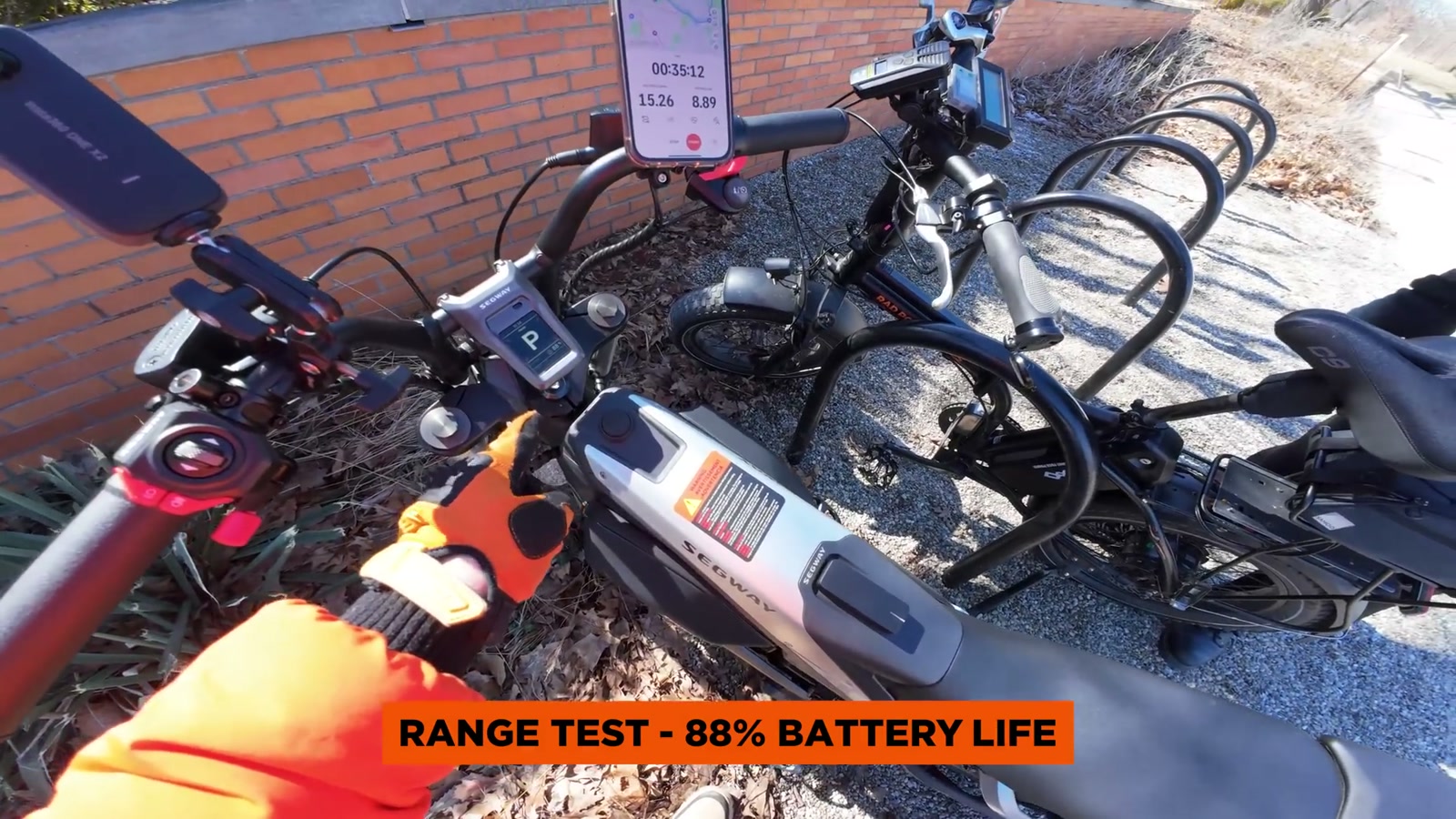
I started the ride at 98% and ended at 73% after 18.72 miles, averaging about 15 mph overall.
A detail I found interesting: the two batteries didn’t stay perfectly matched in percentage during the ride. The system keeps the packs somewhat isolated as a protection strategy, so one pack can read higher than the other until the levels come closer together.
The big takeaway wasn’t the math.
It was the feeling that I could ride this thing like it wants to be ridden, and still not stress about the battery.
Smart features and subscriptions: what happens later
The bike supports connected features tied to network/cloud services. Out of the box, those smart services are included for a period (one year at the time of my testing).
If you don’t renew later, the bike still rides normally—but cloud/network features (things like remote status updates, positioning/locating, track recording, alarms/prompts, and other connected functions) may not be available without an active subscription.
How this lands will depend heavily on pricing once renewal is finalized.
Living with it: the trade-offs are real
Dual battery mode makes the Xyber feel closer to a light electric motorcycle in everyday use.
That’s awesome on the road.
But it’s something to be honest about if your life involves stairs, small storage spaces, or lifting an e-bike onto a rack. With both batteries installed, this is not a casual “toss it around” bike.
What We Like
Dual-battery mode makes the throttle feel more responsive and more controllable
Big improvement in acceleration to real-world speeds
Hill climbing is noticeably stronger, with better speed carry to the top
Charging both batteries from one charger is clean and convenient
In-app visibility for each battery (percentage, voltage, temp) is genuinely useful
The in-frame hardshell bag fits the bike perfectly and looks integrated
Things To Consider
Installing the dual-battery harness means opening up the controller area; it’s not a 5-minute add-on
Total weight goes up, and the bike starts to feel more like a moped/light moto for storage and handling off the bike
Top speed only increases slightly; the main benefit is acceleration and torque, not a huge mph gain
Some connected/smart features may require a subscription after the included period ends
Final Thoughts
With one battery, the Segway Xyber is workable. With two batteries, it finally feels like the bike the design promises.
The biggest difference isn’t the top speed—it’s how quickly and confidently it gets there, and how well it holds speed when the terrain turns against you. Add in the reduced range anxiety, and dual-battery mode becomes the configuration I’d choose if I was spending real time on this bike.
If you’re already considering the Xyber, I’d budget for the second battery from the start. After riding it this way, going back to single-battery mode feels like leaving the best part of the bike turned off.