

Super73 Z1 52V Upgrade: Real-World Ride Impressions With a Brick Lithium 52V 20Ah Pack
April 15, 2021
Some links in this article may be affiliate links. If you buy through them, we may earn a small commission at no extra cost to you.
I’ve run a few different battery setups on my Super73 Z1, and the jump to a quality 52V pack is one of those upgrades you feel immediately. This time I installed a Brick Lithium 52V 20Ah battery (built around Tesla Model 3 2170 cells) and took it out for speed runs, hill pulls, and general cruising to see what changed in the real world.
Read more: Want a discount on your Super73? Use my promo code here and Super73 Z1 Tactical MOLLE Panel Order Form
This isn’t just a numbers upgrade. It changes the personality of the bike.
Why I Wanted 52V on the Z1
The main reason is simple: I wanted more usable range with stronger, cleaner power delivery.
I’d previously been running a generic “48V 20Ah” battery that, in practice, behaved a lot more like a smaller pack. The result was what you’d expect: weaker punch, more sag under load, and less confidence when you start pushing speed or hills.
With the Brick Lithium pack, the capacity is legitimately 20Ah, and at 52V that works out to 1,040Wh. In everyday terms, that’s the kind of battery size that can support 50+ miles of riding depending on weight, terrain, and how heavy your throttle hand is.
Unboxing + Build Quality Impressions
Right out of the box, this felt like a serious battery.
It’s a heavy pack (around 10 pounds), but the construction and the cell choice immediately inspired more confidence than the budget battery I’d been using. The connections are straightforward (XT60 and a DC port), and Brick Lithium included an XT60 extender which made routing power to my controller much easier with the battery location I wanted.
One thing I liked: the whole setup felt purpose-built for the DIY Super73 crowd rather than a generic “fits everything” solution.
My Mounting Setup (MOLLE Bag Under the Seat)
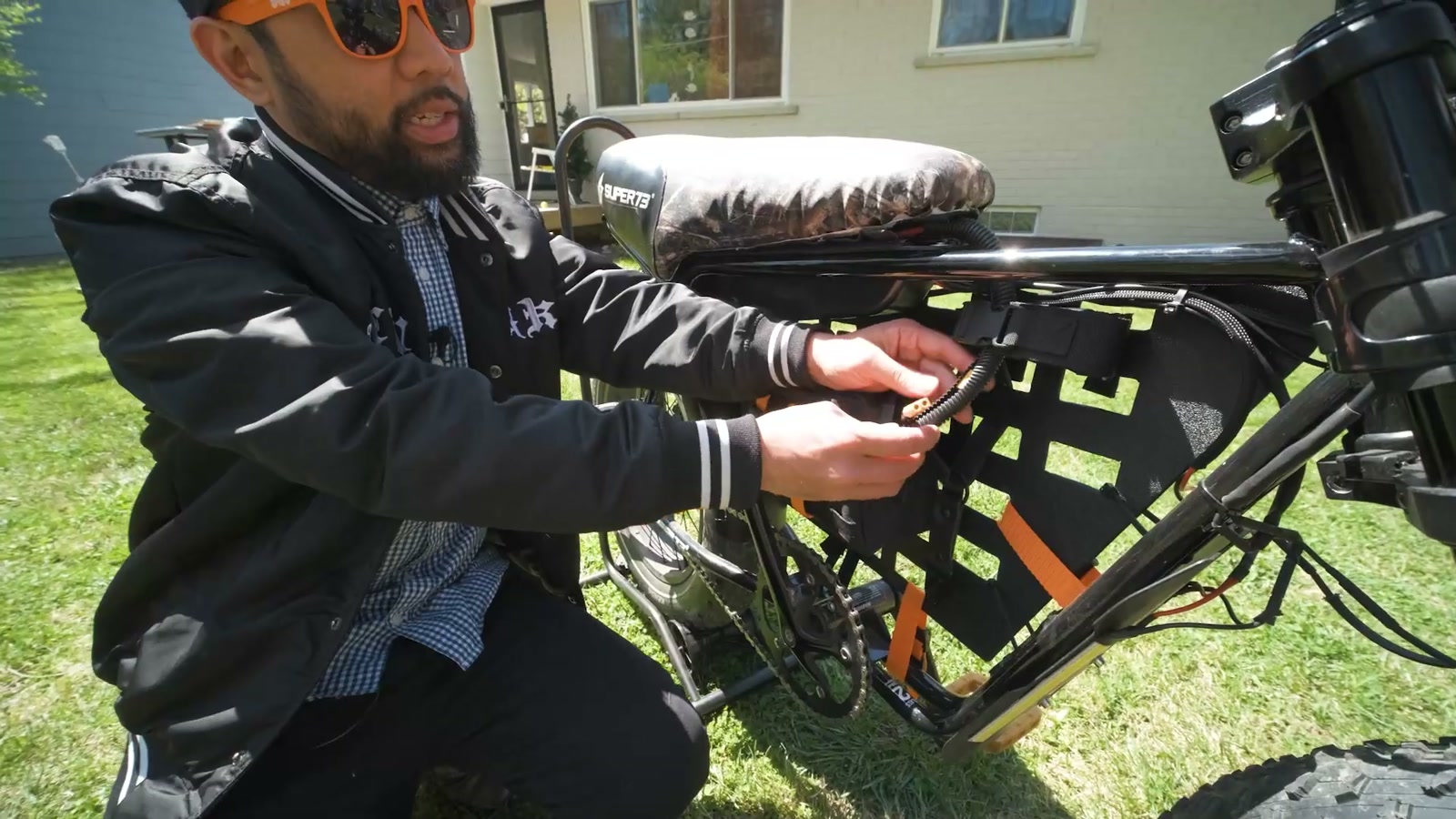
I mounted the battery in a MOLLE bag attached to my DIY tactical MOLLE panel on the Z1. With the battery tucked under the seat area, the weight stays centralized and low.
On the ride, that placement mattered. Even though it’s a heavy pack, it didn’t make the bike feel weird or tail-heavy. The center of gravity stayed natural, and the bike still felt like a Z1—just with more urgency when you roll on throttle.
The fit in the bag was tight (in a good way). I’d rather have a snug, secure battery than something that can shift around mid-ride.

First Ride: Stronger Punch, Smoother Power
The biggest difference I felt wasn’t a dramatic “night and day” jump like going from 36V to 48V.
Instead, it was a cleaner, more confident version of what the Z1 already does.
Throttle response felt stronger.
Acceleration felt smoother and faster.
And most importantly, the power delivery didn’t feel like it was sagging or falling on its face under load. The voltage felt steady, which translated into a more consistent ride—especially when I asked for more speed.
Speed Runs: What I Hit and What Felt Realistic
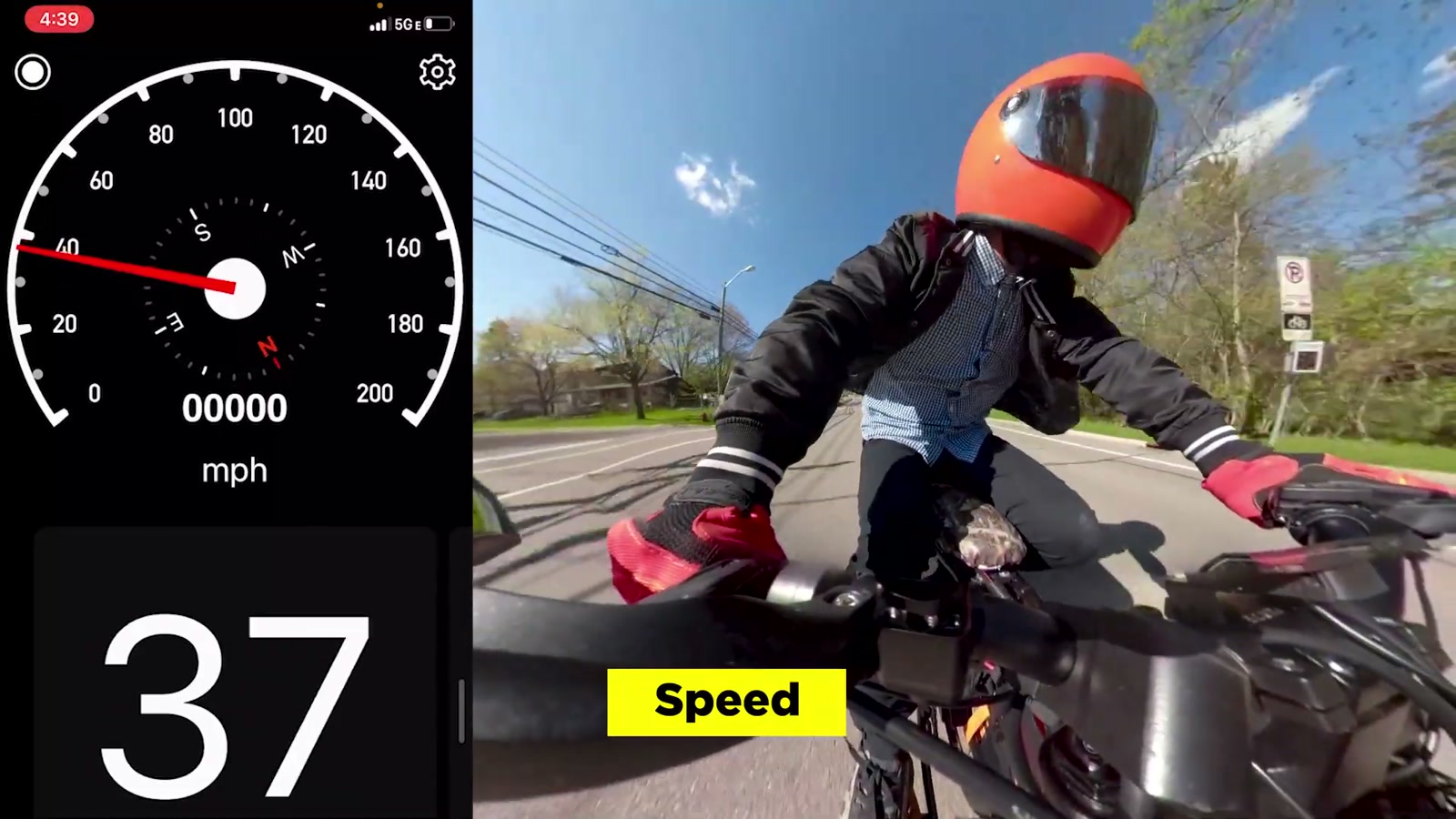
I did a top-speed run with GPS verification. On a slight downhill, I hit 38 mph.
On flat ground, based on how it was pulling and what I was seeing, I’d expect more like 31–32 mph.
That’s a meaningful bump for a Z1-style setup, and it’s the kind of speed increase that makes the bike feel less like a casual neighborhood cruiser and more like something you need to ride with real attention.
The Catch: Controller Heat and Cutoffs
Here’s the part I want to be very honest about: pushing full throttle for speed runs can heat-soak the controller.
With my controller mounted inside the frame area, I started getting slight cutoffs on a hill climb after it got hot. It wasn’t a full shutdown, but it was that annoying on/off behavior where you have to back off and reapply throttle.
That’s not the battery “failing”—it’s the controller protecting itself.
If you’re doing a 52V setup like this and you plan to ride hard, I’d strongly consider mounting the controller externally where airflow can cool it. I’m planning to do exactly that.
Range: Why This Upgrade Matters Even If You Don’t Ride 50 Miles
Yes, a true 20Ah pack at 52V can support 50+ miles depending on rider weight and terrain.
But for me, the real win is more practical: I don’t have to charge as often, and I don’t have to baby the bike to avoid sag. If you’re lighter (I’m under 175 lbs), and you ride conservatively, it’s realistic to expect excellent range.
Even if you never plan a 50-mile ride, the day-to-day convenience is real.
What We Like
Stronger throttle punch with smoother delivery
Noticeably reduced voltage sag compared to lower-quality packs
Real capacity (a true 20Ah battery) for meaningful range
Centralized mounting under the seat keeps handling feeling normal
Solid DIY-friendly approach from a builder who clearly understands the Z1 community
Things To Consider
Controller heat can become an issue at sustained full throttle, especially if it’s mounted inside the frame
The battery is heavy (around 10 lbs), so secure mounting is non-negotiable
If you’re going to keep pushing power, you may eventually look at controller and possibly motor upgrades to match the battery’s capability
Higher speed changes the risk profile of the bike—ride gear and braking setup matter more once you’re running 30+ mph regularly
Final Thoughts
This Brick Lithium 52V 20Ah pack made my Super73 Z1 feel more responsive, more consistent, and more capable—without turning it into something unpredictable.
The upgrade isn’t just about top speed. It’s about ride quality: smoother pull, better torque, and range you can actually trust.
If you’re still on a questionable “too good to be true” battery and you want a real step up in performance and confidence, this is the type of upgrade that makes the Z1 feel like it’s finally running on the power it deserves.