
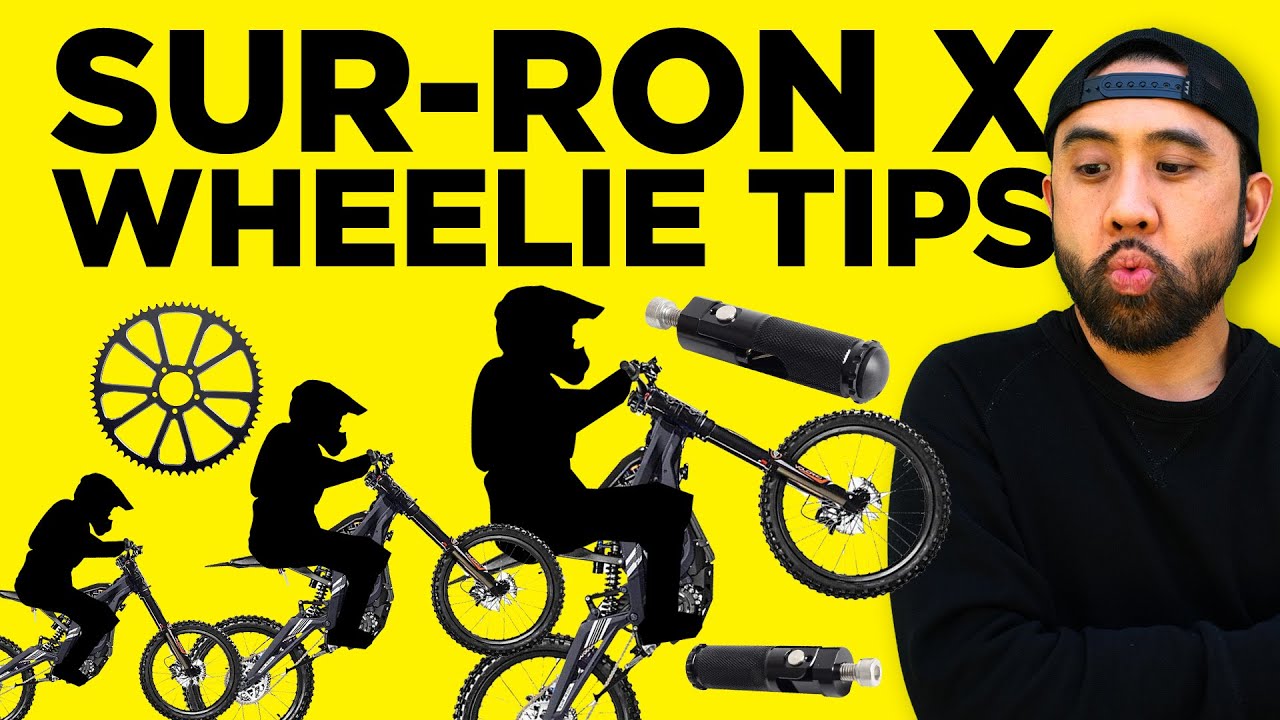
Sur-Ron X Wheelie Techniques: What Actually Helped Me Get the Front Wheel Up (and Keep It There)
September 22, 2021
Some links in this article may be affiliate links. If you buy through them, we may earn a small commission at no extra cost to you.
Wheelies on the Sur-Ron X look like pure showing off… until you actually start trying to learn them.

Once I got some real seat time practicing with riders who do this daily, it clicked: learning to wheelie isn’t just about lifting the front wheel. It’s about understanding balance point, throttle control, and (most importantly) building the reflex to save it with the rear brake.
Here’s what helped me most, what I paid attention to on the bike setups, and how I’d recommend approaching it if you’re trying to wheelie your Sur-Ron without turning it into a yard sale.
Why I Even Bothered Learning
On an electric bike like the Sur-Ron X, torque is instant and the bike is quiet—so it’s easy to find little pockets of time to practice. And the more I worked on wheelies, the more I felt it translate into better overall control: smoother inputs, more confidence modulating speed, and a better sense of where the bike is under me.
It also made me think differently about setup. Small changes—where I sit, where my hands are, gearing choices—can make the difference between “I can’t get it up” and “oh… it comes up every time.”
The Setup Stuff That Changes the Learning Curve
I spent time around Sur-Rons that were clearly tuned for wheelies, and you can feel it immediately.
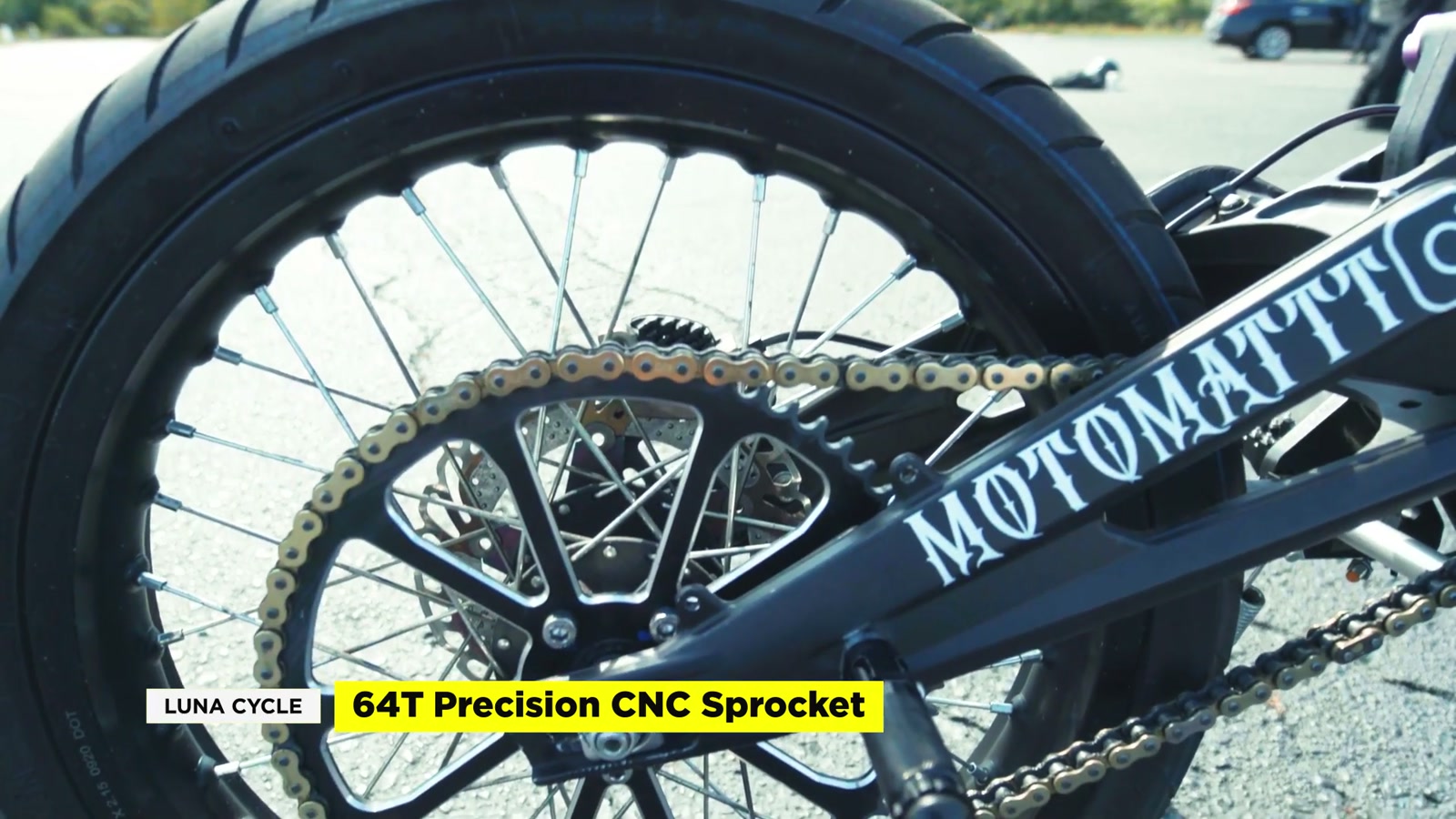
Big rear sprockets make it easier (but come with a trade)
A larger rear sprocket makes the front end want to come up with less effort. That’s awesome for learning because it reduces how hard you have to “snap” the throttle.
The tradeoff is you give up top speed. For a wheelie-focused build, that compromise makes sense—especially if your goal is controlled, slower wheelies instead of chasing high-speed power wheelies.
Pegs and other control-focused add-ons
Comfort and control upgrades matter when you’re repeating the same motion over and over. Anything that helps you feel planted and consistent makes practice more productive.
Bars/grips and rider fit
Bar choice, grip feel, and overall cockpit comfort affect how relaxed your hands are—which affects how smooth your throttle and brake inputs are. If your hands are tense, everything gets jerky.
Gear I Now Consider Non-Negotiable
Wheelie practice is repetitive, and you’ll eventually mess up. I treated protective gear like part of the technique:
Helmet: if you’re practicing wheelies without one, you’re rolling the dice for no reason.
Goggles: especially helpful for daytime glare; swapping lenses for night rides is a real quality-of-life thing.
Gloves: I noticed how quickly your hands take a beating during repeated practice—even with gloves.
Boots: ankle protection matters when you’re dabbing and catching yourself.
Pants: anything is better than bare skin; lightweight options keep you from overheating.
The Skill That Matters Most: Rear Brake Discipline
The biggest technique change for me was committing to this habit:
Always keep one finger on the rear brake.
Not “most of the time.” All the time.
The rear brake is your lifeline. If you drift past balance point, the brake is what brings the front back down. Building that reflex is the difference between controlled progression and painful setbacks.
Balance Point vs. “Chasing” the Wheelie
Early on, it’s really common to do what a lot of riders call a power wheelie—basically chasing the wheelie by constantly feeding throttle to keep the front up.
The problem is it tends to escalate speed fast. You end up going way quicker than you intended, and you’re relying on throttle instead of balance.
The wheelie that feels controlled is the balance-point wheelie:
I bring it up.
I find that sweet spot where it can almost coast.
I use small throttle inputs and rear brake taps to keep it there.
Once you feel a real balance point for the first time, everything changes.
Seat Position: I Had to Move Forward
One of the simplest changes that helped instantly was where I sat.
Sitting far back can feel like it makes the wheelie easier… but it also makes it scarier because the balance point is farther behind you.
When I moved up toward the front of the seat, the balance point felt more manageable. The bike stayed in a range where I could correct it sooner, and I wasn’t constantly feeling like I was about to loop.
Hand Position and Relaxed Inputs
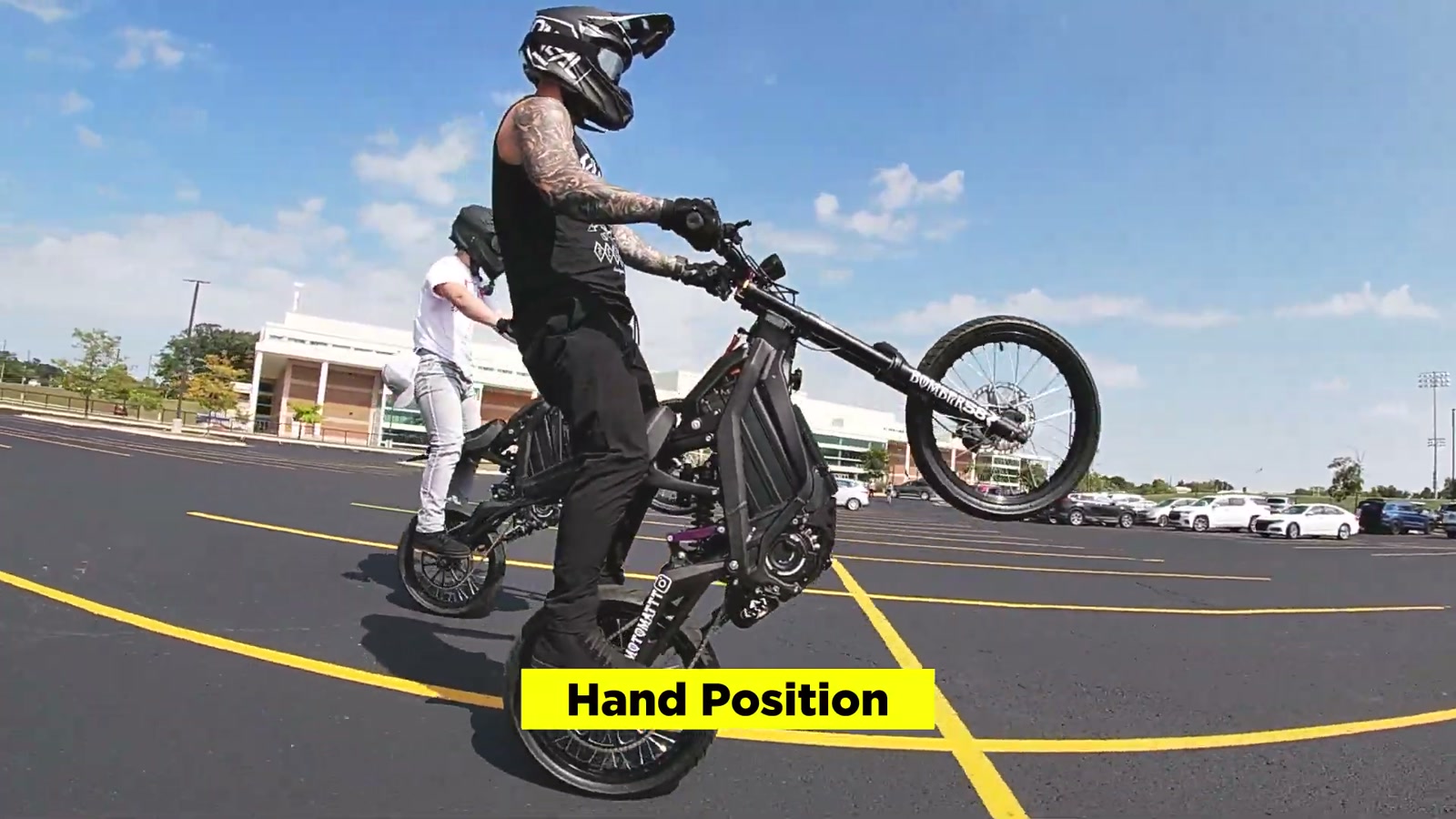
Wheelies punish tense riding.
With a light grip and a consistent one-finger rear brake position, my throttle control got smoother. That made the whole bike feel calmer—especially during the moment where the wheelie is rising and you’re deciding whether to commit or set it back down.
Where I Practiced (and Why It Helped)
A flat surface is great. A slight uphill is even better.
That little incline changes the balance dynamics in your favor and can make it easier to learn the “float” without accelerating too aggressively.
I also made sure the practice area had room to roll out mistakes. Tight spaces add stress, and stress makes you stiff.
Speed: I Stopped Trying to Go Fast
The safest progress came when I focused on slower wheelies.
High-speed power wheelies are where things get sketchy fast. If you’re flying and you get too far back, the consequences are bigger—and even braking can get unpredictable when panic sets in.
Keeping things in a slower, controlled range helped me stay calm, feel the balance point, and actually learn.
The Real Goal: Speeding Up and Slowing Down While Up
Once the front is up, the next level isn’t “hold it longer.”
It’s being able to:
speed up while on one wheel
slow down while on one wheel
That’s where throttle and rear brake become a conversation instead of a panic move.
What We Like
Wheelie practice builds real bike control, not just a party trick
Rear-brake-first technique creates safer, repeatable progression
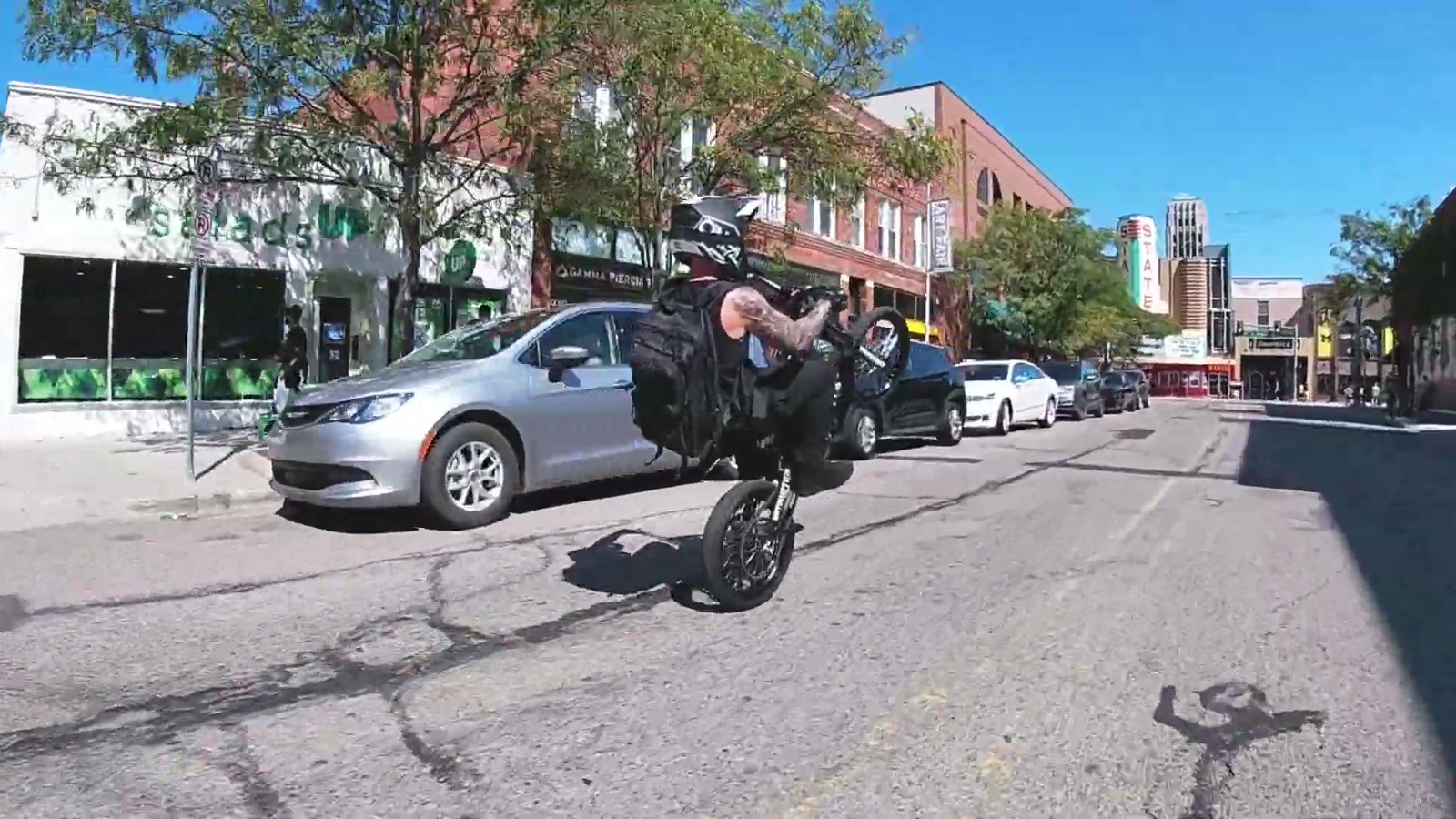
Moving forward on the seat makes balance point feel more approachable
Slight uphill practice areas can make learning easier
Wheelie-focused setups (like larger sprockets) reduce the effort needed to lift the front
Things To Consider
Bigger sprockets can cost you top speed; decide what kind of riding you actually do
Power wheelies “work,” but they can push you into higher speeds than you’re ready for
Gear isn’t optional if you’re going to repeat wheelie attempts for hours
This takes time—consistent short sessions beat one big sketchy day
Final Thoughts
After practicing in a more intentional way—front-of-seat position, one finger always on the rear brake, and a focus on balance instead of chasing—I felt the Sur-Ron X become way more predictable.
Wheelies still demand respect, but they’re also one of the fastest ways I’ve found to level up overall riding skills. The best part is how transferable it is: once you understand balance point and brake control here, everything else you do on the bike feels more controlled.
If you’re learning, keep it slow, keep it consistent, and treat that rear brake like it’s the whole game—because it is.