

How I Film Sur-Ron Stunt Clips (Without Ruining the Ride)
November 8, 2022
Some links in this article may be affiliate links. If you buy through them, we may earn a small commission at no extra cost to you.
Sur-Ron rides have a funny way of making a regular session feel like a movie. The speed is quiet, the group energy is loud, and the stunts happen fast—usually when you’re not ready.

After spending time around riders who are actually pushing the culture forward (and learning from Reese Ford’s approach), I tightened up how I shoot: fewer “generic action cam” clips, more intentional movement, and a lot more awareness when I’m filming in traffic-y, unpredictable group ride situations.
This is how I’ve been approaching Sur-Ron stunt filming in the real world—what’s working, what’s sketchy, and what I’d recommend if you’re trying to capture the moment without becoming the moment.
The mindset shift: I’m riding first, filming second
When I’m filming stunts, it’s tempting to chase the shot like it’s the only reason I’m there. But the best sessions I’ve been part of weren’t “perfect footage” days—they were days where the ride felt good and the filming naturally clicked.
If I miss a moment, I miss it. I’d rather come home with fewer clips than force a dangerous line, drift into someone else’s lane, or get tunnel vision.
That one change makes everything else smoother.
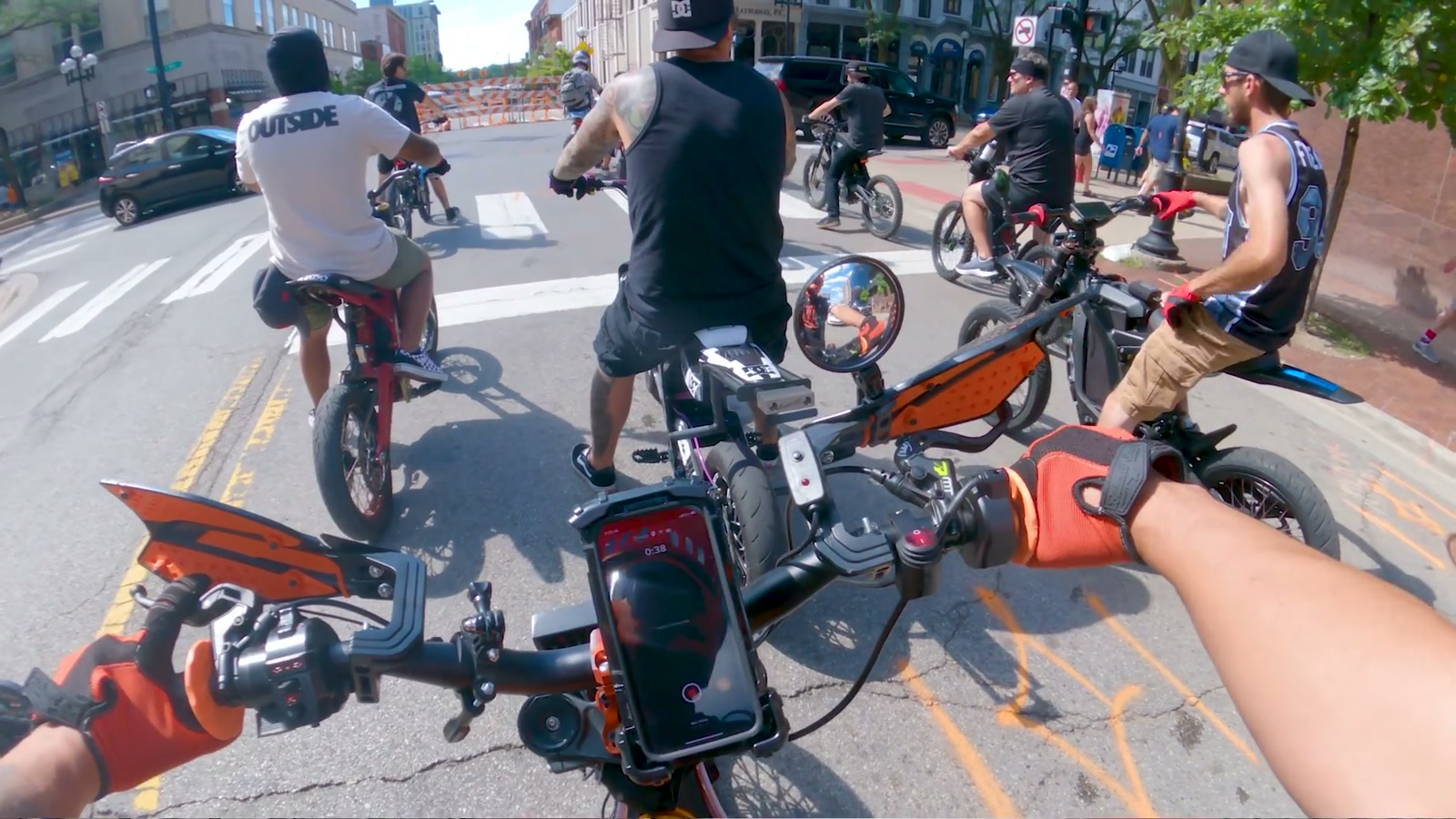
Group rides are the hardest place to be a camera guy
Filming in a pack is different than filming a single rider on a controlled road. Things stack up quickly:
Riders cut across lanes unexpectedly
Speeds change in a split second
You’re constantly managing spacing so you don’t swerve into someone
You end up in places a “normal rider” probably shouldn’t be
When I’m the one holding the camera (or switching between riding and recording), I have to think farther ahead than I normally would. I’m not only watching the rider I’m filming—I’m watching what’s coming up behind them, beside them, and beyond them.
If I can’t keep my head on a swivel, I back off and reset.
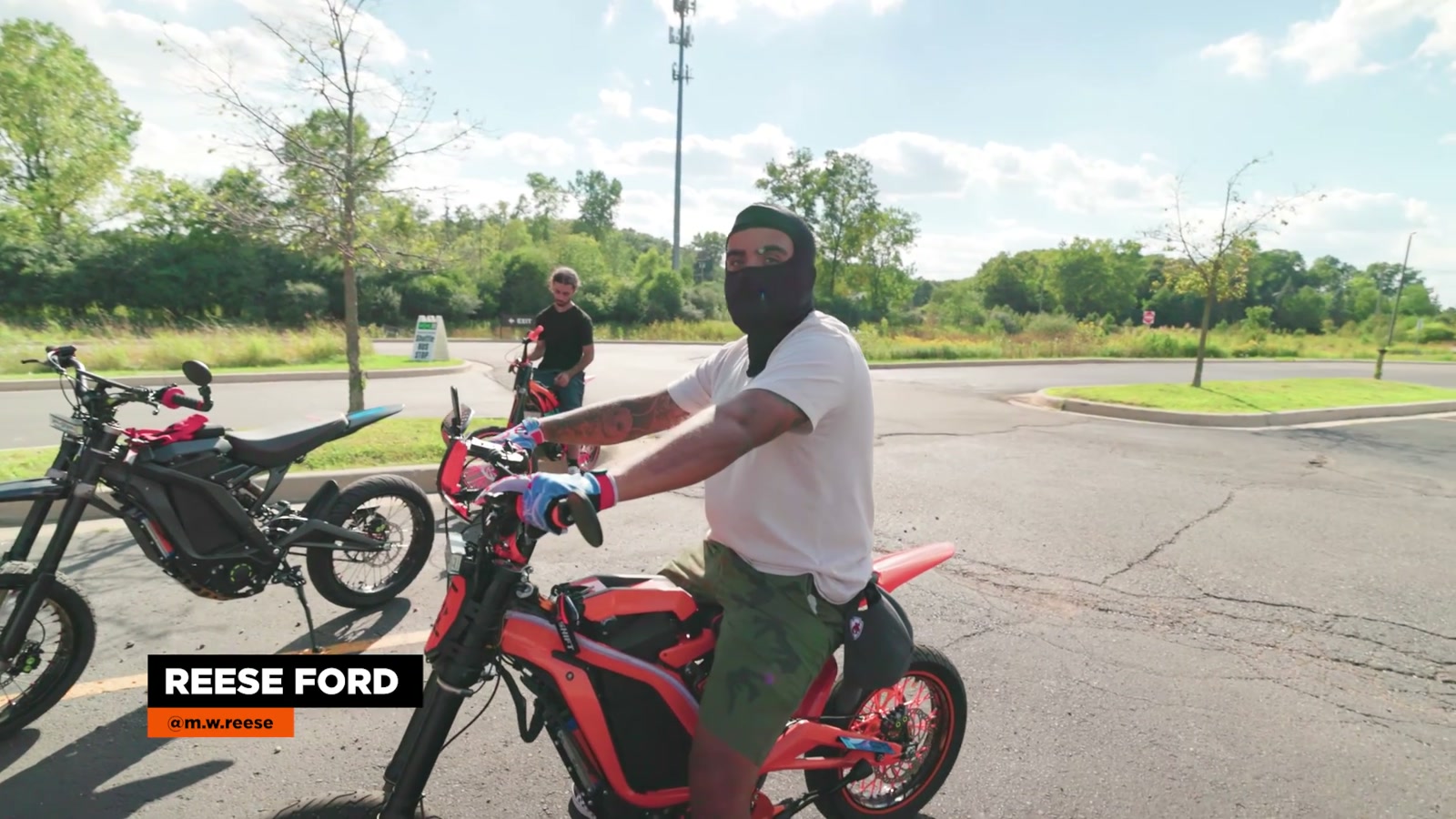
Close-up shots feel like being there (because they are)
The footage I’m most proud of almost always comes from getting closer than feels comfortable—without getting reckless.
Close-up shots hit harder because that’s what the ride actually feels like: you’re right next to someone balancing a wheelie, dragging a foot, or snapping into a transition with zero warning.
The trick is staying close without drifting into their space. I’ve had the best results by:
Matching pace first, filming second
Holding a steady line instead of “micro-correcting” constantly
Giving extra margin when the rider looks unstable (even if the trick is intentional)
Eye contact is an underrated cheat code
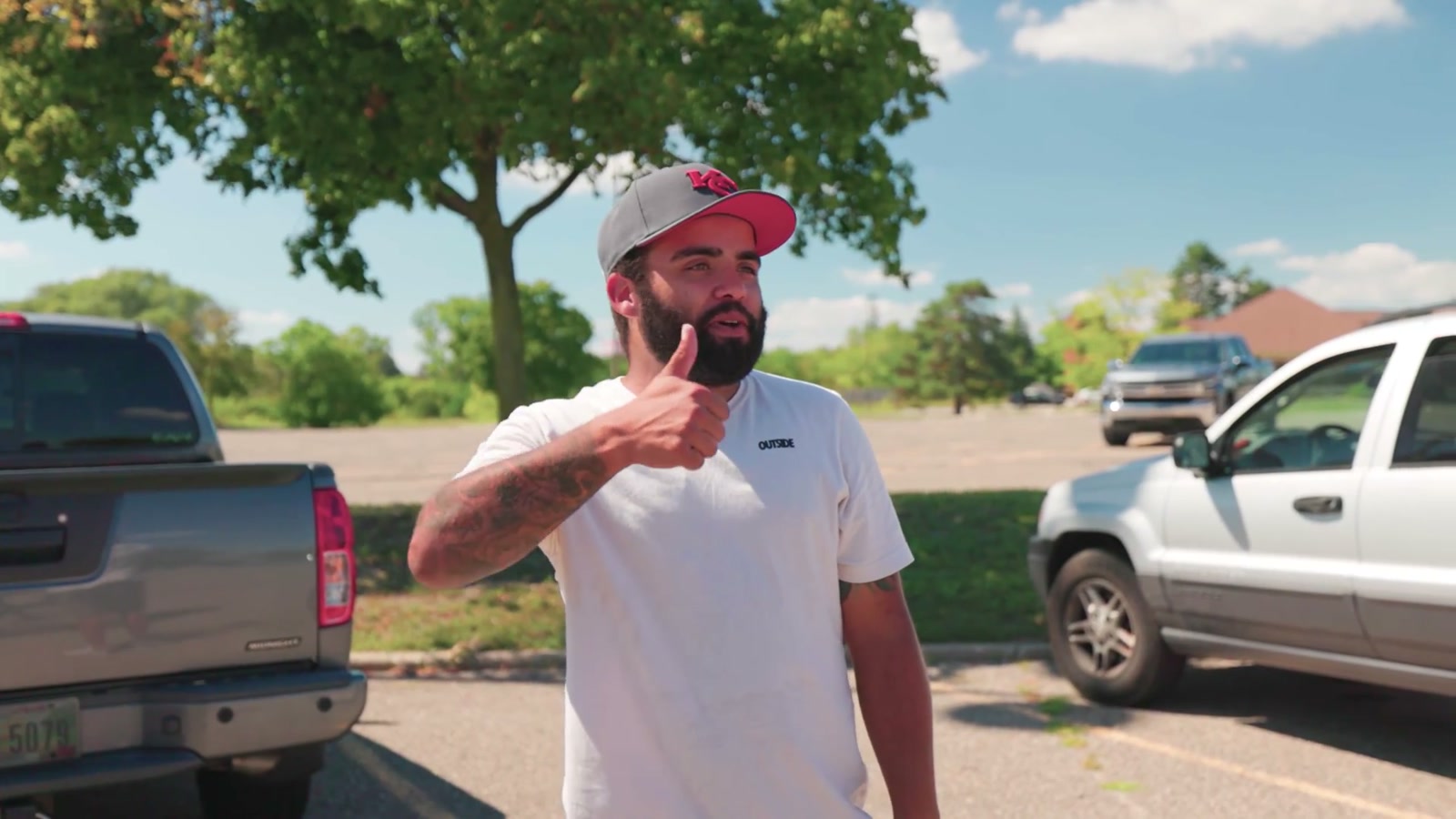
One of the most “sticky” shots I’ve gotten is the simple front angle where the rider looks straight at the lens.
When I can pull that off—front angle, rider turns their head, makes eye contact—it immediately feels more engaging. People watching don’t just see a rider doing a trick; they feel like they’re in the lane with them.
I don’t force it, but when I’m already in front and the rider’s comfortable, I’ll hold position long enough to give them the opportunity.
The shot I always chase: front-to-back transitions that stay fluid
The biggest difference between “random clips” and “a real sequence” is movement.
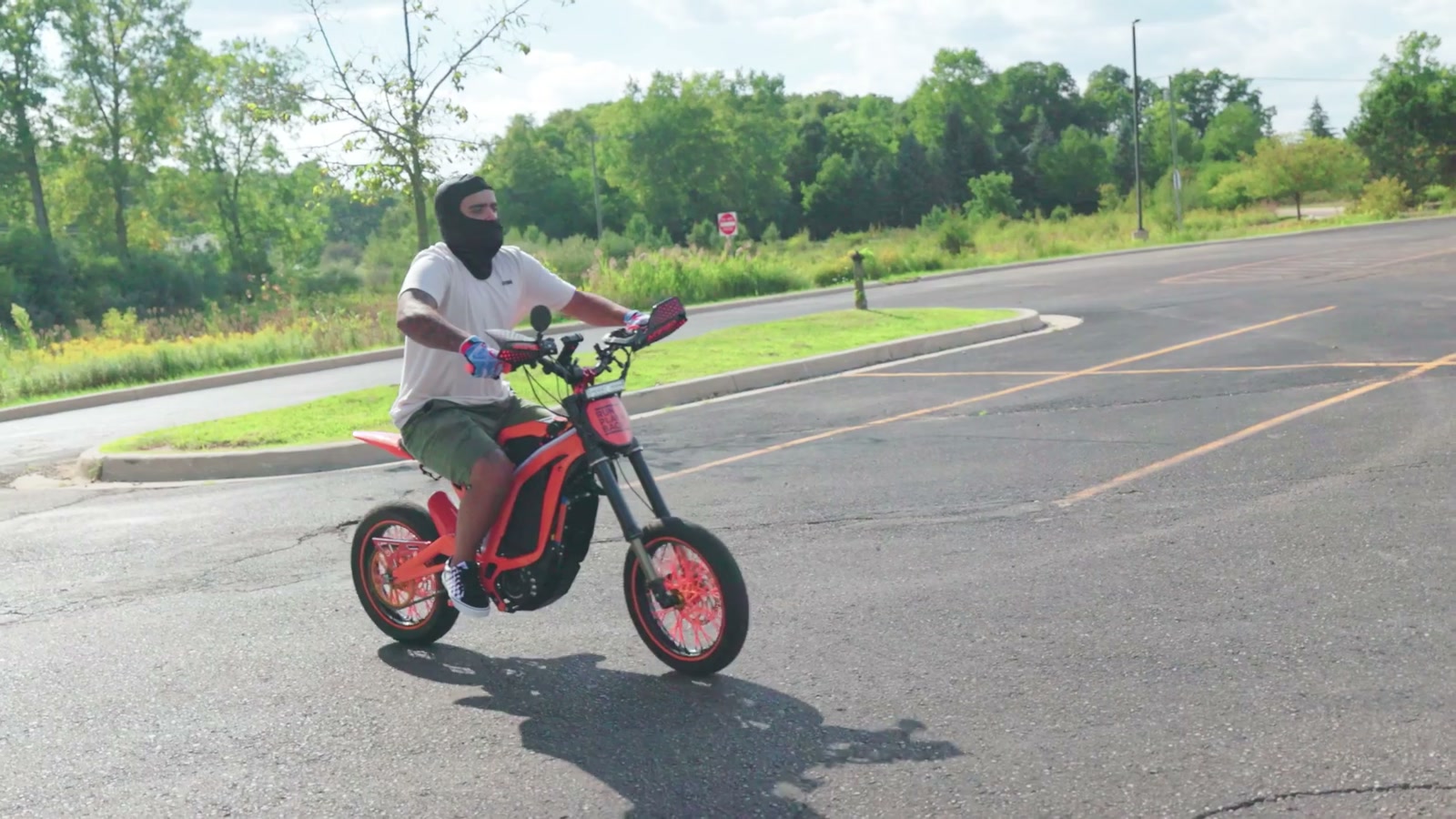
I’ve been practicing cleaner transitions:
Start in front for the approach
Slide to the side for style and context
Drop back to show the full trick and control
Come forward again if it’s safe to reset for the next hit
When it works, it looks intentional instead of accidental. When it doesn’t, it usually means I tried to move too much, too quickly, or I forgot that traffic and riders don’t care about my camera plan.
Practice is the multiplier (even 15–20 minutes a day)
I’ve noticed the biggest improvements come from short, consistent practice.
Even 15–20 minutes focusing on one thing—smooth following distance, stable one-hand control (if you’re doing that), quick camera repositioning, or just staying calm while riding close—adds up fast.
At first, it’s intimidating. You feel behind. You feel shaky. You question whether you should even be filming.
Then it becomes a comfort zone.
Film more riders, in more places, as often as you can
If I only film the same people in the same environment, my footage starts to look the same.
The fastest way I’ve found to level up is:
Film different riders (different styles force you to adapt)
Film different environments (lighting, background, traffic, pacing)
Try different shot ideas even if they don’t work at first
This also builds community naturally. One solid session leads to another invite, another ride, another introduction.
What We Like
Close-up filming makes Sur-Ron content feel immersive and real
Eye contact front shots are incredibly engaging when you can safely get them
Fluid front-to-back transitions instantly make footage feel more cinematic
Consistent small practice sessions build confidence fast
The Sur-Ron / e-bike stunt community (at its best) is welcoming and open with knowledge
Things To Consider
Group rides add real risk: spacing, traffic, sudden moves, and unpredictable lines
Chasing the shot can create tunnel vision—ride awareness has to stay priority #1
You won’t always “get the shot,” and that has to be okay if you want to keep riding long-term
Getting close looks best, but it demands control and respect for the rider’s space
Final Thoughts
My biggest takeaway from filming Sur-Ron stunts is simple: the footage gets better when I stop treating it like a mission and start treating it like part of the ride.
When I stay aware, keep things fluid, and focus on capturing what it actually feels like—close, fast, human—the clips come out more authentic. And honestly, that’s the whole point of filming this scene in the first place.