

Street-Legal Sur-Ron in Michigan: Why I Registered Mine as a Moped (and Why You Might Not)
March 20, 2022
Some links in this article may be affiliate links. If you buy through them, we may earn a small commission at no extra cost to you.
Sur-Ron ownership lives in a weird little space between e-bike, moped, and motorcycle. Depending on where you live (and how you ride), it can feel totally normal… or totally complicated.

For me, the best move was getting my Sur-Ron registered as a moped here in Michigan. Not because I think everyone should, and not because it magically makes the bike “right” or “wrong.” It simply fits how I use my Sur-Ron day-to-day.
Below is my real-world take on what changed once I went street-legal, what the Michigan process looked like, and the honest trade-offs.
The reality: Sur-Rons are already in a legal gray area
In Michigan, high-powered electric bikes like the Sur-Ron generally sit in a gray zone. In practice, if you ride respectfully, you can often fly under the radar. I haven’t personally seen local enforcement come down hard on riders around me, and when people do get bothered, it tends to be the exception, not the rule.
That’s why a lot of Sur-Ron owners prefer to keep things “gray” and keep riding like a bike.
I get it.
But my riding style evolved, my build changed, and my use case became mostly street commuting—so my risk math changed too.
Michigan moped rules (the parts that mattered for my decision)
Michigan’s moped requirements are relatively casual compared to some states.
What stood out to me:
You only need a standard driver’s license (not an M endorsement).
Insurance isn’t required for a moped.
You’re essentially attesting that the bike is equipped for the street (think basics like lights, horn, mirror, etc.).
You need to be limited to 30 mph for moped classification.
That last point—30 mph—was a big one. I didn’t want to permanently neuter the bike. I wanted options.
My setup: street mode when I need it, full power when I don’t
My Sur-Ron is built to live on pavement a lot of the time. I also run a setup with:
Headlight
Signal lights

Brake lights
Horn
Mirror
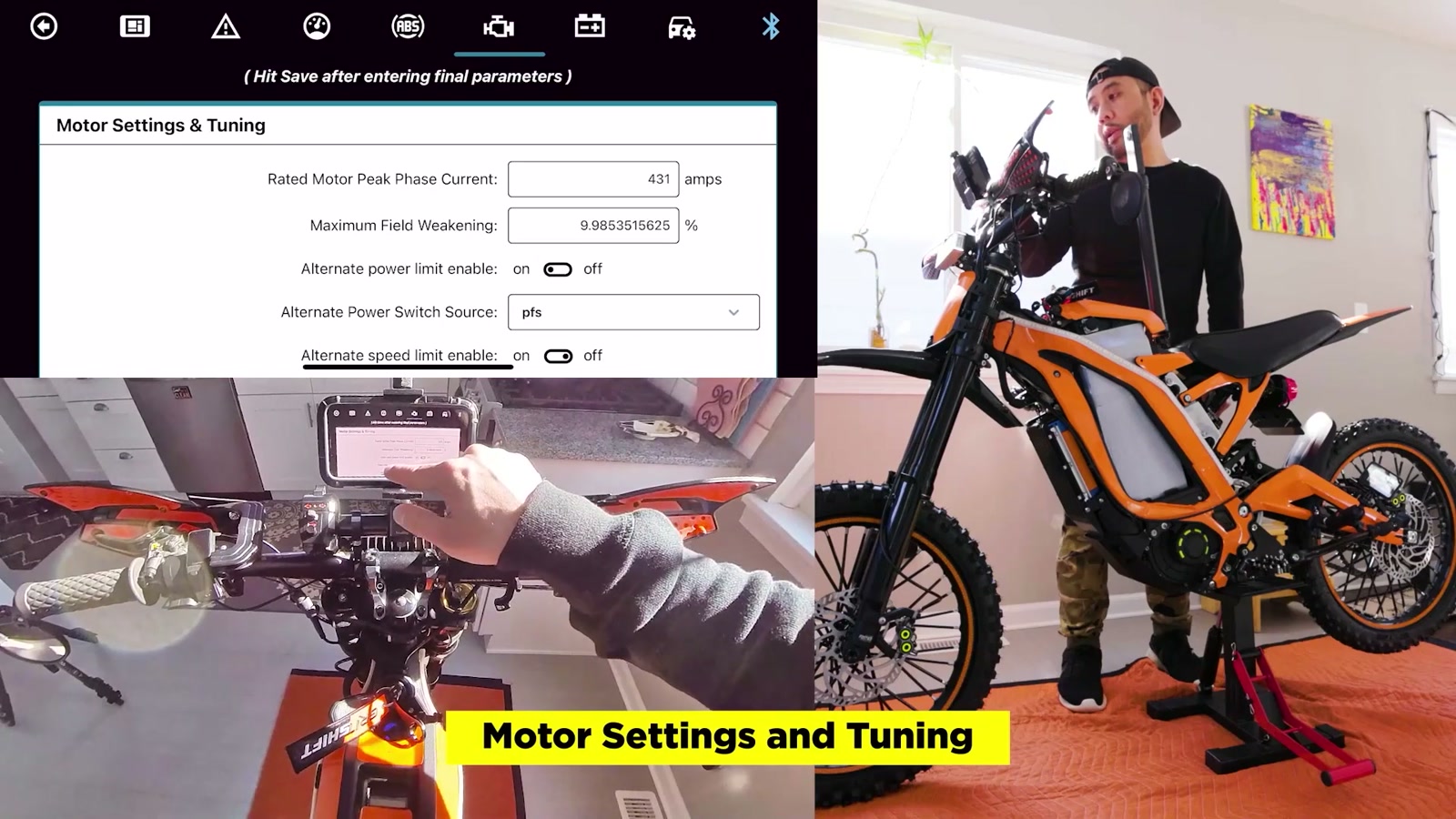
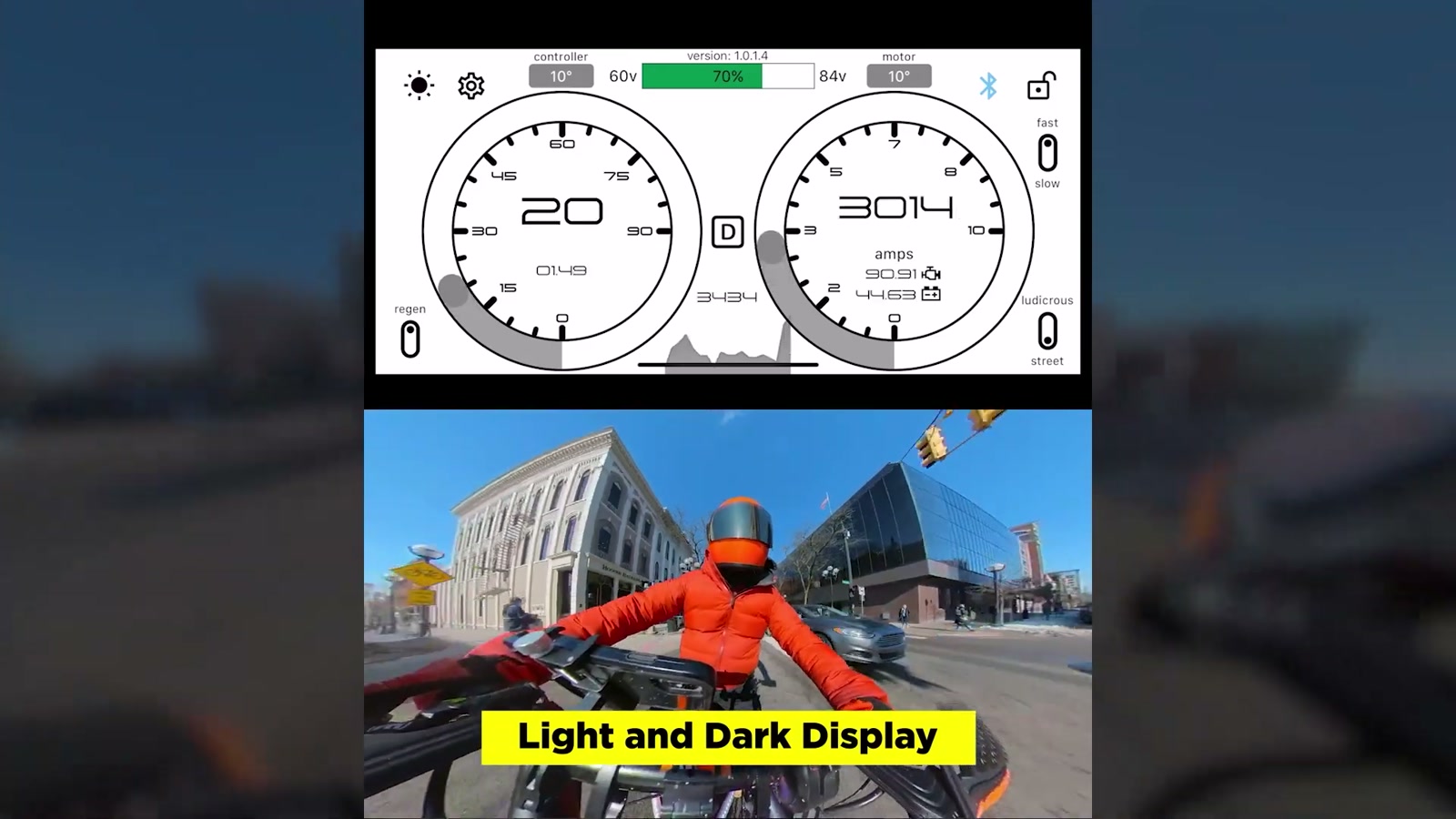
And the key piece for making the moped route feel practical: the GLE dashboard.
With that, I can program a street mode that doesn’t exceed 30 mph for legal road use. When I’m on private property or private roads, I can switch out of that and ride the bike the way a Sur-Ron is meant to be ridden.
That “two personalities” approach is what made registration feel like a tool instead of a compromise.
How I registered my Sur-Ron as a moped in Michigan
Michigan mopeds aren’t titled vehicles, but they do need to be registered.
Here’s what I brought in:
The bike’s frame serial/VIN (the Sur-Ron has one)
Proof of ownership (bill of sale/receipt showing retail cost, with my name and address)
A form with my info, the retailer’s info, and identifying details about the bike (Michigan keeps this as proof of ownership)
The Michigan moped registration form
One small detail: I added two zeros to my VIN to make it 17 digits. It’s likely not required, but it helped keep things standardized.
The cost and timing were surprisingly painless:
6% state sales tax
$15 for a three-year decal
In and out in under 10 minutes
That’s it. Sticker on the bike, and now I have the option to ride fully above-board when I’m commuting.
Why I went street-legal (my three real reasons)
1) I ride it like an urban commuter
My Sur-Ron gets used on streets about 99% of the time—main roads, intersections, city riding. I’m not trailering it to singletrack every weekend.
And where I live, trails aren’t exactly abundant nearby, so “off-road only” doesn’t match reality.
2) My bike doesn’t look like a normal e-bike anymore
Once you start modding, a Sur-Ron stops blending in. Even if you ride politely, the look alone can attract attention.
Going street-legal reduces the stress of that.
3) Liability risk matters more to me than hassle
This is the big one.
I carry full coverage insurance on the bike (loss, collision, and comprehensive). My personal risk isn’t “will I get stopped,” it’s “what happens if there’s a real accident and someone gets hurt?”
From my perspective, having the bike registered as a street-legal moped only decreases potential liability and ambiguity.
Why I still understand the “stay in the gray” crowd
If you mainly ride off-road, ride in quieter areas, or you’re in a place where registration is a paperwork nightmare, staying gray can be the most practical option.
Also, enforcement and laws vary wildly by state and city. Some places are stricter, some are more lenient than Michigan.
And there’s another real point: if you ride it like a bicycle, people often treat it like a bicycle. That’s a big reason the gray-area approach has worked for so many riders.
There’s no one correct label: e-bike, moped, motorcycle
A Sur-Ron can be interpreted as all of the above depending on:
Local definitions
Equipment on the bike
Speed capability and how it’s limited
Where it’s ridden
How it’s ridden
So I’m not interested in turning this into “registered vs unregistered.” I’m interested in “does it match your lifestyle?”
And honestly, having options is underrated. If I wanted to return to the unregistered approach, the decal can come off. The bike doesn’t suddenly stop being a Sur-Ron.
What We Like

Street mode + off-road mode makes the bike more versatile for real life
Michigan’s moped process was fast, inexpensive, and straightforward
Registration reduces anxiety when commuting on main roads and intersections
A clearer paper trail can matter if the worst-case scenario ever happens
Things To Consider
Your state/city laws may be very different from Michigan
Moped classification comes with a 30 mph limit requirement here (you need a way to comply)
If your Sur-Ron is still mostly a trail toy, registration may add complexity with little upside
The “gray area” can work fine for many riders—until it doesn’t, and that risk is personal
Final Thoughts
Registering my Sur-Ron as a moped wasn’t about proving a point—it was about aligning the bike with the way I actually use it.
If your Sur-Ron is an urban commuter, if your build is drawing attention, or if liability is what keeps you up at night, going street-legal can be a smart, calming move.
If your riding is mostly off-road, your area is relaxed, and registration is a headache where you live, staying in the gray might be the better choice.
Either way, the best “mod” you can do is understanding your local laws and choosing the setup that fits your lifestyle.