

Victrip R7 Review (60V Mini Electric Dirt Bike, 4,000W Peak Tested)
October 4, 2026
Some links in this article may be affiliate links. If you buy through them, we may earn a small commission at no extra cost to you.
The Victrip R7 is the kind of mini electric dirt bike that makes you rethink what “small” means. It’s compact, sure, but the moment I saw it was running a 60V system, I knew it wasn’t going to ride like the usual tame 48V minis.
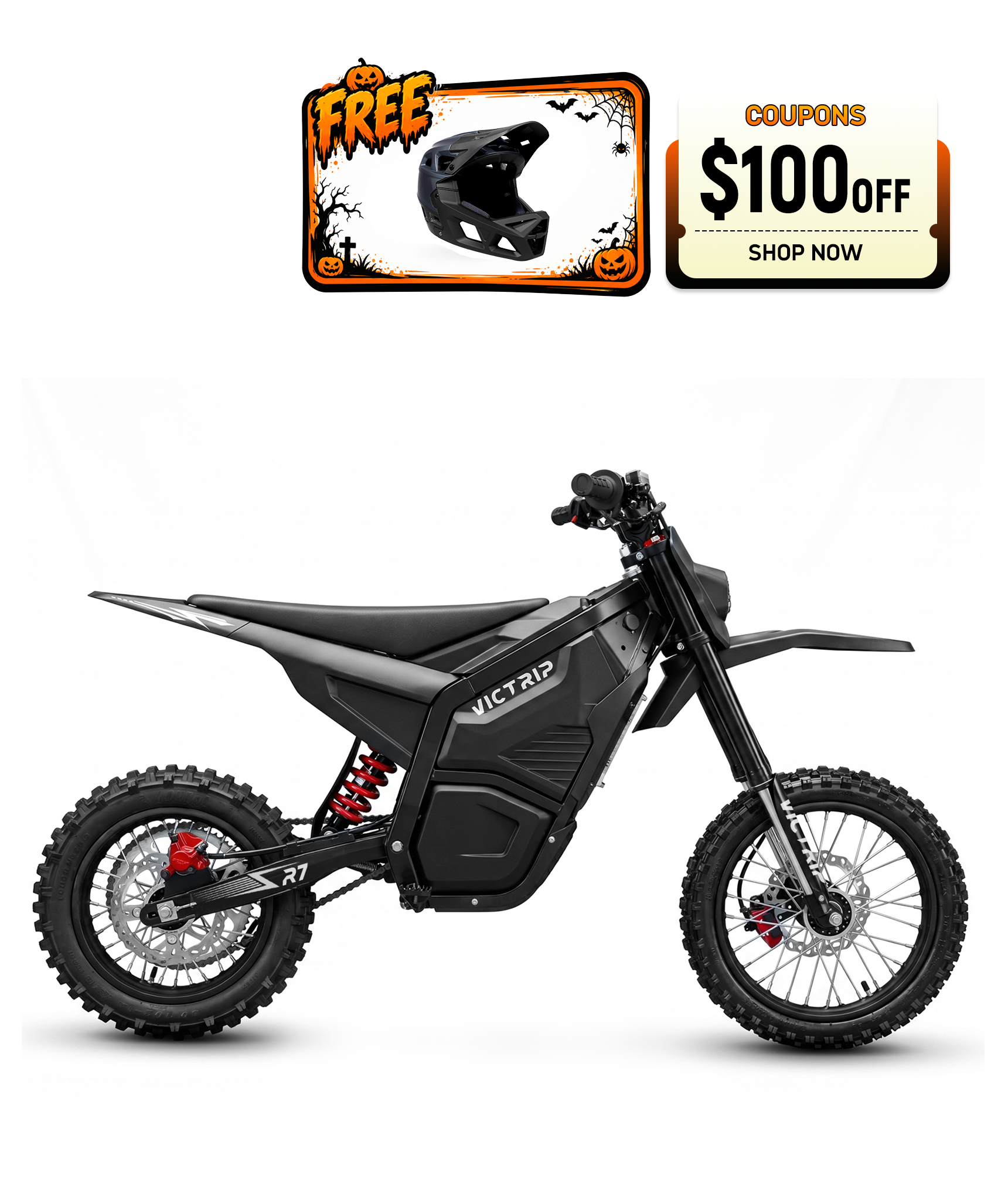
And after putting real time on it—street pulls, braking tests, and a bunch of off-road messing around—I can say it plainly: 60V on tiny tires is a recipe for a stupid amount of fun.
This is my hands-on Victrip R7 mini electric dirt bike review, focusing on how it actually feels to ride, how the power modes behave, and whether it makes sense for beginners, teens, or adults who just want a small bike that rips.
First Impressions
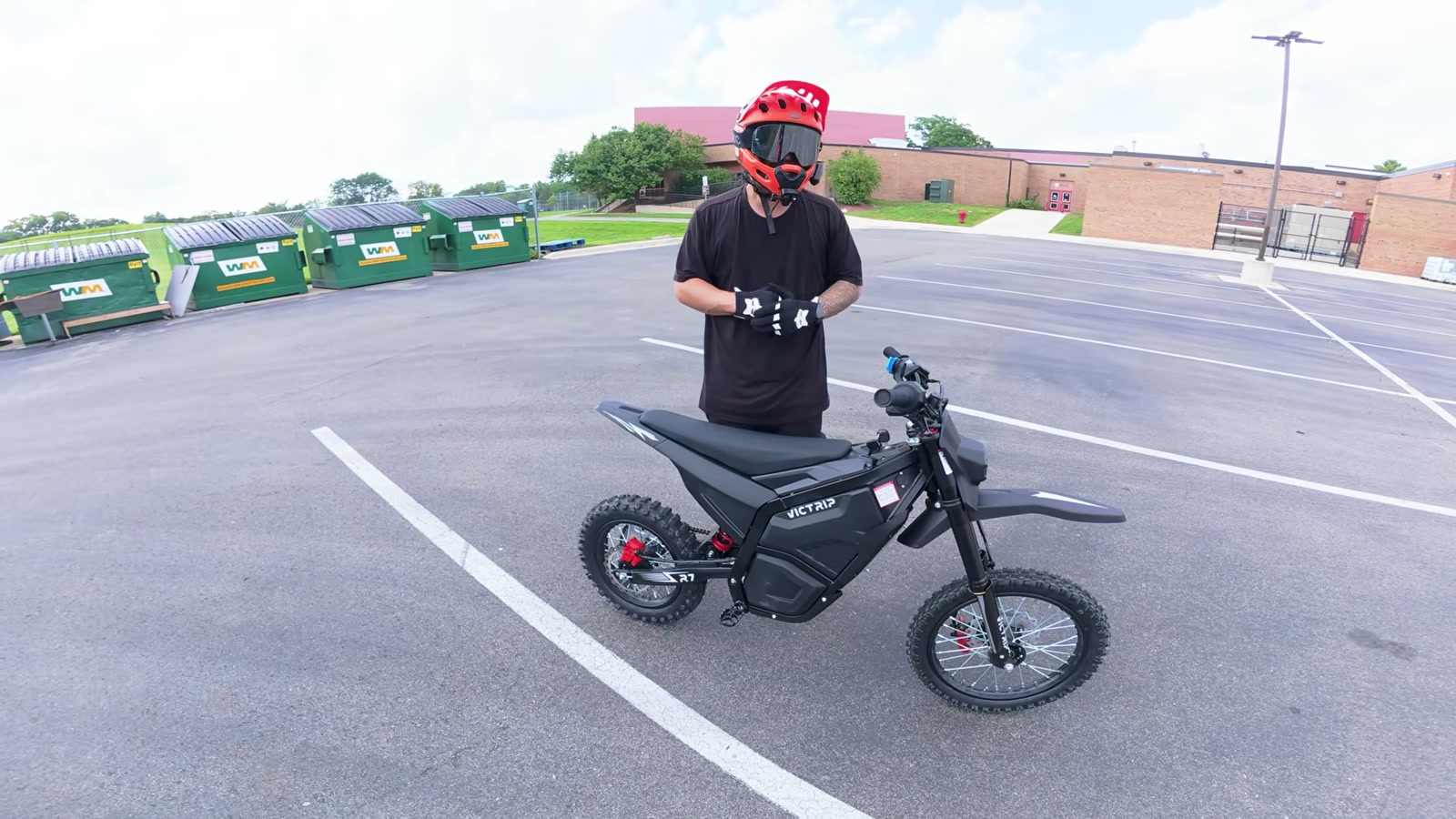
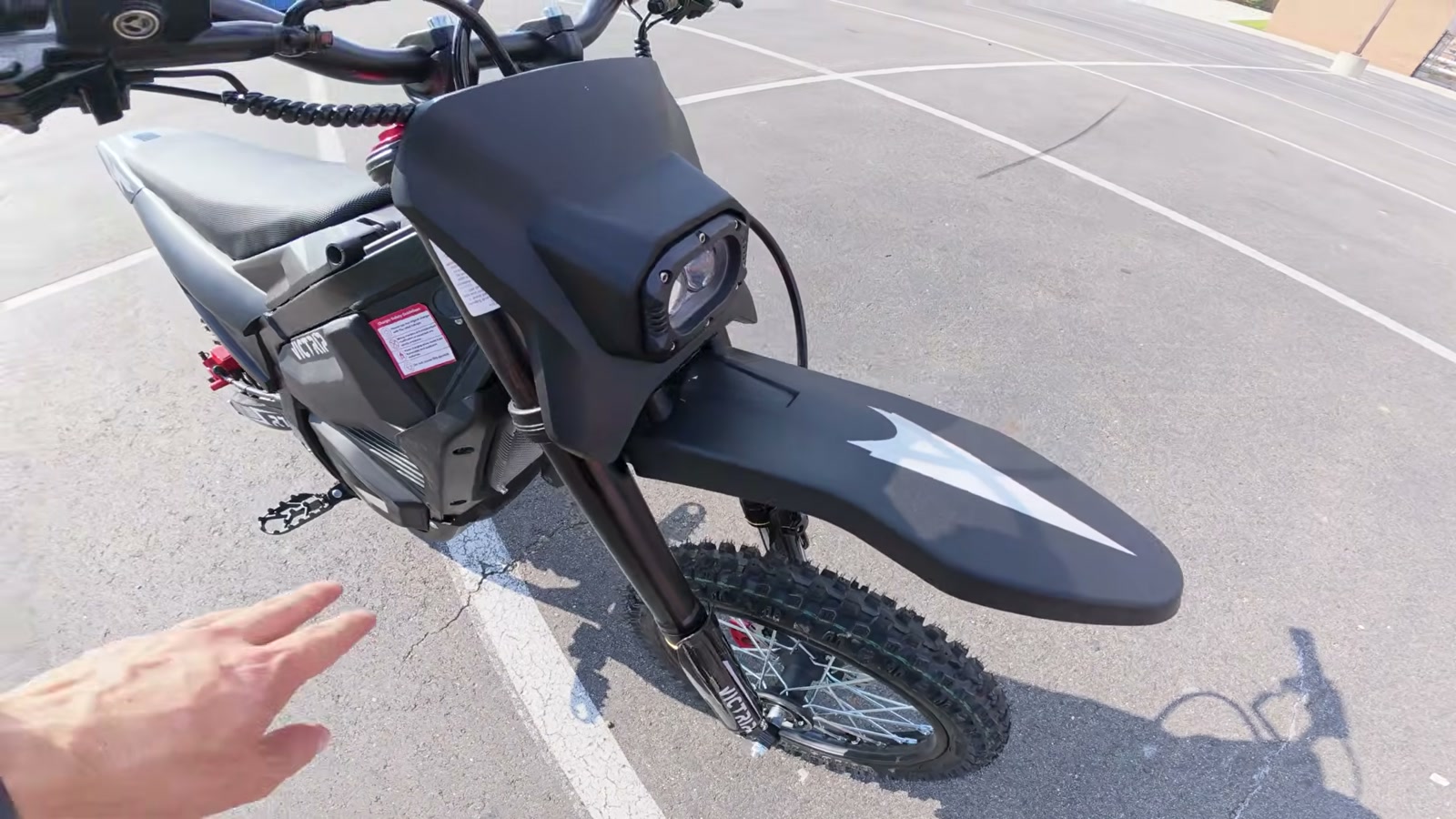
The R7 has that familiar mini dirt bike silhouette: compact frame, moto seat, knobby tires, and plastics that sit tight and flush against the frame. It honestly reminded me of the Yasmo style bikes in the way everything fits together.
Up front there’s an integrated number-plate-style headlight/fairing. It looks cool, and it gives the bike a proper mini-moto vibe, but it’s fixed—you can’t tilt it up or down. I generally prefer a bar-mounted light for adjustability, but purely on looks, this design works.
A couple things jumped out immediately:
It’s heavier than you’d guess by looking at it. The listed weight is 143 lbs, and it feels like it. This isn’t the kind of mini you casually toss around the garage without thinking about storage or transport.
The build has the right dirt-bike basics: hydraulic disc brakes, hydraulic suspension, and a proper mid-drive setup.
Controls and Setup (The Stuff You Touch Every Ride)
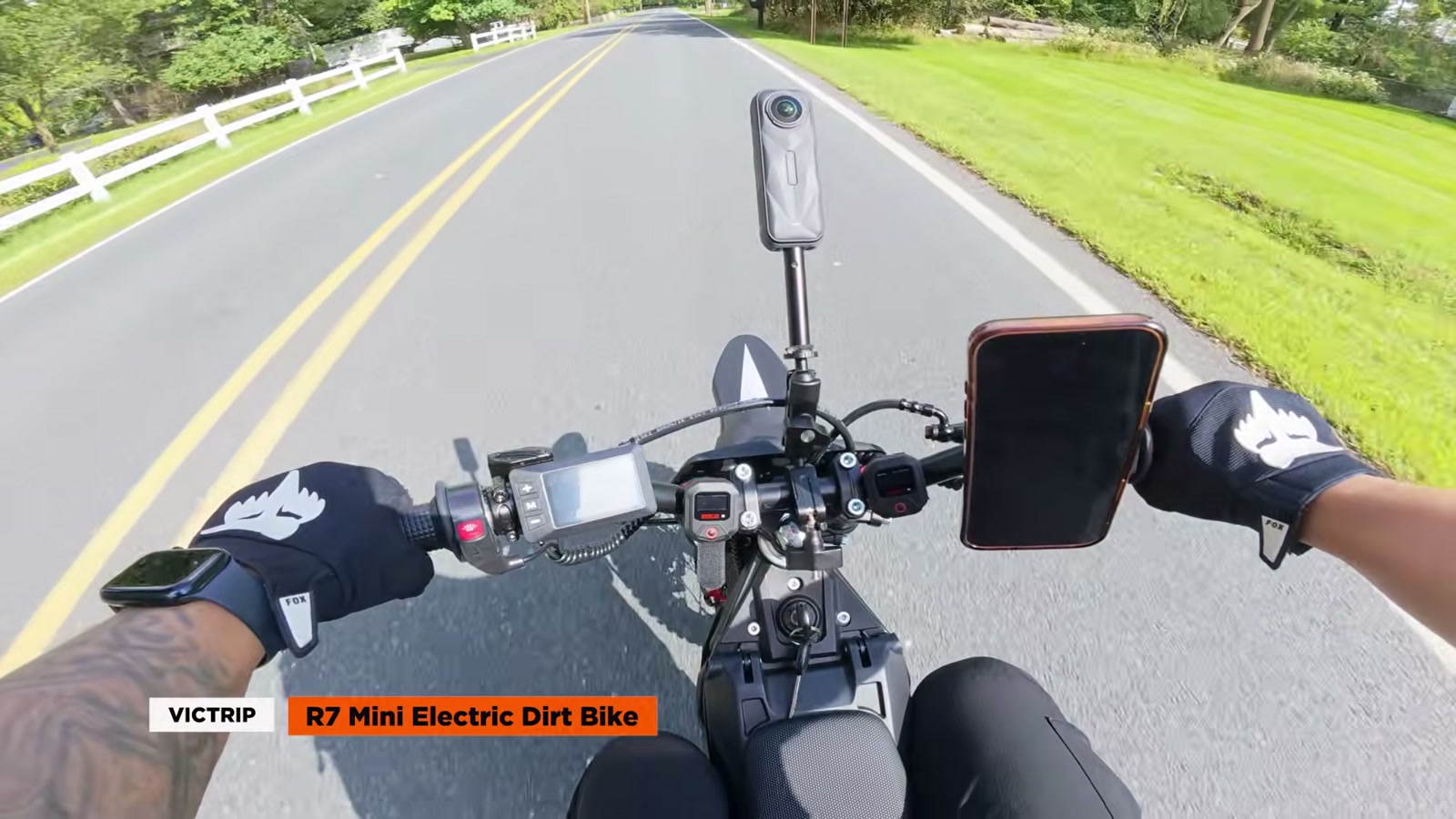
The cockpit is simple.
There’s a small LCD display mounted on the left, and you get three power modes. The throttle is a Sur Ron-style full twist, which fits the character of the bike. If you’re coming from e-bikes with thumb throttles, a full twist can feel “more moto” immediately—especially once you start using it to modulate the front wheel.
One detail I loved: there’s a dedicated headlight switch. On a lot of these minis, lighting feels like an afterthought, so having a real switch is a nice quality-of-life touch.
Charging is easy, too. The charging port is accessible without needing to remove the battery.
Battery removal is possible, but it’s not “grab-and-go.” You unlock the seat area with a key, disconnect the discharge cable, then unbolt the battery plate. So yes, removable—but I’d treat it like something you do occasionally, not something you’ll want to do every day.
The Interesting Part: 60V Power on a Mini
Most mini electric dirt bikes in this category live in 48V land. That’s fine—48V can be fun—but it often feels a little tame when the bike has any real weight to it.
This is where the Victrip R7 gets interesting.
With 60V, the bike feels more responsive, it has more torque on tap, and it holds speed better. On a small-wheel platform, that extra punch is the difference between “toy fun” and “actually rips.”
This R7 uses a mid-drive motor that peaks at 4,000W, and the controller is a Fardriver unit, which is known for being tunable (including via a Bluetooth dongle connection).
I left the tune stock for my riding impressions.
Acceleration and Top Speed Testing
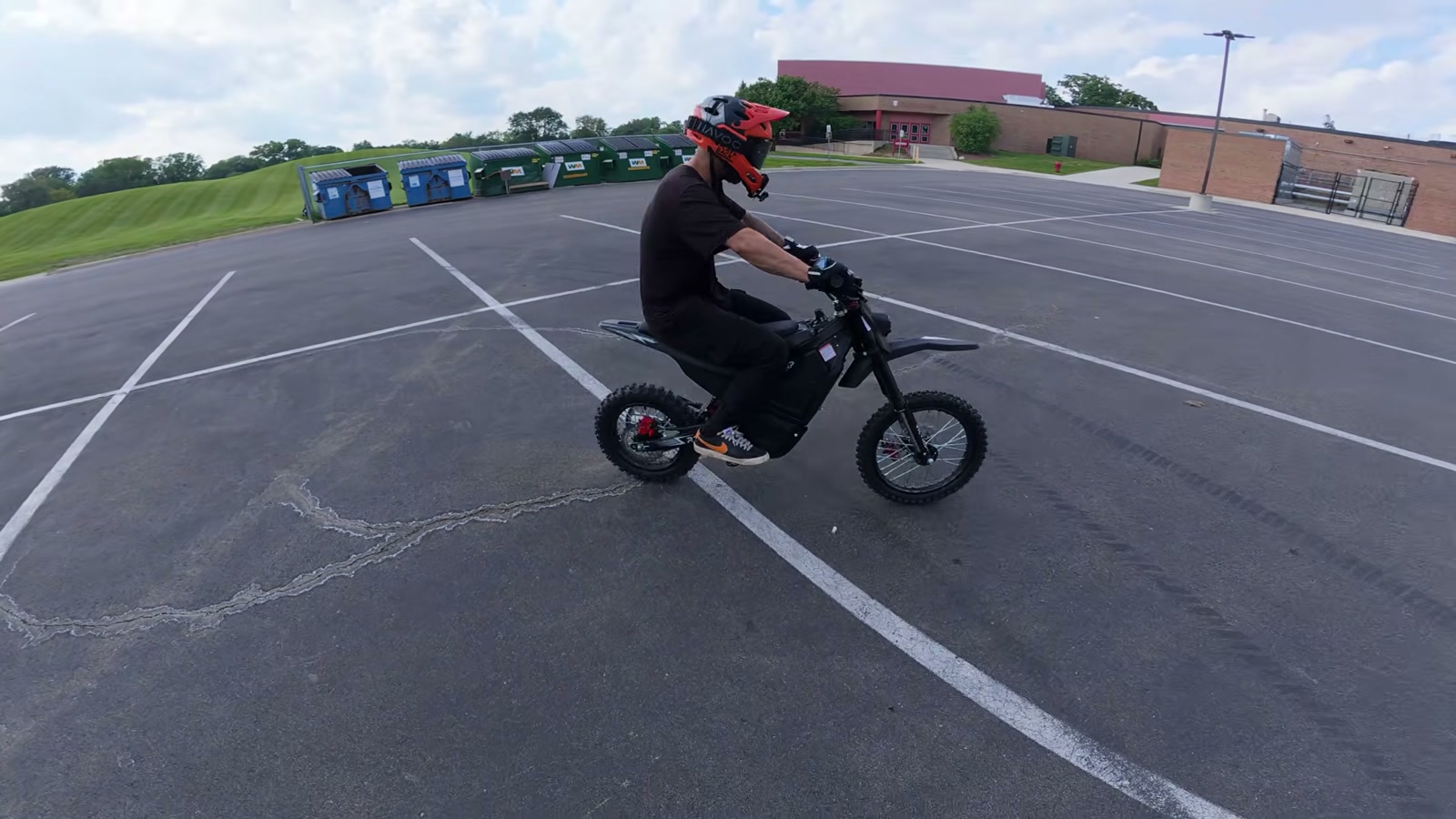
I did a GPS-based top speed run and consistently saw 40 mph.
The bike is listed higher, but real-world testing is what matters, and 40 mph on this form factor is already more than enough to get your attention.
The bigger story isn’t the number—it’s how it gets there.
When I did hard pulls, the acceleration was wild for a mini. The front wheel wanted to come up, and on the highest power mode it takes almost no effort to get it light.
If you’re expecting “mini bike slow,” this isn’t that.
Ride Experience (Where the R7 Really Shines)
Power delivery: three modes that actually make sense
A lot of bikes have modes that feel like minor suggestions. On the R7, the modes are genuinely distinct.
Mode 1 is smooth and manageable. The ramp-up is controlled, and it’s not trying to yank the bars out of your hands. Even so, you still feel that 60V responsiveness.
Mode 2 adds noticeably more torque down low, and the throttle response gets sharper. This is the mode I’d point most riders to as the “everyday fun” setting.
Mode 3 is where it turns into a little wheelie machine. It wants to lift the front end, and if you’re comfortable modulating a twist throttle, you can play with it immediately.
For me, the standout wasn’t just raw power—it was the tune. The way the modes are spaced makes the bike feel approachable, then progressively rowdy as you step up.
Handling and maneuverability
Off-road, the R7 feels easy to place. The smaller tires make it quick to maneuver, and the bike doesn’t feel awkward or unpredictable when you start weaving or changing lines.
I rode it around cones and on uneven ground, and it kept that “point and shoot” vibe these minis are good at—except here it has enough power to keep the fun going when the terrain fights back.
Hill climbs and off-road confidence
I put it up a hill climb and it handled it without drama. No bogging, no feeling like it ran out of breath.
That’s a big deal for real off-road use. Some minis are fine on flat dirt but fall apart once you ask for sustained torque. The 60V setup helps a lot here.
Braking performance
The hydraulic brakes have real bite.
I was able to lock up the wheel, and overall stopping power felt strong. On a bike that can hit 40 mph and wants to wheelie in mode 3, brakes aren’t optional—they’re part of the fun. The R7’s braking feel matched the bike’s performance.
Suspension and comfort
The bike runs hydraulic suspension front and rear.
The rear shock has preload adjustment, and it looks like the kind of setup you could upgrade later if you wanted.
The front fork doesn’t have adjustment, but in general riding it did what I needed it to do.
One comfort nitpick: the seat is that typical moto-style saddle that doesn’t have much grip. If I owned this bike, a grippier seat cover would be one of my first upgrades—especially if you’re doing hard accelerations, braking drills, or any riding where you’re shifting your body position a lot.
Noise: The One Thing You’ll Notice Immediately
The motor/chain noise is louder than I’m used to on this style of bike.
It’s not necessarily a dealbreaker, but it is noticeable while riding. I suspect some of it could be addressed with chain adjustment or general drivetrain tweaking, but out of the box it’s not a “stealthy” mini.
If you ride in areas where keeping a low profile matters, that’s worth thinking about.
Real-World Use Cases
Private property riding
This is where the R7 makes the most sense.
On dirt, on trails, around property, and for general off-road play, it’s a blast. The power modes make it friendly for newer riders, and mode 3 gives experienced riders enough punch to keep it interesting.
Beginners, teens, and adults who want a mini
I see this fitting a wide range of riders:
Beginners can live in mode 1 and learn without the bike constantly trying to wheelie.
Intermediate riders will probably love mode 2.
More advanced riders (or anyone who’s into wheelies) will appreciate how easily mode 3 brings the front end up.
Street riding (the reality check)
This is primarily an off-road machine.
Depending on where you live, riding it on the street may not be legal, and it may attract attention. If you have private land or a legit place to ride off-road, you’ll enjoy it a lot more—and you won’t spend your time worrying about where you can and can’t ride.
What We Like
60V power feels like the sweet spot for a mini electric dirt bike
Three power modes are well tuned: mode 1 is manageable, modes 2 and 3 bring real acceleration
Hits 40 mph in real testing, with hard acceleration getting there
Easy to maneuver off-road and feels confident on hills
Hydraulic brakes have strong stopping power
Things To Consider
Heavy for a mini at 143 lbs, so storage/transport matters
Motor/chain noise is noticeably loud while riding
Designed primarily for off-road use; street legality will vary by location
Stock seat cover is slick and could use a grippier upgrade
Final Thoughts
The Victrip R7 is the rare mini electric dirt bike that feels properly powered. That 60V setup changes the whole personality of the bike: it’s more responsive, it climbs better, it accelerates harder, and it stays fun even once you’re used to the platform.
If you want a mini that’s beginner-friendly but doesn’t get boring after a weekend, this one nails the balance—especially because the three power modes feel thoughtfully spaced.
I’d skip it if you need something lightweight to move around constantly, or if you’re looking for a quiet, low-profile ride. And if your riding plans are mostly on public roads, you’ll want to think hard about local rules before you buy.
But as an off-road-focused mini that genuinely rips? The R7 surprised me—in a good way.