

Cycrown Urban X Review: A Class 3 Commuter E-Bike That Nails the Ride Feel
November 1, 2026
Some links in this article may be affiliate links. If you buy through them, we may earn a small commission at no extra cost to you.
The Cycrown Urban X surprised me in a way a lot of commuter e-bikes don’t: it immediately felt like a regular bike… just faster.
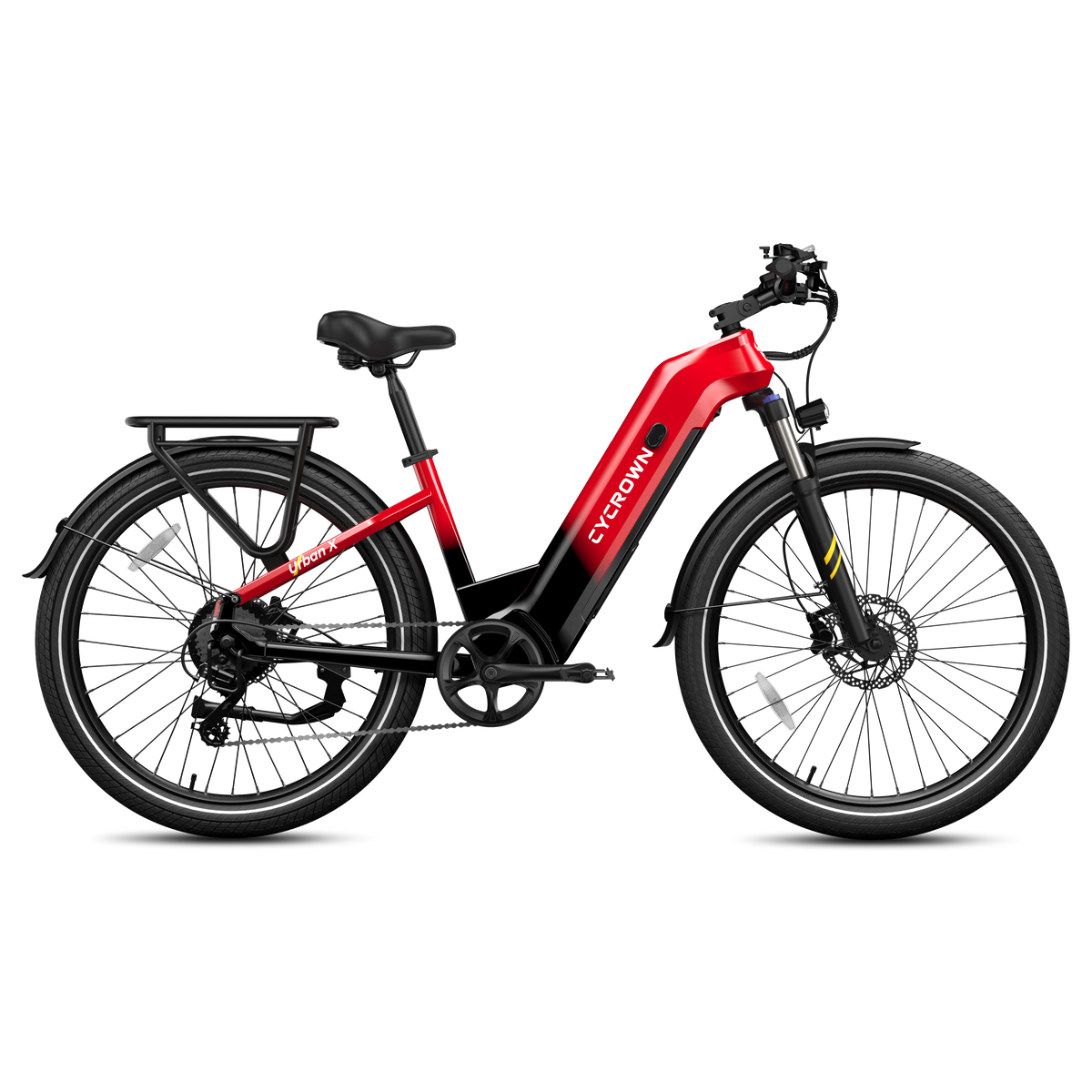
Yes, it’s got the headline stuff—Class 3 speed, a rear hub motor, removable battery, fenders, rack. But the thing that made me want to keep riding it was how natural the pedal assist felt and how easy it was to maneuver. If you ride in a city with decent bike infrastructure (or you wish you did), this one makes a strong case for itself.
I put the Cycrown Urban X through real-world riding: acceleration, GPS top speed, brake feel, and even some “probably not what it was designed for” grass/off-road runs. Here’s how it went.
First impressions: a commuter that actually looks cool
Most commuter e-bikes play it safe visually. The Urban X doesn’t.
The first thing that hit me was the colorway: black dissolving into red with a gradient that looks genuinely sharp in person. It’s the kind of finish that makes the bike feel a little more premium than you’d expect at a glance.
It’s also clearly built with everyday riding in mind:
Step-through frame that makes mounting and dismounting easy
Integrated rear rack
Integrated rear fender
Narrower, street-focused tires (27.5 x 2.4)
A saddle that drops low enough that shorter riders (like me) can get comfortable quickly
The frame is aluminum alloy, and the bike weighed in around 66 pounds. That’s not “carry-it-up-three-flights” light, but for a Class 3 commuter it felt manageable. I wouldn’t call it featherweight, but it wasn’t a chore to handle, and that matters a lot when you’re weaving through bike racks, doors, tight storage spaces, or cramped garages.
Controls and cockpit: one great idea, one weird one
There are a couple of design decisions here that stood out immediately.
First, the display is integrated into the frame (right on the top tube area). It looks clean and unique—almost stealthy.
But in use? It’s not my favorite.
It’s not very bright, and because it’s mounted on the frame instead of up on the bars, I had to look down farther than I want to when I’m riding. On a sunny day, it can be tough to read, and I’m always going to prefer a display that’s both brighter and closer to my natural line of sight.
The second standout is the throttle: it’s a left-hand thumb throttle. Personally, I’m just not a fan of that style—especially on the left. The good news is I didn’t feel like I needed the throttle much anyway (more on that in a second). Still, if you’re someone who relies on throttle a lot in traffic, this setup might be a dealbreaker.
On the plus side, the bike uses a Shimano 7-speed drivetrain, and the grips are comfortable. The bars are a standard flat, mountain-bike style setup, and there’s an adjustable stem so you can change the angle and dial in fit.
Pedal assist that feels “right”
This is the core of the Urban X experience.
I started in pedal assist level 1 and worked my way up through all five levels. What I noticed right away was how quickly and smoothly assist came in—after about one pedal revolution, it kicks on in a way that didn’t feel jerky or unpredictable.
Levels 1 and 2 felt natural and easygoing, like they’re meant for casual cruising or conserving battery.
As I moved up to levels 3 and 4, I got a noticeable bump in power, but it wasn’t abrupt. The spacing between assist levels felt well tuned—subtle where it should be, stronger where it needs to be. That’s a bigger deal than it sounds, because poorly tuned assist can make a commuter e-bike feel “digital” and annoying, especially in stop-and-go riding.
Then there’s level 5, which is where the Urban X stretches its legs.
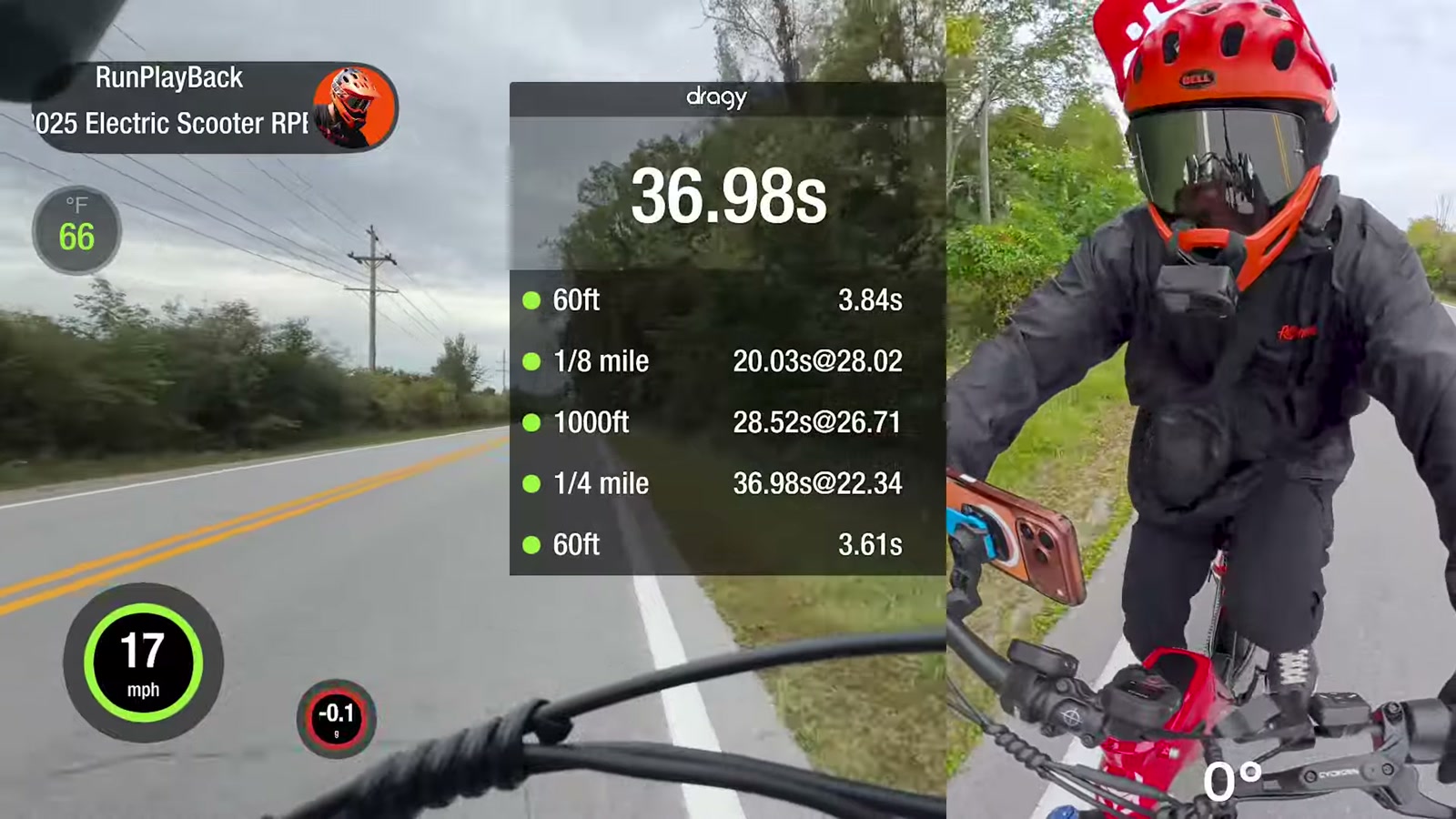
Class 3 speed: I hit about 28 mph (pedal assist only)
In my testing, I reached right around 28 mph at the top end.
One important detail: to reach top speed, it’s pedal assist only. You can’t just pin the throttle and expect it to take you all the way there. That’s very much in line with how Class 3 e-bikes are typically intended to work.
What surprised me is that I didn’t mind.
Because the pedal assist felt so well calibrated, I wasn’t sitting there wishing I could “cheat” with throttle the whole time. The bike rewarded pedaling with speed in a way that made it feel like riding, not operating.
Handling: easy to maneuver, doesn’t feel like a tank
Even though it’s around 66 pounds, the Urban X felt light on its feet. The step-through frame and overall geometry made it easy to maneuver, and at lower speeds it didn’t have that “heavy e-bike flop” some bikes get when you’re making quick corrections.
That matters for commuting.
You’re not always cruising in a straight line. You’re dodging potholes, threading through bike-lane debris, slowing for intersections, and navigating around pedestrians. The Urban X felt intuitive in those moments.
Braking: strong, confidence-inspiring
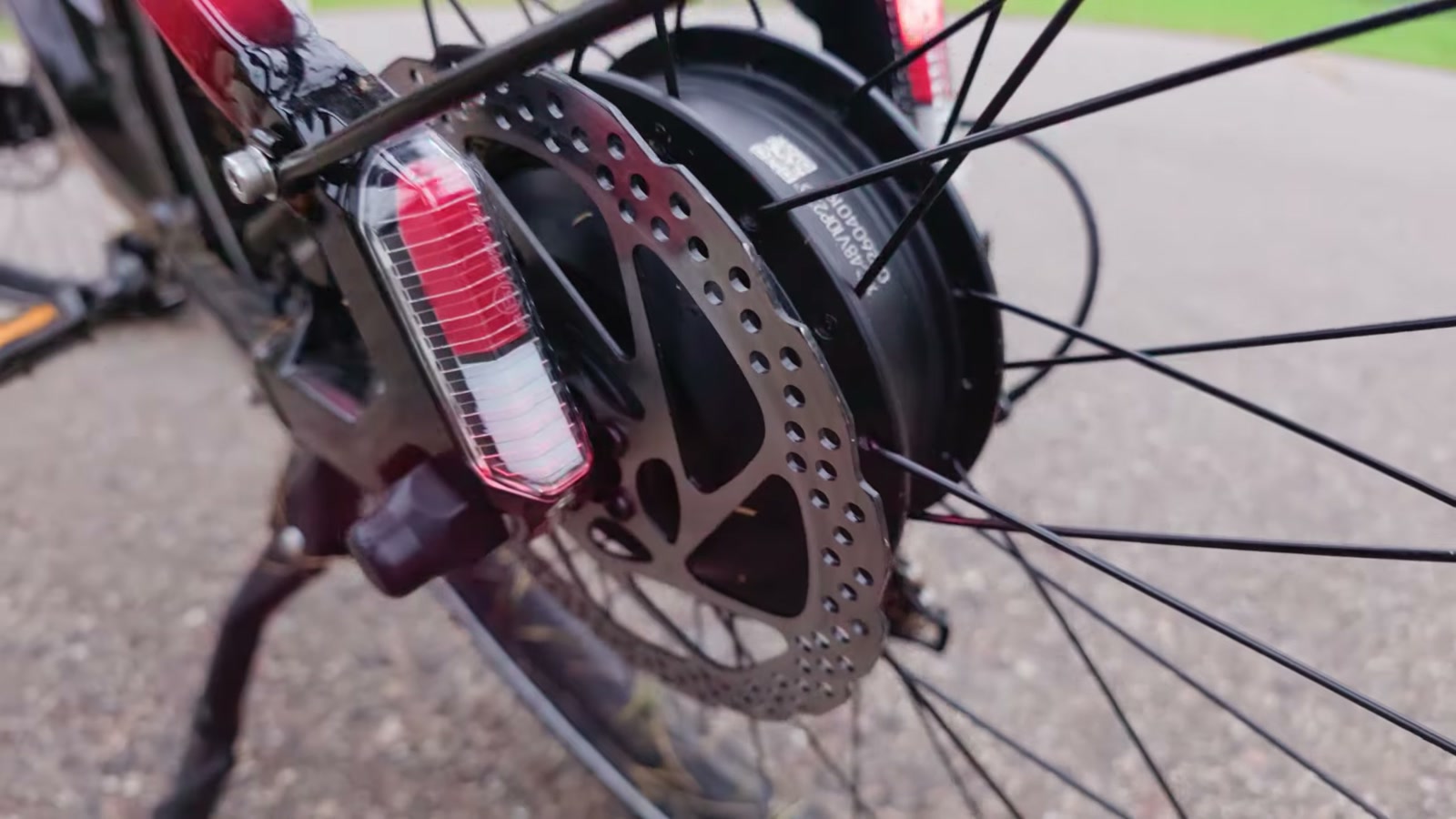
The Urban X uses hydraulic disc brakes, and in my brake testing they felt strong.
It’s the kind of braking that makes you comfortable riding at Class 3 speeds. When you’re moving at close to 28 mph, brakes aren’t a “nice to have” feature—they’re a core safety requirement. These did the job.

Comfort: great on pavement, rough off-road
This is where the Urban X shows its commuter roots.
Up front there’s a suspension fork with lockout and preload adjustment. On pavement, it’s fine—helpful for smoothing out smaller chatter.
But once I took the bike onto grass and rougher terrain, the story changed.
The bike is a hardtail with no rear suspension, and you feel that immediately. Over bumps, it got uncomfortable fast. The fork helped a little, but it wasn’t soaking up bigger hits in a meaningful way.
To be fair, this isn’t marketed as a trail bike. The tires are street-tread, and the overall setup screams “commuter.”
So here’s the practical takeaway: if your commute is pavement, bike paths, and typical city streets, the Urban X makes sense. If your daily route includes broken-up trails, rough unpaved shortcuts, or you want something for real off-road exploring, you’ll want something with more suspension (or at least a different design focus).
Hill climbing: it can do it, but you’ll work a bit
I pointed the Urban X at a steep hill and it made it up. The bike has enough power to climb, but it wasn’t a “sit back and do nothing” situation. I still had to put in effort.
That’s not necessarily a bad thing—especially for a commuter e-bike where efficiency and natural feel matter. Just know that if you live in a very hilly area and want effortless climbing without thinking about gears or cadence, your expectations should be realistic.

The commuter features that actually matter day to day
This is one of the strongest parts of the Cycrown Urban X package.
The bike comes with practical features that I’d normally end up adding myself:
Rear rack and utility-ready frame
There’s an integrated rear rack that makes the bike instantly useful for errands and daily carry. I also noticed mounting points up front that look like they’re meant for a front basket.
For commuting, that’s the difference between “fun ride” and “car replacement.”
Lighting done right: bright headlight, brake lights, and turn signals
The headlight is surprisingly bright. It’s not an afterthought.
Out back, the Urban X has separate left and right rear lights that function as tail lights and get brighter when braking. Even better: you get rear turn signals.
And the way the rear lighting is designed, it’s visible not just from behind but also from the side, which is exactly what you want when you’re crossing intersections at night.
No front turn signals, but between the headlight and the rear signal system, it’s a solid commuter lighting setup right out of the box.
Real-world use cases: who the Urban X is for
After riding it, the Cycrown Urban X feels most at home doing three things:
City commuting
This is the obvious win. The bike’s smooth pedal assist, maneuverability, and Class 3 speed make it a strong choice for keeping up with traffic flow where bike lanes exist.
Errands and utility riding
The rear rack and commuter-ready setup make it easy to run around town—especially if you add a basket or bag setup.
Recreational rides on pavement
If you just want something comfortable and quick for paved paths, neighborhoods, and casual long rides, it fits.
Where I wouldn’t prioritize it: rough off-road or anything where rear suspension is a must.
What We Like
Smooth, natural pedal assist with five well-tuned levels
Real-world top speed around 28 mph (Class 3 behavior)
Easy to maneuver for a 66-pound e-bike
Step-through frame is comfortable and accessible for a wide range of riders
Practical commuter setup: rear rack, bright headlight, brake lights, and rear turn signals
Things To Consider
No rear suspension makes rough terrain uncomfortable
Front fork doesn’t absorb bigger bumps particularly well
Frame-integrated display is dim and requires looking down while riding
Left-hand thumb throttle isn’t my favorite design choice
Final thoughts
The Cycrown Urban X feels like it was designed by someone who actually cares about the riding experience—not just checking boxes on a spec sheet.
For commuting, the biggest win is the pedal assist tuning. It’s smooth, predictable, and genuinely enjoyable, and that’s what makes the bike feel “right” in daily use. Add in the Class 3 speed, solid braking, useful rack, and a lighting system that includes rear turn signals, and you’ve got a commuter that’s ready to work the day you unbox it.
I’d recommend the Urban X to riders who want a street-focused commuter e-bike that feels natural, moves quickly, and includes the safety/utility features people actually use.
I’d skip it if your riding is mostly rough terrain, you need rear suspension for comfort, or you strongly prefer a brighter, handlebar-mounted display and a more traditional throttle setup.