
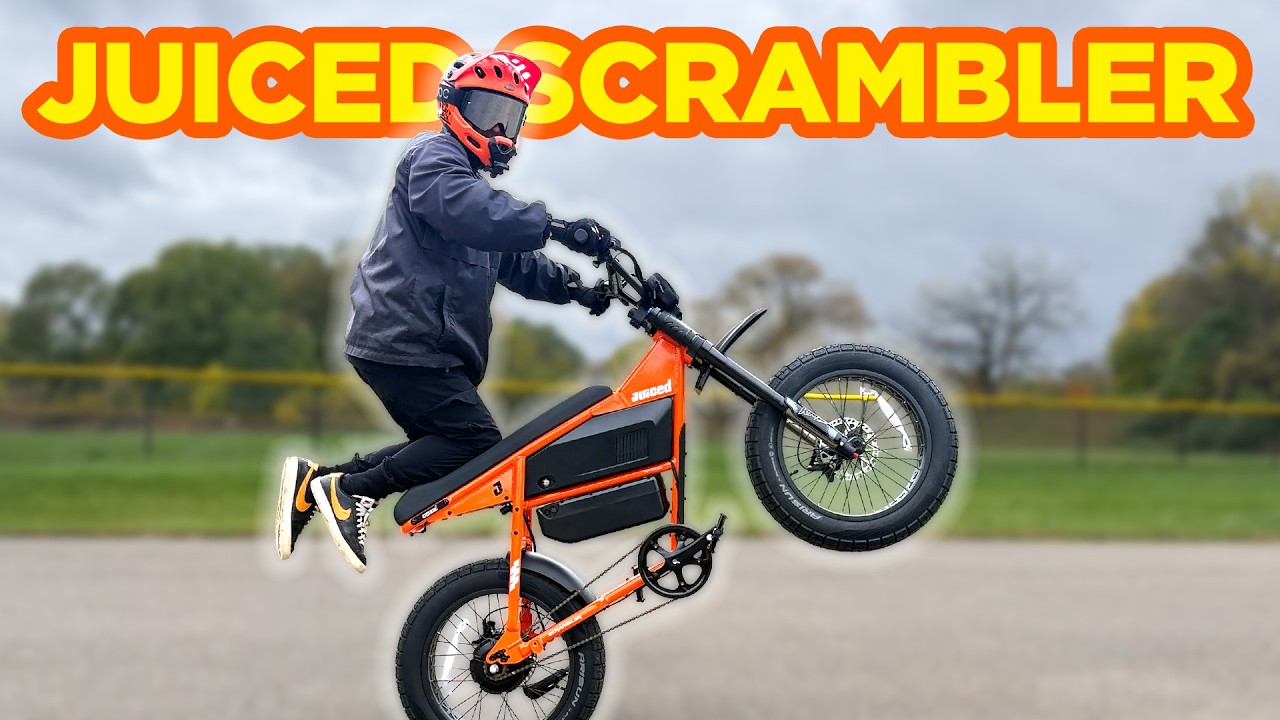
Juiced Scrambler Hardtail Dual Battery Review: A Moped-Style E-Bike That’s Shockingly Comfortable
October 30, 2026
Some links in this article may be affiliate links. If you buy through them, we may earn a small commission at no extra cost to you.
The Juiced Scrambler Hardtail Dual Battery is the kind of e-bike that instantly triggers nostalgia if you’ve spent any time around moped-style builds. The silhouette screams classic scrambler—Super73 vibes for sure—but the details feel more modern and, honestly, more premium than I expected.
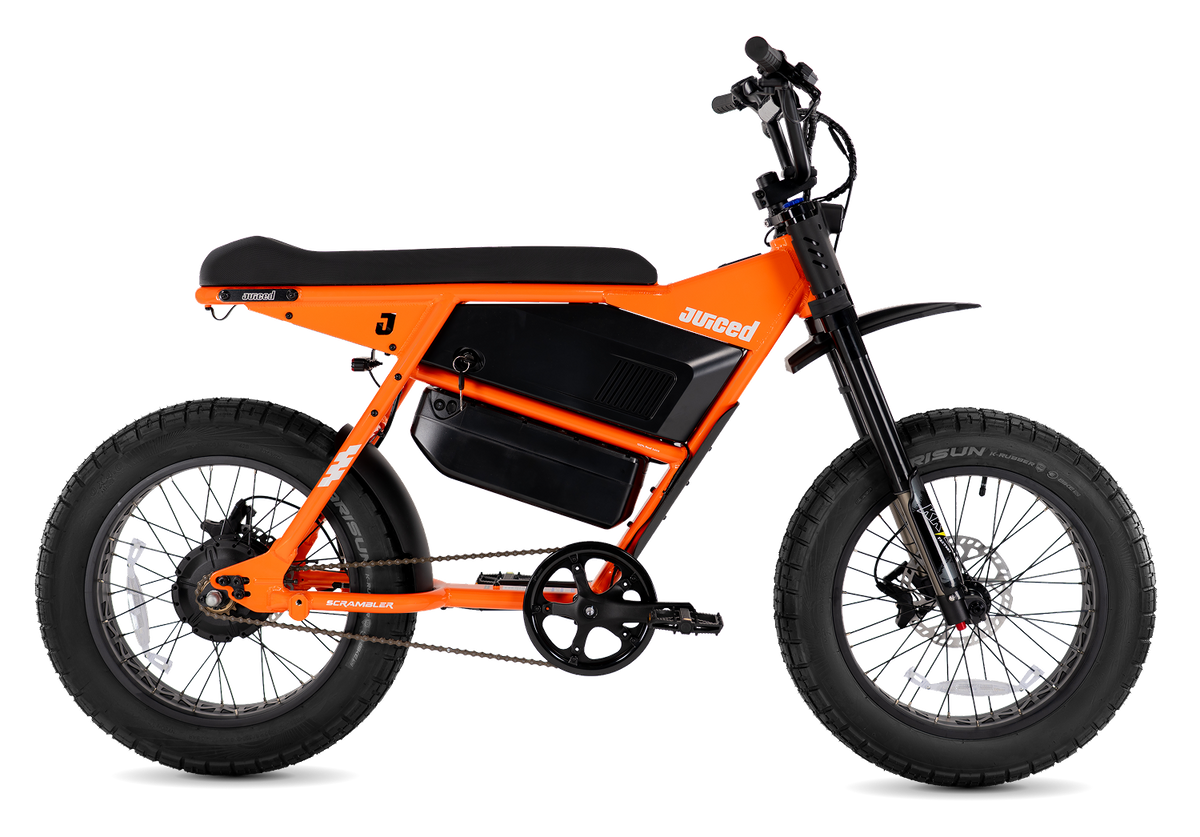
And here’s the twist: even though this is a hardtail (no rear suspension), it ended up being one of the most comfortable moped-style e-bikes I’ve ridden in a while. Comfortable enough that it genuinely changed how I think about whether full suspension is “mandatory” on this category of bike.
First impressions: premium touches in a familiar package
The first thing that hit me was the colorway. I’m partial to orange, so this one was always going to have a head start with me, but Juiced did a really thoughtful job with the accents. It stands out without looking like a toy.
Assembly and packaging also felt dialed. Everything about the presentation gave me that “this is a refined product” impression right out of the gate.
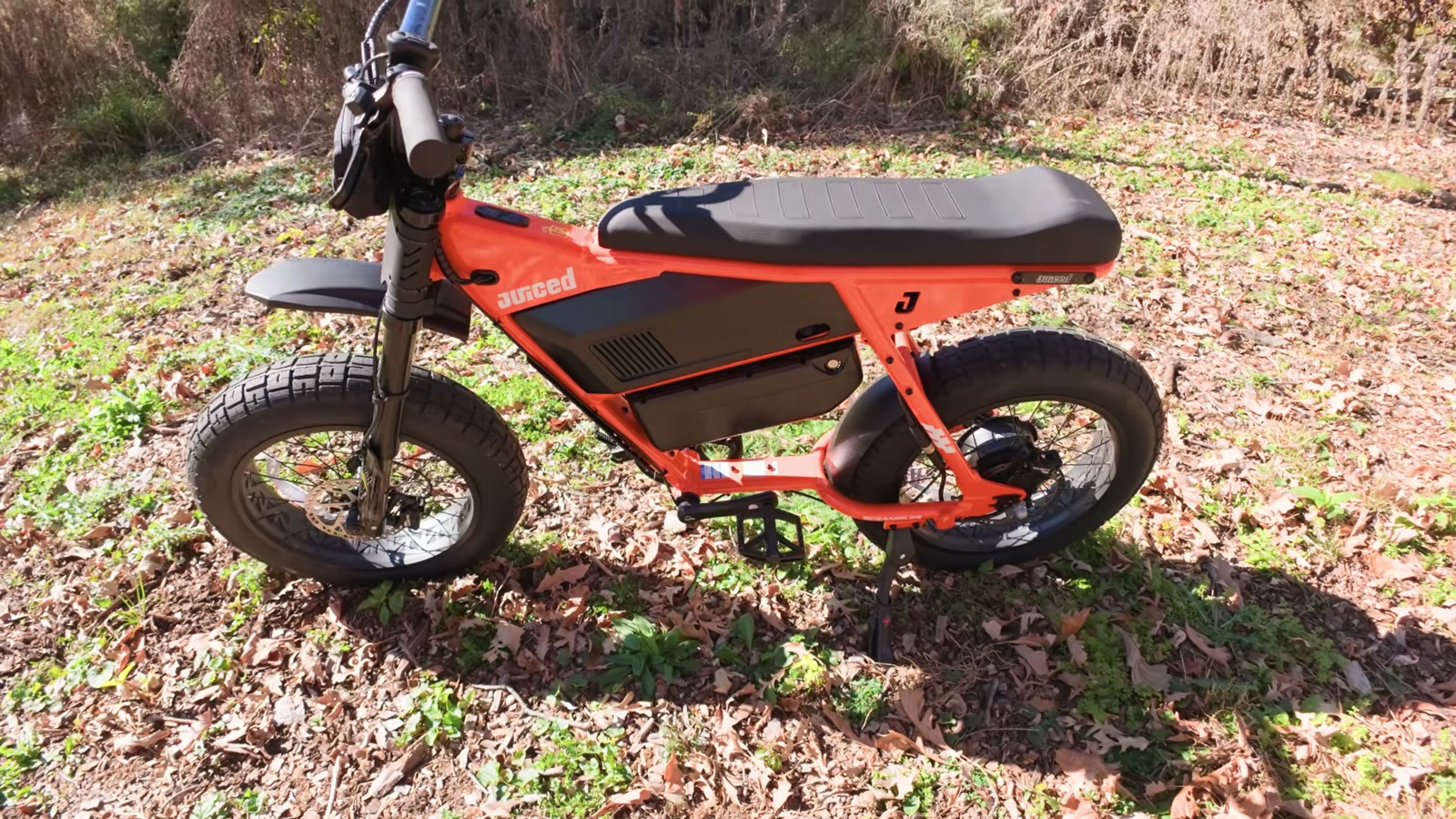
Up close, the frame has small details that make it feel less generic—like the cutout Juiced logo and the way the display is integrated into the frame instead of bolted on as an afterthought.
The moped seat is the sleeper feature
I didn’t expect the seat to be one of my favorite parts of this bike, but it absolutely is.
The saddle is wide, supportive, and—this is the big one—grippy. A lot of moped-style seats look cool but feel slick, so you end up sliding around when you brake or accelerate. Here, I felt planted. There’s also a little rear hump that helps keep you in place when you get on the power.
And there’s real estate back there. If you want to add a passenger seat setup, there’s room for it.
Fit and getting rolling
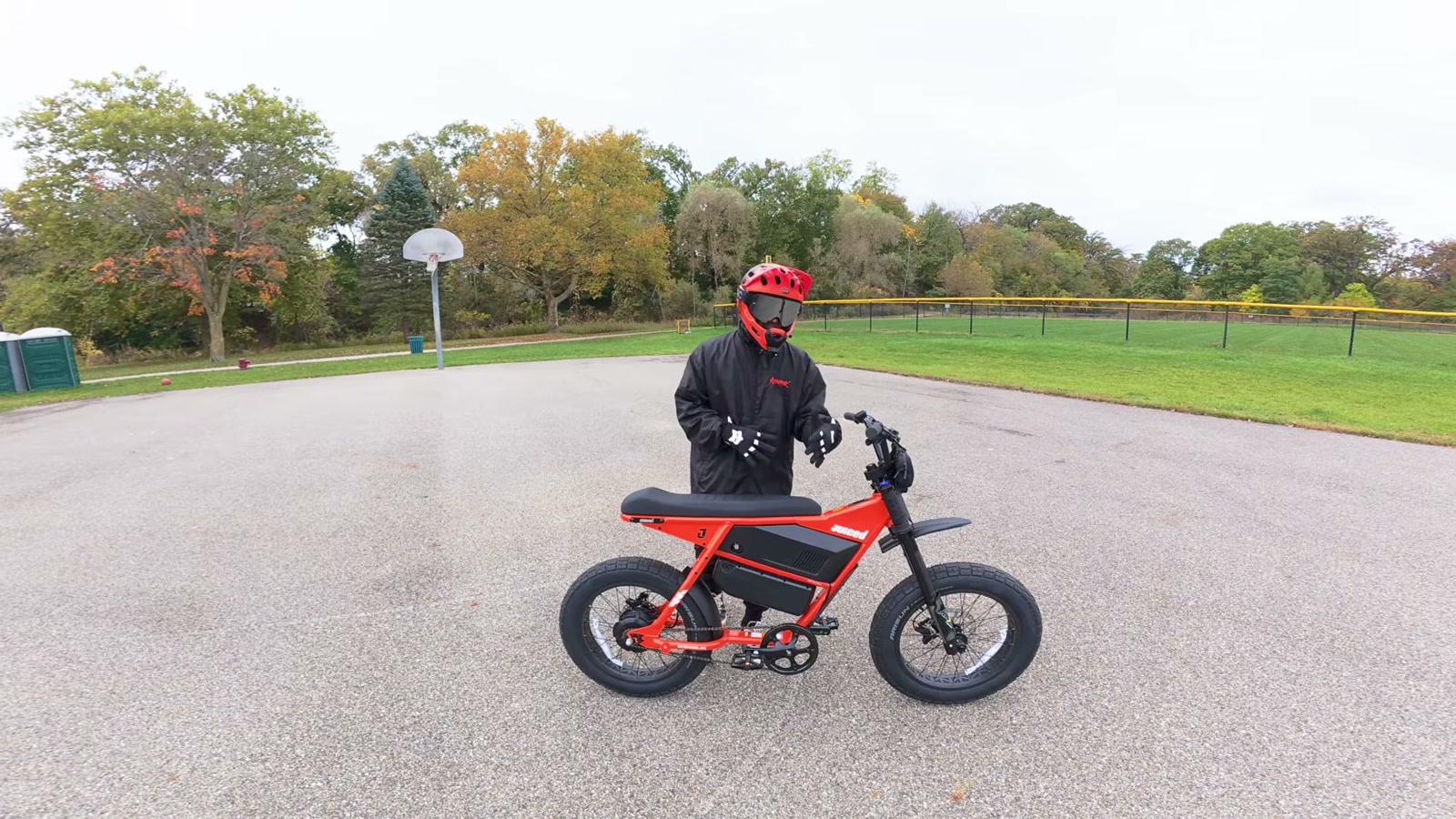
For reference, my inseam is about 30 inches, and I’m a shorter rider. I couldn’t quite flat-foot it, but it never felt unmanageable. I could comfortably do the “one foot down, one foot on the pedal” approach at stops.
Despite the bike’s heft (it’s around 83 pounds), it didn’t feel awkward once I was moving. Weight distribution feels centered, and that matters a lot on these longer, heavier, moped-style frames.
Power delivery: a lot of low-end, especially in pedal assist
This bike runs a 52V dual-battery setup, and the character of the power feels very “52V” in the best way—strong low-end shove and a smooth ramp when you get into it.
What surprised me most was how punchy it felt even at low assist.
Pedal assist levels feel aggressive early on
In pedal assist level 1, the tune felt high. I was getting a strong hit of low-end torque right away. It’s fun, but it’s also something to respect if you’re riding around pedestrians, maneuvering on tight paths, or trying to creep through a crowded bike lane.
Level 2 brought more mid-range and top-end support.
Level 3 felt like the sweet spot for normal riding—quick off the line, easy to steer, and strong enough to mix with slower city traffic without feeling like I’m the rolling obstacle.
Level 4 is where it wants to party: maximum torque, maximum push, and (with the bike set up for Class 3 behavior) the top end gets you into that “this feels like a small motorbike” territory.
Throttle response: immediate, smooth, and predictable
When I used the throttle, there was basically no delay. Pressing it down gave me instant response, and the ramp-up felt smooth rather than jerky.
One interesting note from my acceleration testing: pedal assist felt like it delivered better acceleration than throttle-only. Throttle wasn’t bad—it just felt a touch softer off the line compared to what the pedal assist tune was giving me.
Real-world speed: what I actually saw
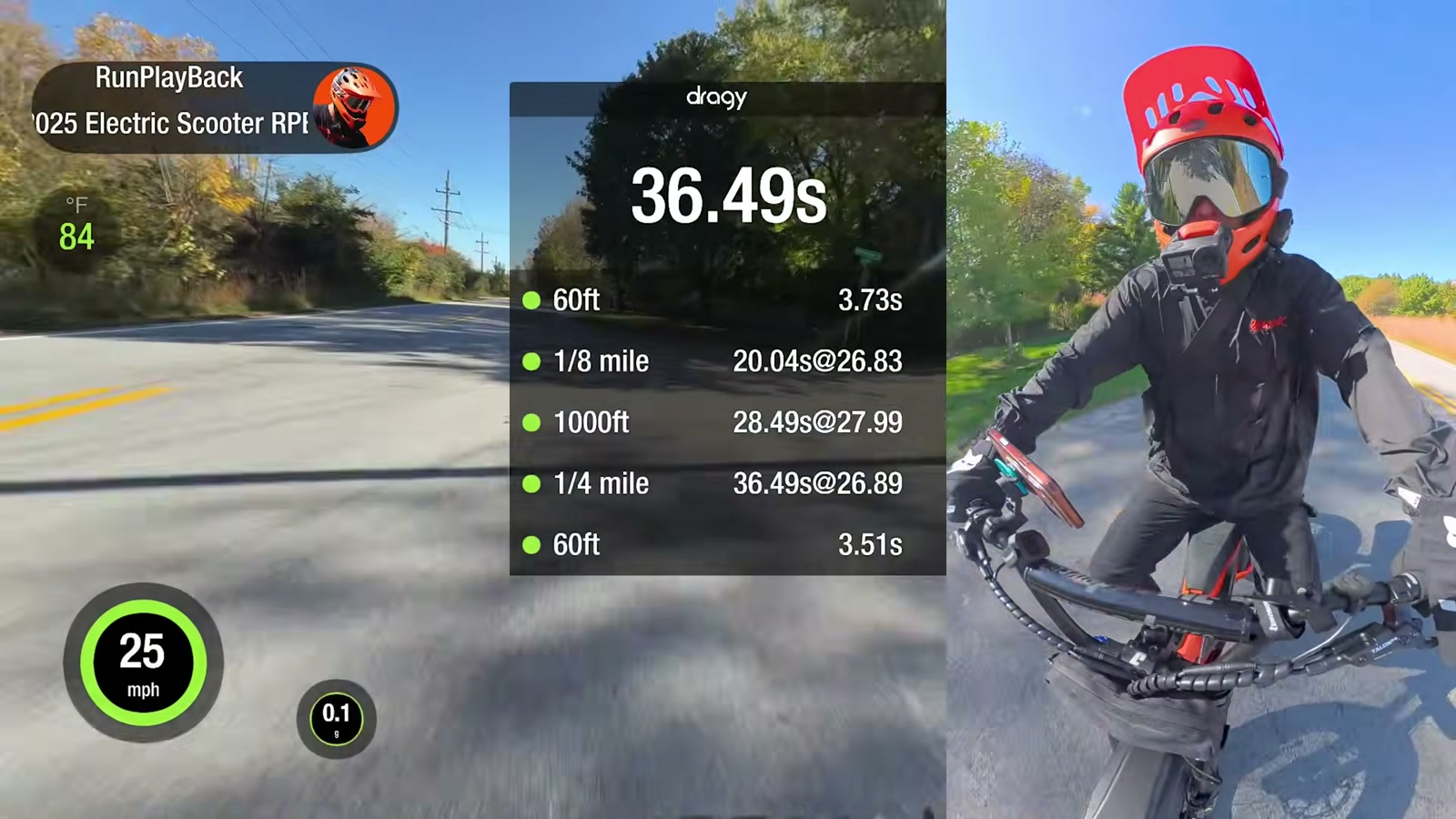
I tested top speed and consistently saw about 27 mph on the display and on my GPS-based testing.
At that speed, I was ghost pedaling, which leads right into one of the most important “know before you buy” points on this bike.
Single-speed life: fun, simple… and you’ll ghost pedal
The Scrambler Hardtail Dual Battery is a single-speed.
That’s not automatically a dealbreaker for this category—lots of moped-style e-bikes do it—but you need to be honest about what you want out of pedaling.
At higher speeds, pedaling becomes symbolic. You’re going to spin out and ghost pedal, especially when you’re near the top end. For some riders, that’s totally fine because the point of this bike is throttle + assist cruising. For others (especially anyone who wants meaningful pedaling at 25–28 mph), it’s something to think hard about.
Comfort and ride feel: the hardtail that didn’t beat me up
Going in, I assumed the hardtail would feel like a compromise.
Then I rode it on grass and light off-road sections and… it didn’t.
I kept expecting the rear to feel harsh, but between the fat tires and the seat, it stayed surprisingly composed. I could absolutely feel bumps (it’s still a hardtail), but it never crossed into “this is miserable” territory.
The front fork does real work
Up front you get an inverted suspension fork with 140mm of travel, and it felt genuinely effective. The front end was doing a lot of the heavy lifting in smoothing out chatter and absorbing impacts.
On rougher patches, the fork plus the tires made the bike feel more controlled than I expected, especially considering the rear is rigid.
Fat tires are part of the suspension package
This bike rolls on 20x4-inch fat tires with a dual-sport tread that leans more street than dirt. That combo makes sense for how most people will ride this: pavement first, with the ability to cut across grass, hardpack, or rough paths when you want.
They also play a big role in why the bike feels so comfortable despite having no rear suspension.
Handling: easy to maneuver, even with the weight
For a bigger, heavier moped-style e-bike, it felt surprisingly easy to steer and place where I wanted.
Even in higher assist levels—where that low-end torque can make bikes feel a little “twitchy” if the tune is off—the Scrambler stayed manageable. The power-to-weight feel is dialed enough that it doesn’t come across as sloppy or unpredictable.
Off-road and hills: better than expected
I pushed it onto grass and up a steep hill, and it climbed without drama as long as I approached it the right way: gather some speed, add pedaling, and roll into full throttle.
Torque feels strong, and the bike didn’t rattle my teeth the way I assumed a hardtail scrambler would on uneven terrain. I was legitimately impressed by how planted it felt.
Would I pick full suspension if I planned to ride rough terrain regularly? Yes.
But for light off-road, shortcuts, parks, and “imperfect city” surfaces, this hardtail setup worked way better than I expected.
Braking: confident, easy to lock up when you need it
The bike uses four-piston hydraulic brakes, and the stopping power felt right for something that can cruise at high 20s with a heavy chassis.
When I tested braking, the bike had no problem scrubbing speed quickly, and the brakes were strong enough to lock the wheels when pushed—exactly what I want available on a bike with this kind of power and weight.
Features that actually matter day-to-day
A few things stood out because they impact real riding, not just spec sheet appeal.
Integrated frame display
The display being built into the frame is a great touch. It’s compact, easy to read, and doesn’t look like an afterthought bolted to the bars.
I also like that you can get into settings to adjust things like brightness, tire size, and speed/class behavior.
Dual batteries (and smart weight placement)
The dual-battery setup is a big part of what makes this Scrambler interesting. Both batteries are removable. The lower one is quick to pull, while the top one seems like it could be trickier—realistically, you may need to deal with the saddle to access it.
What I liked most was how the weight feels distributed. With batteries positioned up top and low on the frame, it keeps mass centered around the bottom bracket area, so it doesn’t feel awkwardly front-heavy or rear-heavy.
Lights and turn signals
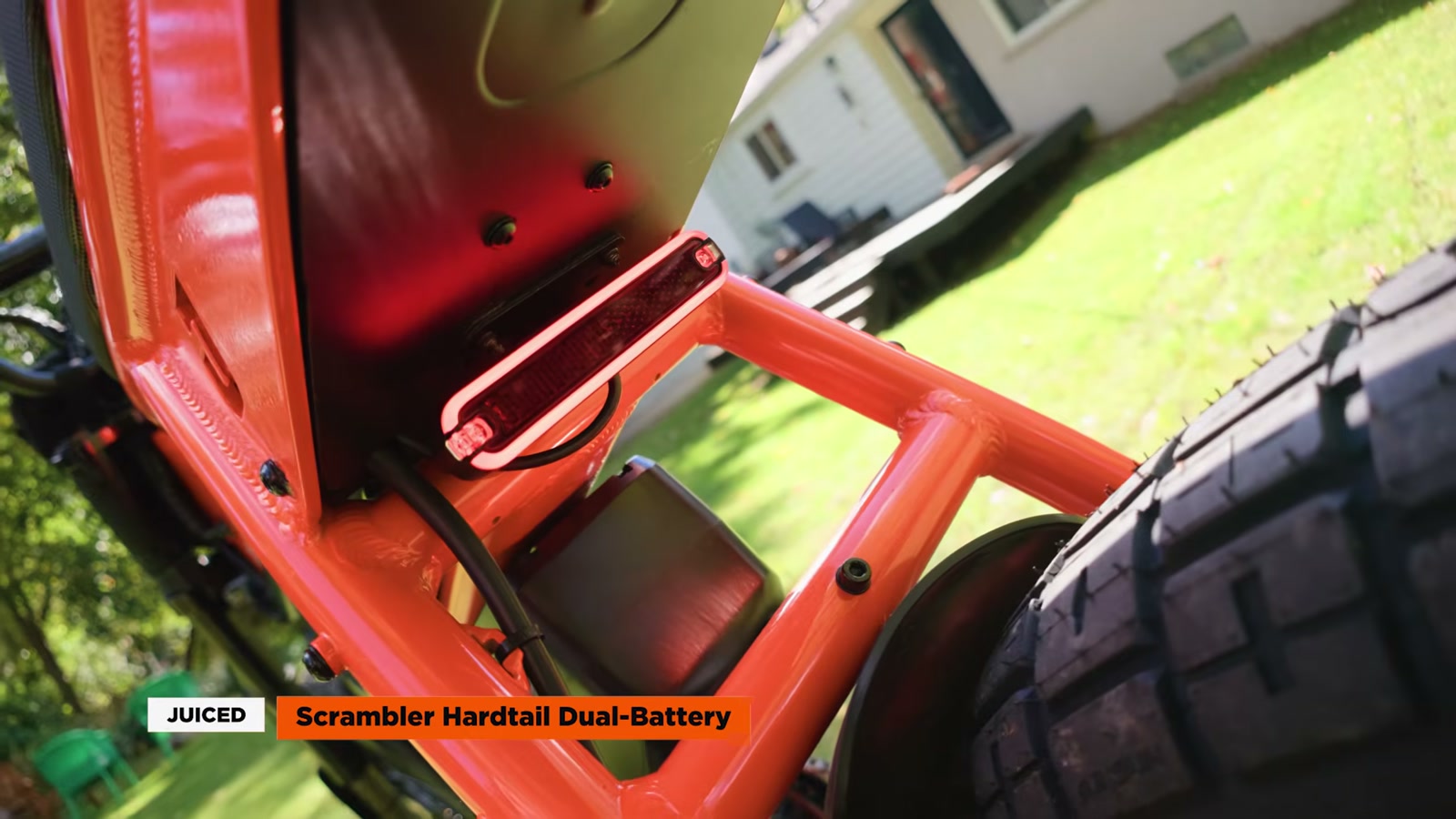
The tail light includes turn signals and brake light functionality, which is the kind of feature I appreciate more the more I ride in real traffic.
Up front, the headlight is small but bright. My main nitpick: I couldn’t tilt it up or down, so you’re stuck with the stock aim.
Mounting points for accessories
There are mounting points on the frame that look like they’re intended for accessories—potentially a rear rack, and possibly passenger peg setups.
That’s important on a bike like this because a lot of riders buy scrambler-style e-bikes and then immediately want to add utility.
What We Like
Surprisingly comfortable ride quality for a hardtail
Grippy, supportive saddle that keeps you planted
Strong low-end torque, especially in pedal assist
Throttle response feels immediate and smooth
Integrated frame display looks clean and is easy to read
Confident four-piston hydraulic braking
Dual-battery setup should translate to real range for everyday riding
Things To Consider
Single-speed drivetrain means ghost pedaling at higher speeds
If you plan to ride rough terrain often, rear suspension will still be a big upgrade
Thumb throttle works fine, but I’d personally prefer a full twist throttle on a bike like this
The bike is heavy (around 83 lb), which matters for carrying upstairs or loading into a vehicle
Headlight aim isn’t adjustable
Final Thoughts
The Juiced Scrambler Hardtail Dual Battery feels like a new take on a classic moped-style e-bike—familiar silhouette, but with more polish and better real-world comfort than I expected.
If you want a scrambler that feels premium, has strong power delivery, and can genuinely handle everyday roads (plus a little grass and light off-road exploring), this bike makes a strong case for itself. It’s also an easy recommendation for commuting where you want something that can keep pace with slower traffic and feel stable doing it.
I’d skip the hardtail version only if your riding is consistently rough—trail chatter, pothole-heavy routes, or you just know you want to push off-road harder. In that case, rear suspension will still be worth it.
But if your riding is mostly streets, bike paths, and the occasional shortcut across imperfect terrain, the Scrambler Hardtail surprised me in the best way: it rides way more comfortably than it has any right to.