

Freego Maxx M3 Review: A Mini Electric Bike With Surprisingly Big Torque
October 18, 2026
Some links in this article may be affiliate links. If you buy through them, we may earn a small commission at no extra cost to you.
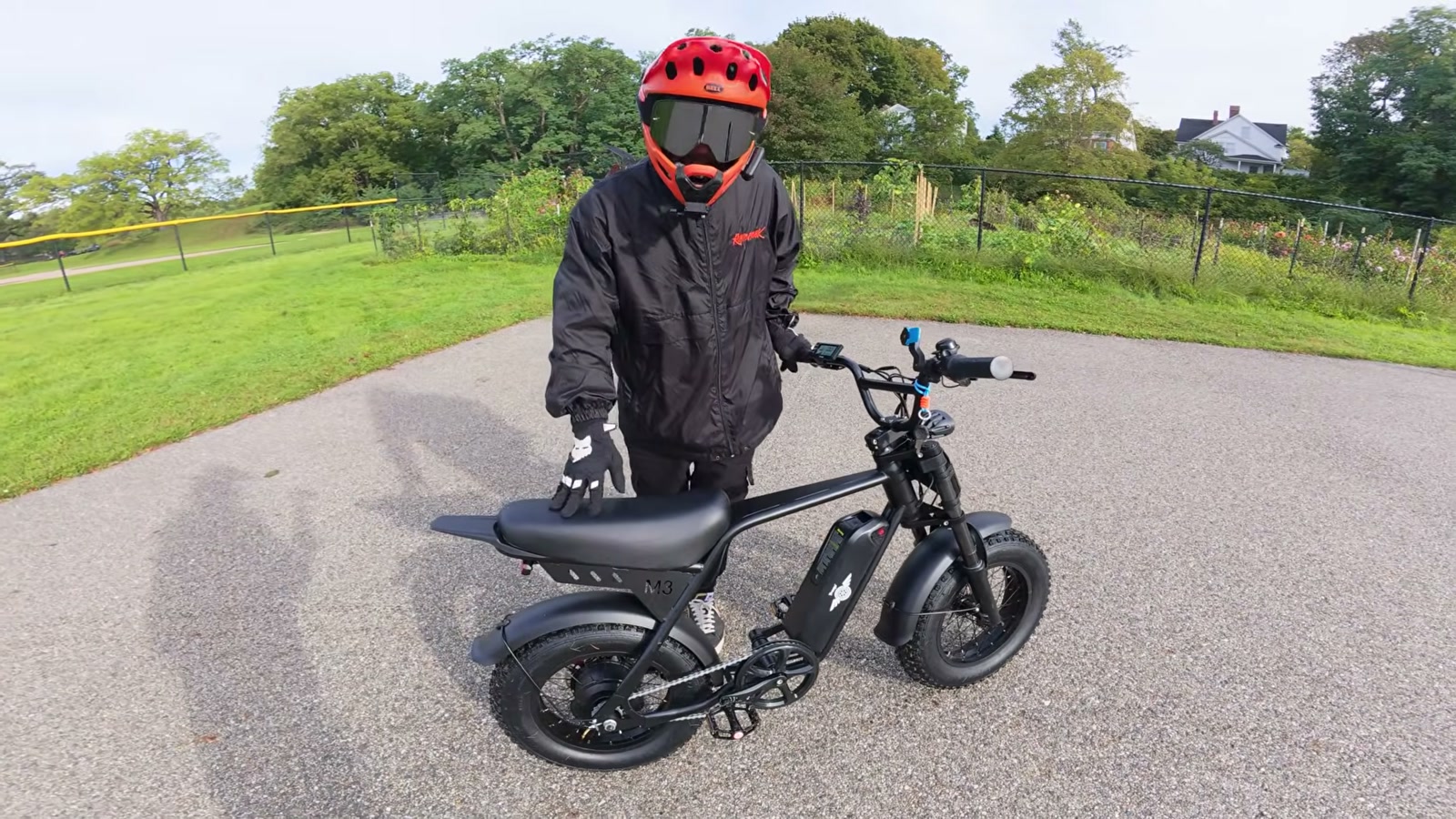
I didn’t expect a compact, 55-pound mini electric bike to feel like it was built with “wheelie energy” baked into the tune—but that’s exactly the vibe I got from the Freego Maxx M3. It’s not trying to be a big, heavy moped-style e-bike clone. It’s smaller, lighter, and way easier to toss around than most of the Super73-style bikes people cross-shop.
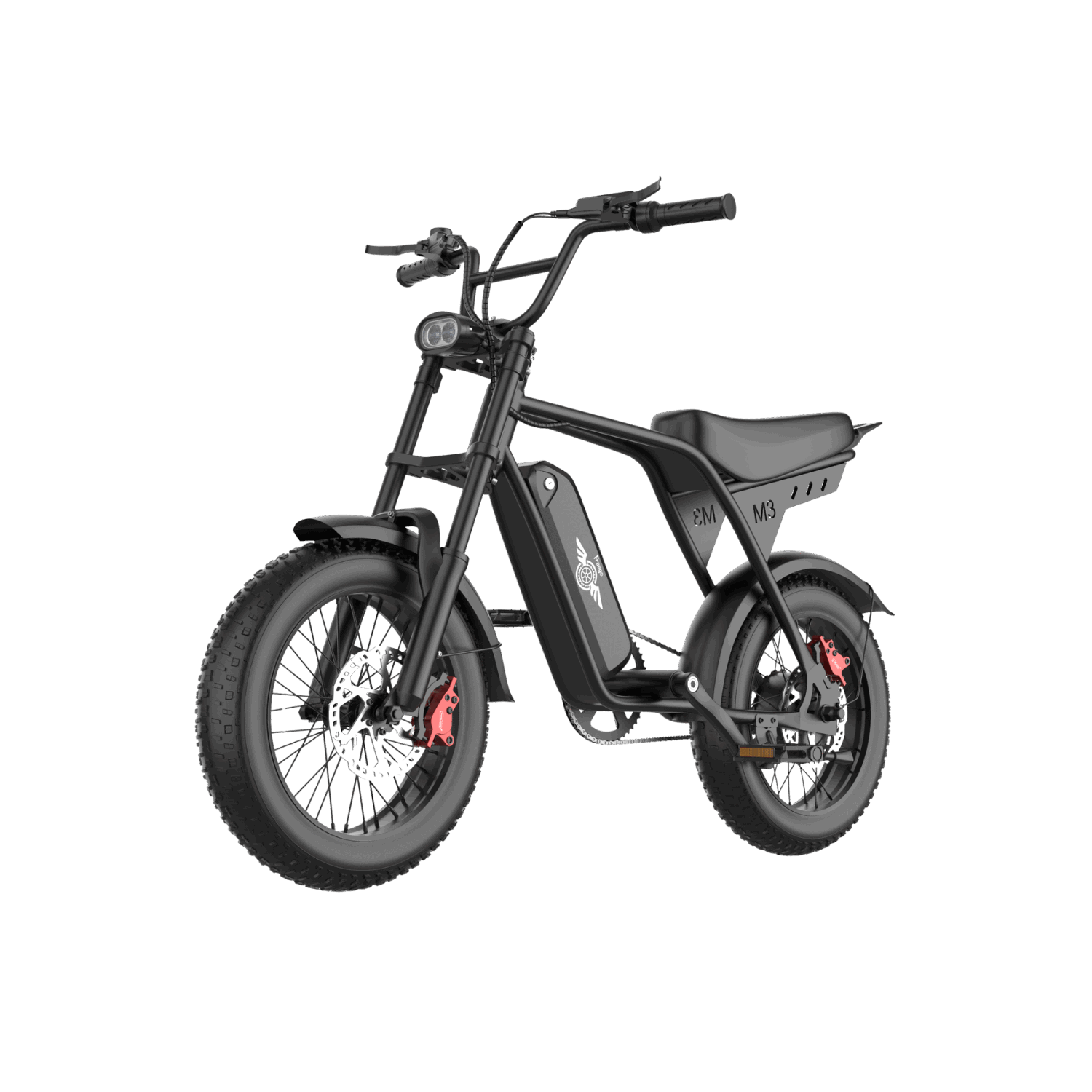
And the most interesting part isn’t the look—it’s how the power comes in from a stop. The Maxx M3 has that punchy, low-end torque that makes a small bike feel playful. The catch is that in my testing, top speed was limited to around 18 mph, and between the slippery saddle and the hardtail rear end, there are a few real-world comfort and usability tradeoffs you’ll want to think through.
First Impressions: Small Bike, Legit Presence
The Maxx M3 is a compact moped-style frame with 16x4-inch fat tires. That tire size is a big part of why it feels so mini in person—most bikes in this category lean on 20-inch wheels, which automatically makes them feel longer, taller, and heavier.
This one feels tight and maneuverable.
A few things stood out to me immediately:
The saddle is thick and cushy, almost Sur Ron-like in shape and padding.
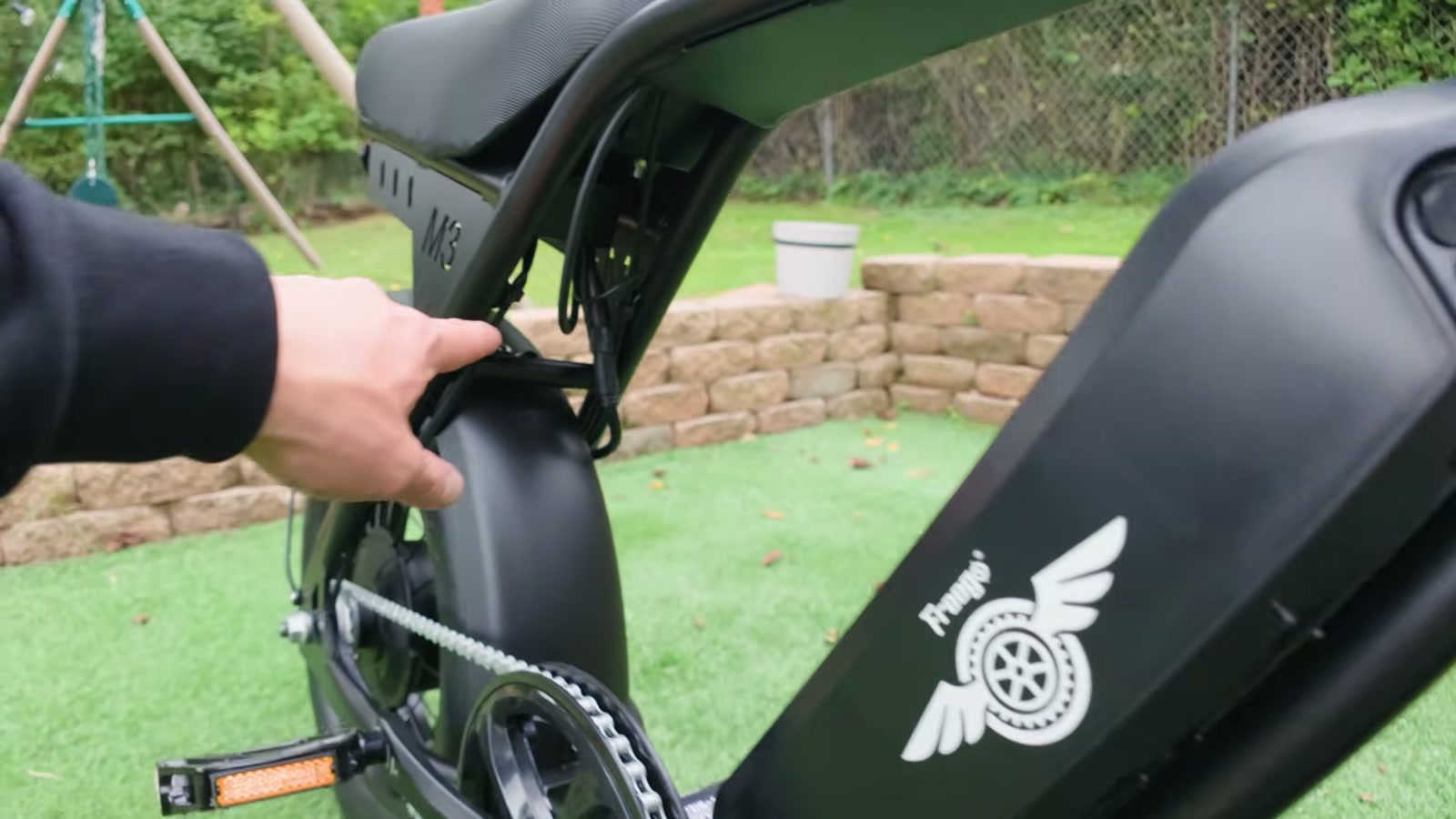
The seat cover material is slick. Like… noticeably slick. More on that later.
It’s a hardtail (no rear suspension), and the front fork felt stiff.
It has a Sur Ron-style headlight up front and a big rear tail light.
The overall build is simple and clean, with a lot of open space in the frame that looks like it’s begging for a small bag or accessory setup.
Freego’s usual reputation (at least in my mind) is tied to higher-powered stuff like the X2 Pro and other heavier, faster bikes. The Maxx M3 feels like a deliberate pivot into something more street-legal and approachable—something you could ride like a compact Class 2 bike, but still get that moped-ish riding position and style.
Fit and Rider Position: Great for Shorter Riders
I’m a shorter rider (30-inch inseam), and I could flat-foot the Maxx M3 easily. On a bike like this, that matters—a lot.
Because it’s compact, everything is closer together. The tradeoff is that even for me, my legs felt a bit cramped while pedaling, and my knees felt like they were living in the same ZIP code as the bars.
If you’re taller, you might run into that more seriously. The good news is the bike uses riser/BMX-style bars, and it looks like you could adjust the setup (or swap bars) to create more room.
Power Delivery: The Low-End Torque Is the Story
The Freego Maxx M3 uses a rear hub motor rated at 600W nominal and 750W peak, paired with a 48V 13Ah removable battery.
But specs don’t really explain what this bike feels like.
What I noticed is that the tune (or the gearing inside the hub motor) is clearly biased toward low-end torque. From a standstill, it has that immediate shove that makes you want to pop the front end up—especially for a small, hub-motor bike.
It’s not the kind of “fast everywhere” power you get from higher-voltage systems or bigger motors. It’s more like a punchy launch.
That launchy tune also helps explain the other headline result:
In my GPS/Dragy-style testing, I was topping out around 18 mph.
Even pushing, even trying to squeeze out more, I kept seeing the same ceiling. I suspect there may be a way to unlock more speed (I didn’t have the password/info needed at the time), but as-tested, this bike rode like it had a firm limiter.
Pedal Assist: Noticeable Steps Between Levels
One thing I really liked is that the pedal assist levels actually feel distinct.
On Level 1, it took a bit of crank rotation before the assist kicked in, and it felt underpowered relative to the weight of the bike.
At Level 2 and Level 3, the bike started to feel more natural—like the motor and the bike’s mass were finally in sync.
By the time I got to Levels 4 and 5, the bike felt properly “awake,” and each level change was noticeable in a way that tells me the system is reasonably well-calibrated.
I did notice what looked like a bit of voltage sag on the display when the assist hit harder. That might be a display behavior more than a true battery issue, but it was noticeable on screen.
Throttle Response: A Small Delay, Then It’s Fine
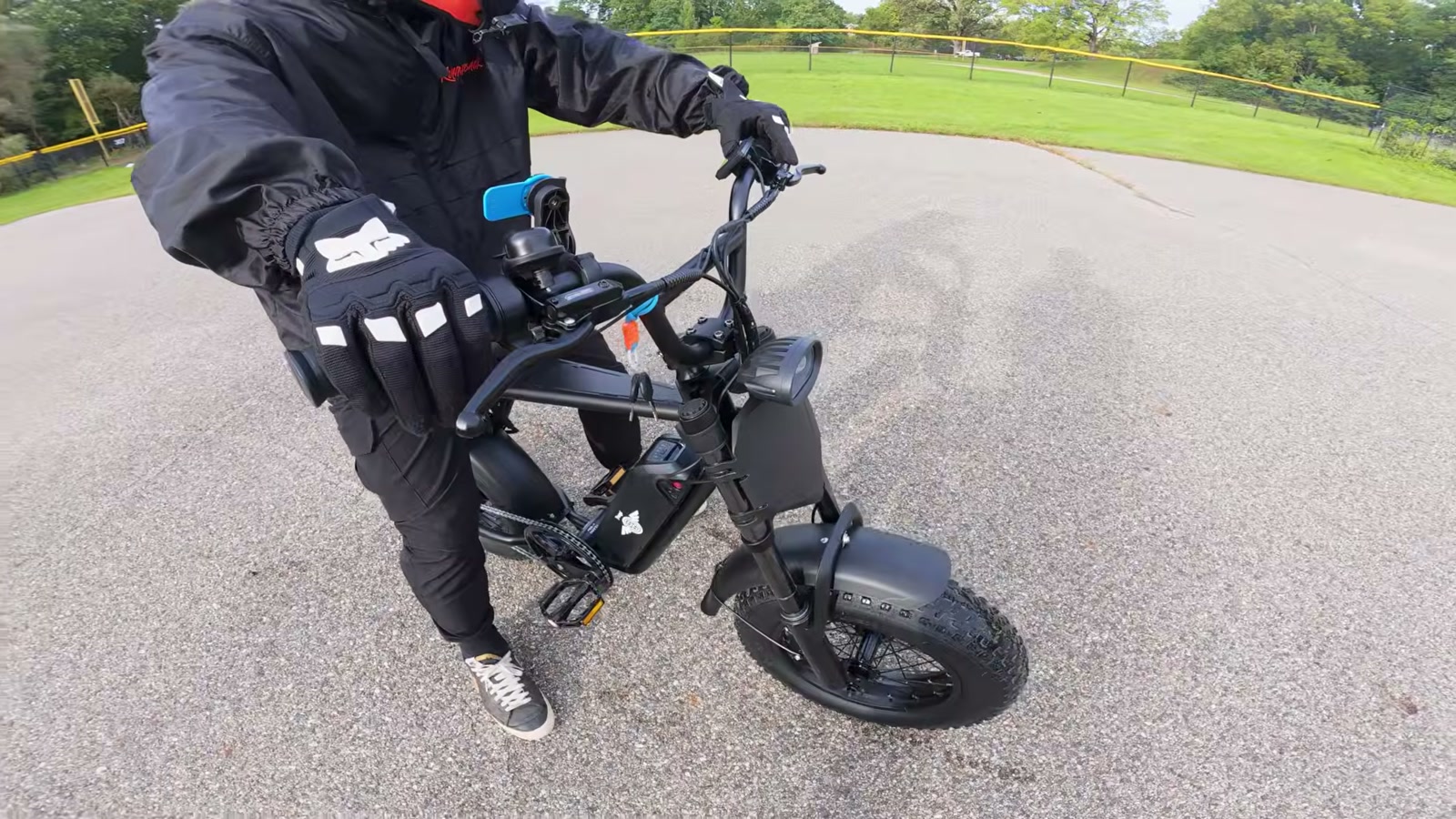
The Maxx M3 uses a full twist throttle, which I love seeing on these moped-style bikes. It’s simply easier to hold steady, and it fits the whole vibe of a mini-moto commuter.
There is a slight delay when you first engage it—almost like a “one Mississippi” before it bites.
Once you’re into the midrange, the throttle feels more predictable. And in real-world riding, I didn’t find myself needing to combine throttle and pedaling very much. On a bike like this, I mostly used the pedals for repositioning my feet and helping my body angle into turns, not for adding speed.
Handling: Light, Easy, and Kinda Playful
At 55 pounds, the Maxx M3 feels light for this category.
That shows up everywhere:
It’s easy to maneuver at low speed.
It doesn’t feel like it wants to flop into turns.
It’s simple to correct if you get off-line.
Between the compact geometry and 16-inch wheels, it feels more like a small “toy that happens to be practical” than a serious motorcycle substitute. And honestly? That’s a compliment, depending on what you’re shopping for.
Braking: Hydraulic Discs That Actually Inspire Confidence
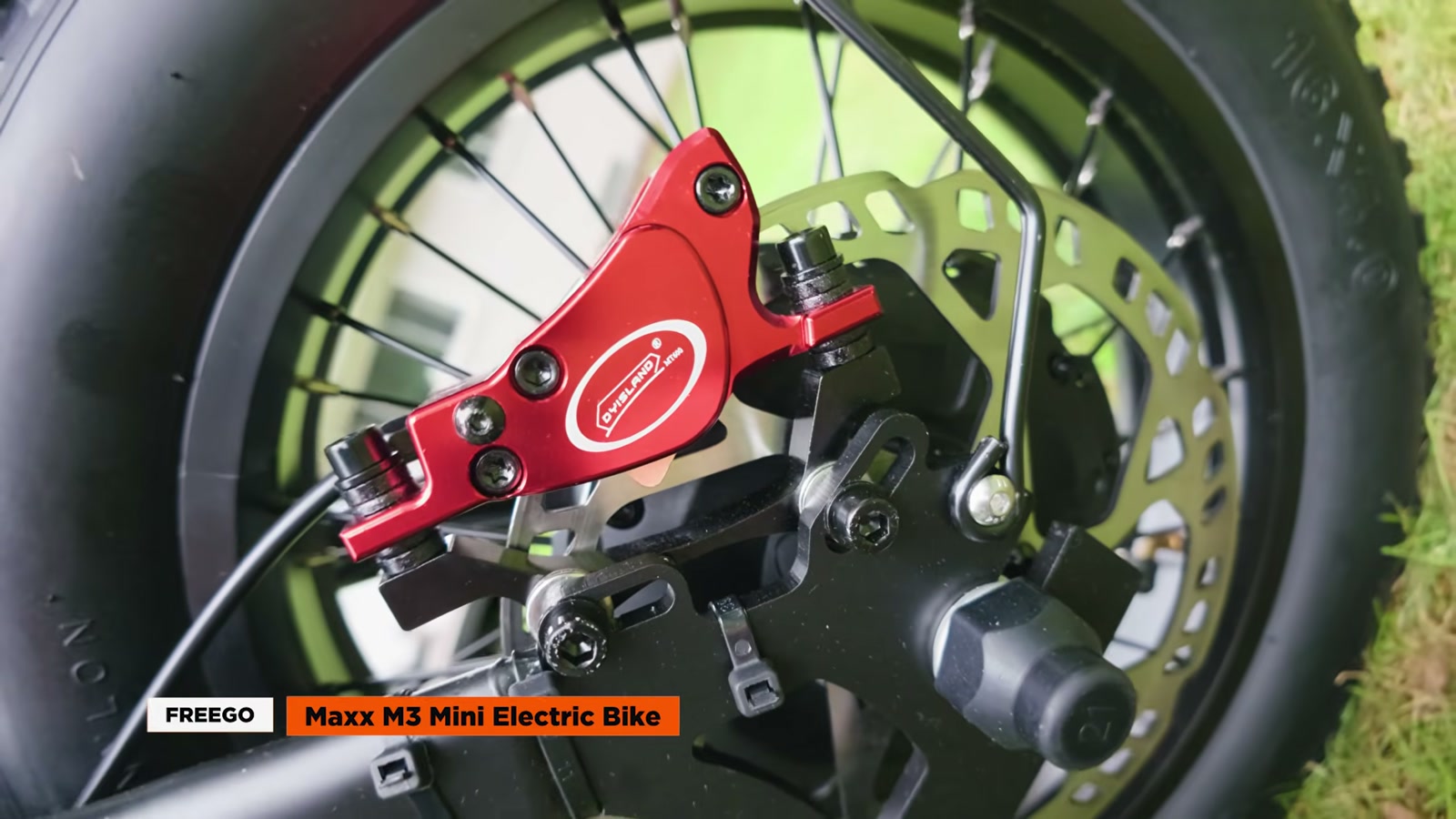
The bike comes with DY Island hydraulic disc brakes and 180mm rotors.
In practice, braking felt solid. Not vague, not mushy, not sketchy.
I wouldn’t call it superbike-level braking (and it doesn’t need to be), but for a compact mini e-bike that encourages quick little launches, I was happy with the stopping power.
Also worth calling out: I like that the rear brake lever is on the left and the front brake is on the right. That’s becoming more common lately, and it just makes more sense to me.
Comfort: The Seat Helps… Until It Doesn’t
The biggest comfort story on the Maxx M3 is the conflict between two truths:
1) The saddle has real cushioning, and it does absorb some bumps.
2) The bike has no rear suspension, and the front fork felt stiff, so you still feel a lot.
On pavement, it’s fine—especially at the speeds the bike was limited to in my testing.
Off pavement, you quickly get reminded that it’s a hardtail. The fat tires take the edge off, and the seat does more work than you’d expect, but it’s not the bike I’d pick for regular off-road riding.
And then there’s the seat cover.
It’s slippery.
When you accelerate—especially with that punchy low-end torque—you can feel yourself sliding around more than you should. The padding is there, the shape is good, but the material doesn’t give you that locked-in feeling.
The upside is that this looks like a fairly standard Sur Ron-style saddle format, so swapping to a grippier cover/seat option seems like an easy win.
Off-Road and Hills: Capable Enough, But Know What It Is
I took it off-road and tried a few hills.
Can it do it? Yes.
Is it comfortable doing it? Not really.
The lack of rear suspension is the limiting factor, and the stiff fork doesn’t help. Still, I’ve ridden hardtails that felt worse than this, and I think the compact frame and thick saddle do more to reduce the misery than you’d expect on paper.
On steeper climbs, it could struggle if I stayed strictly on throttle, and I had to be mindful of balance. On really steep stuff, pedaling to help it out makes sense.
So no—I wouldn’t call it an off-road bike.
But for shortcut dirt paths, rough shoulders, grass, or the occasional uneven trail connection? It can get through it.
Features That Actually Matter Day to Day
A few included details feel genuinely useful instead of filler:
Integrated lighting
The headlight and big rear tail light make it feel more “ready to ride” without immediately shopping for add-ons.
Removable battery
The 48V 13Ah battery is removable, which is huge for apartment life or anyone who charges indoors.
Compact size + low weight
This is the kind of e-bike you can actually maneuver in tight garages, patios, or small entryways without hating your life.
Modding potential
I’m not saying you need to modify it, but the frame layout and battery style make it feel like a friendly platform if you like tinkering—room for a bigger battery, room for accessories, and a general “easy to work on” vibe.
Real-World Use Cases
Here’s where I think the Freego Maxx M3 makes the most sense.
Short commutes with mixed surfaces
If your daily ride is a couple miles across neighborhood streets with the occasional rough patch, this bike feels fun and easy.
Smaller riders or teens (with the usual safety caveats)
The ability to flat-foot it and the compact geometry make it less intimidating than longer, heavier moped-style e-bikes.
RV / van life / campground cruising
The size and weight make it more practical as a “bring-along” mini e-bike than many 20-inch fat tire mopeds.
Play riding and casual wheelie practice
It really does feel like the tune was designed for punch off the line.
What We Like
Surprisingly strong low-end torque for a compact hub-motor mini e-bike
Small, lightweight feel that’s easy to maneuver (especially for shorter riders)
Hydraulic brakes performed well in my testing
Full twist throttle feels right on this style of bike
Integrated lighting and removable battery make it feel ready to use immediately
Things To Consider
As tested, top speed was around 18 mph (there may be an unlock, but I didn’t have it during testing)
The saddle is cushy, but the cover is slippery—especially when accelerating
No rear suspension and a stiff-feeling fork means you’ll feel bumps off pavement
Compact ergonomics can feel cramped while pedaling, even for shorter riders
Final Thoughts
The Freego Maxx M3 is one of the more interesting mini electric bikes I’ve ridden recently because it doesn’t just feel like a scaled-down moped e-bike—it feels intentionally tuned.
That low-end torque is the hook. It makes the bike feel lively, and it’s the reason I kept thinking, “Yeah, I get what they were going for here.” If you want something compact, light, easy to throw around, and you don’t need high speed, it’s a pretty sweet little ride.
But you have to be honest about the compromises. At the current limiter I experienced (around 18 mph), it’s more of a neighborhood ripper / short commuter than a fast arterial-road machine. And if you plan to ride rough terrain regularly, the hardtail rear end will wear on you.
For the right rider, though—especially someone coming from the Super73 world who wants something smaller and punchier—the Maxx M3 feels like it belongs.