

Freesky Ranger Air M-540 Review: Dual-Motor Power That Actually Feels Useful
September 2, 2026
Some links in this article may be affiliate links. If you buy through them, we may earn a small commission at no extra cost to you.
The Freesky Ranger Air M-540 is the kind of eBike you buy when your daily ride isn’t a perfectly paved bike path.
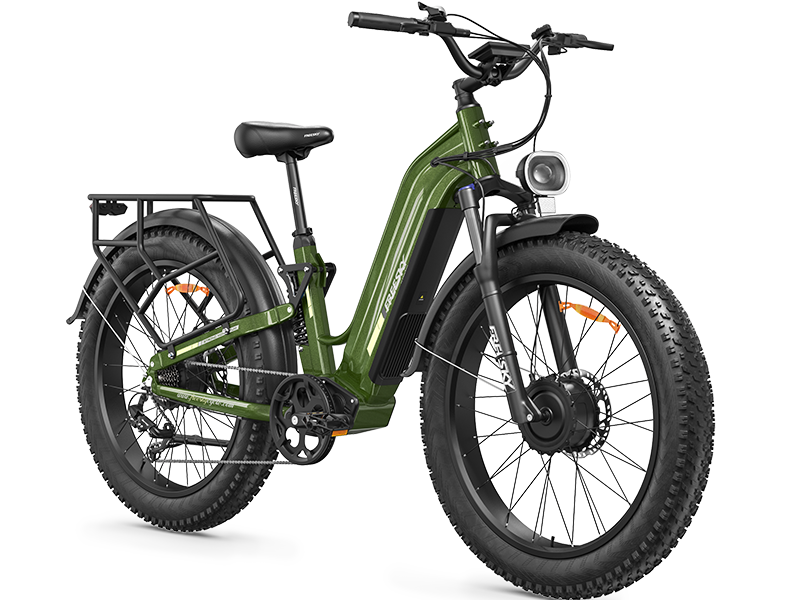
I’m talking cracked roads, potholes, sketchy shoulder lines, snowy seasons, and those “shortcut” routes that turn into grass, dirt, or chunky gravel without warning. The Ranger Air feels built for that reality—especially with its dual-motor setup that can go from calm to straight-up hauling depending on how you configure it.
It’s not for everyone, though. The big headline isn’t just the power. It’s the size, the weight, and the fact that it rides like a serious, full-size fat tire machine.
First Impressions
Right away, the Ranger Air M-540 looks like a sturdy, mountain-bike-inspired fat tire eBike—but with a step-through frame that makes it easier to get on and off (and easier to share between riders).
I chose the green color, and the glossy metallic paint looks legitimately good in person. It doesn’t feel like a bargain-bin finish.
The bike sits tall on 26x4-inch all-terrain tires, and that choice sets the tone for everything else. The big wheels make it feel more “real bike” than a lot of 20-inch fat tire eBikes, and that matters for stability and rollover when the surface gets ugly.
A few practical touches stood out immediately:
Integrated rear rack that’s actually useful
Front and rear fenders already in place
A surprisingly plush saddle
A rear shock mounted vertically under the seat (a layout I’ve ridden before, and when it’s tuned well it can be very comfortable)
The overall vibe: this is a big, confident bike that looks ready for rough roads.
Setup and Controls: NFC Start, Clear Drive Modes
Powering on the Ranger Air brings you to a passcode/NFC screen. If you’ve got the NFC card, you just swipe and go. It’s a nice real-world security feature for a bike like this—especially if you’re commuting and locking up outside.
The color display is bright and center-mounted, and the drive-mode logic is simple:
Rear single-motor mode
Dual-motor mode (front + rear)
Five levels of pedal assist in either mode
On the bars, the biggest “different but fine” detail is the left-hand thumb throttle. I’ve ridden other bikes like that, so it didn’t throw me off, but if you’re used to a right-hand throttle it takes a minute to retrain your muscle memory.
The bike also includes turn signals, plus front and rear lights. And I’ll say this: I appreciate that the headlight is bright without being one of those massive, moped-style blocks. Those lights work, but the look has never been my thing. This one feels more bike-like.
Size and Weight: This One Needs a Home
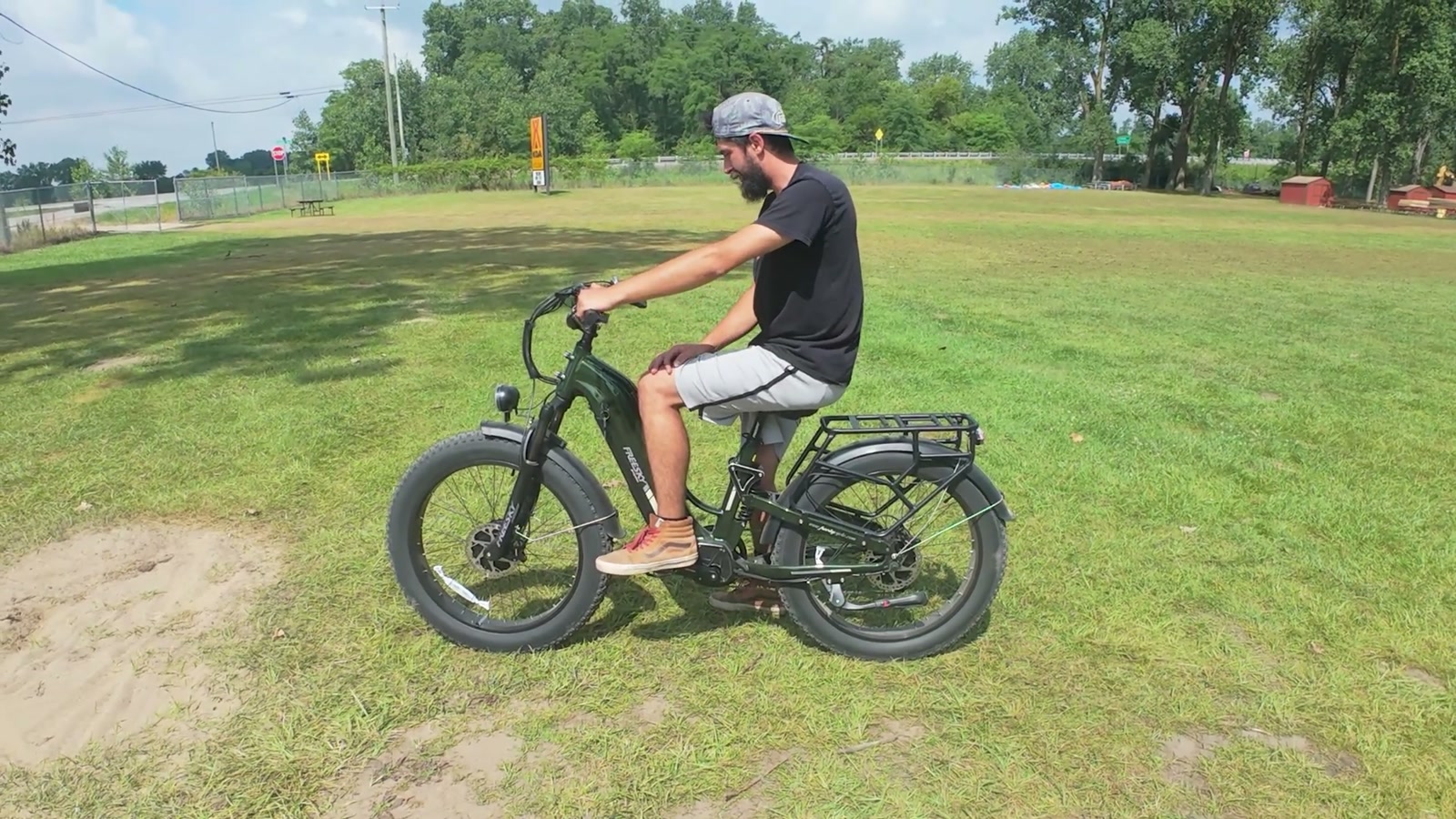
This is not a lightweight eBike. The Ranger Air comes in around 95 lb, and you feel it.
You feel it when moving it around the garage.
You feel it when loading it onto a rack.
And you even feel it in single-motor riding, where the power-to-weight ratio isn’t as dialed as it is once you bring the second motor online.
If you live in an apartment, need to carry your bike up stairs, or rely on a lighter-duty rack, this is a serious consideration. The Ranger Air really wants dedicated storage and a transport plan.
The other size factor is rider fit. Even though it’s step-through and the seat can drop, it’s still a big bike. Taller riders will feel more naturally at home here.
On the Road: Power Delivery Feels Legit
My first ride told me a lot in the first minute.
Pedal assist level 1 is strong—stronger than I expected. On many eBikes, PAS 1 is basically a crawl mode. Here, it already feels like it wants to move.
The assist engagement is also quick and smooth. It doesn’t require a full crank rotation to wake up. I was getting assistance after roughly an eighth of a turn, which makes the bike feel responsive instead of sluggish.
As I clicked up through pedal assist levels, I could actually feel distinct boosts in output—not just an increase in allowed speed. That’s important. Some bikes feel like each level just raises the ceiling. This felt more like each level adds real push.
Single Motor vs Dual Motor: Two Different Bikes
In rear single-motor mode, the Ranger Air is still easy to ride, but I noticed the weight more. It’s not struggling, it just feels like a heavy bike being helped by one motor.
Dual-motor mode changes the personality instantly.
Acceleration jumps in a way that makes you sit up and pay attention. If you’ve never ridden a dual-motor eBike before, it’s the kind of power that takes a little getting used to—not because it’s uncontrollable, but because it pulls harder than your brain expects a “bicycle” to pull.
In PAS 5 with dual motors, it absolutely hauls.
This is also where the Ranger Air makes the most sense. That second motor doesn’t just increase speed—it makes the whole bike feel more “right,” because the power matches the mass.
Acceleration and Top Speed (Real-World Testing)
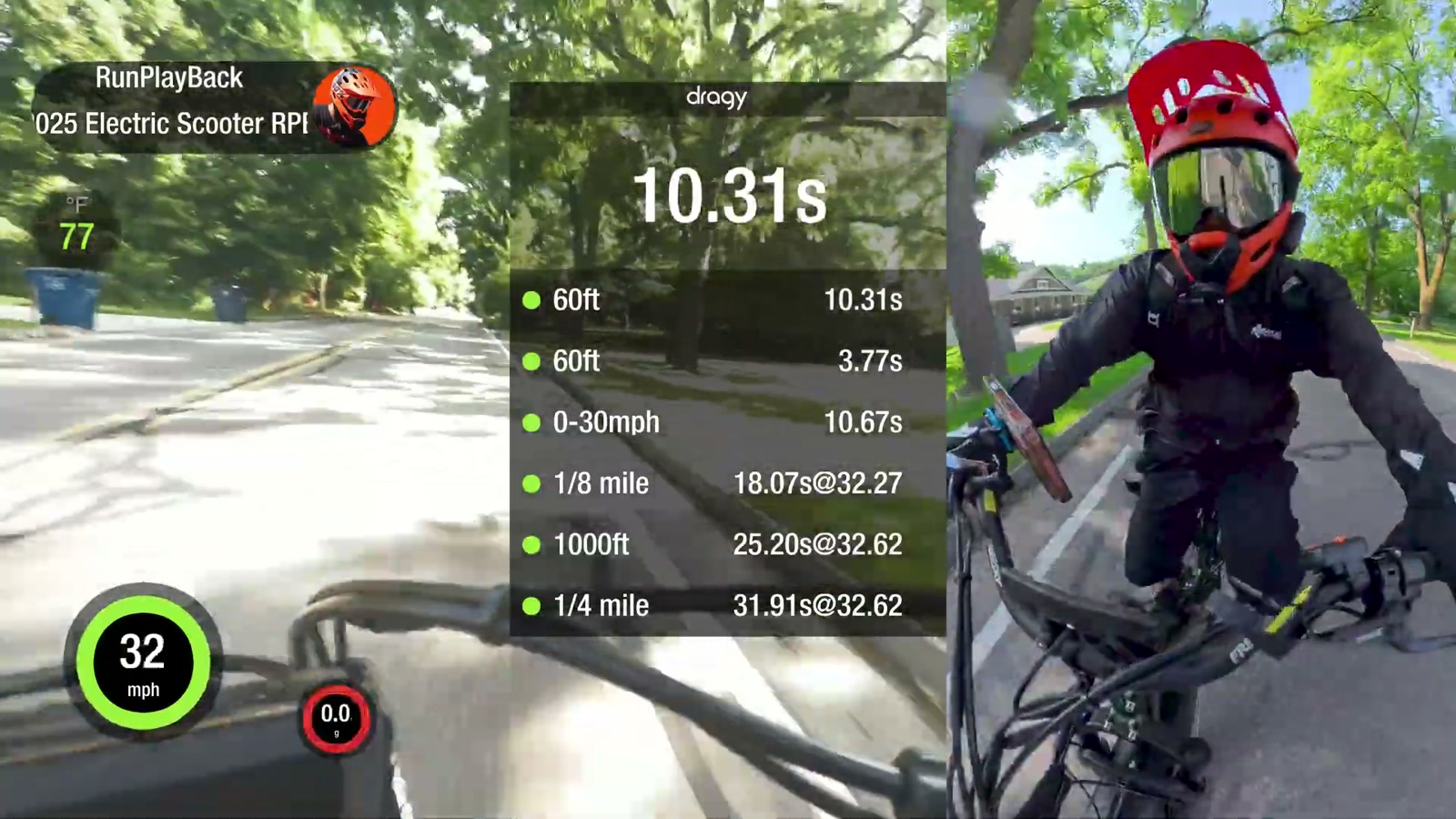
I did acceleration runs using throttle plus pedal assist in dual-motor mode, and the bike was holding around 32 mph, with brief moments touching 33–34 mph downhill.
Starting from an incline, it still climbed into that same general top-speed range, then settled closer to about 30 mph as the grade flattened.
What mattered more than the number, though, was the feeling: it doesn’t feel strained getting up to speed. It feels like it has extra in reserve.
Braking: Confidence-Inspiring
The Ranger Air uses hydraulic disc brakes with 180 mm rotors front and rear, and on the road they felt fantastic.
I did a quick brake test from around 15 mph and the bike stopped hard and controlled. With a heavy eBike, brakes can make or break the experience—especially if you’re commuting in traffic or riding fast on mixed surfaces. These felt like they belong on a bike with this much speed and weight.
Suspension and Comfort: Surprisingly Well Balanced
Suspension is one of those things I’m always skeptical about on budget-friendly full-suspension fat tire eBikes. I’ve ridden plenty that look good on paper but feel unbalanced in real riding—like the rear is harsh and the front dives, or the front is stiff and the rear pogo-sticks.
The Ranger Air didn’t do that.
The front and rear felt well matched, and right out of the box I didn’t feel like I had to adjust anything to get a decent ride. At my weight (around 150–160 lb), it felt ready.
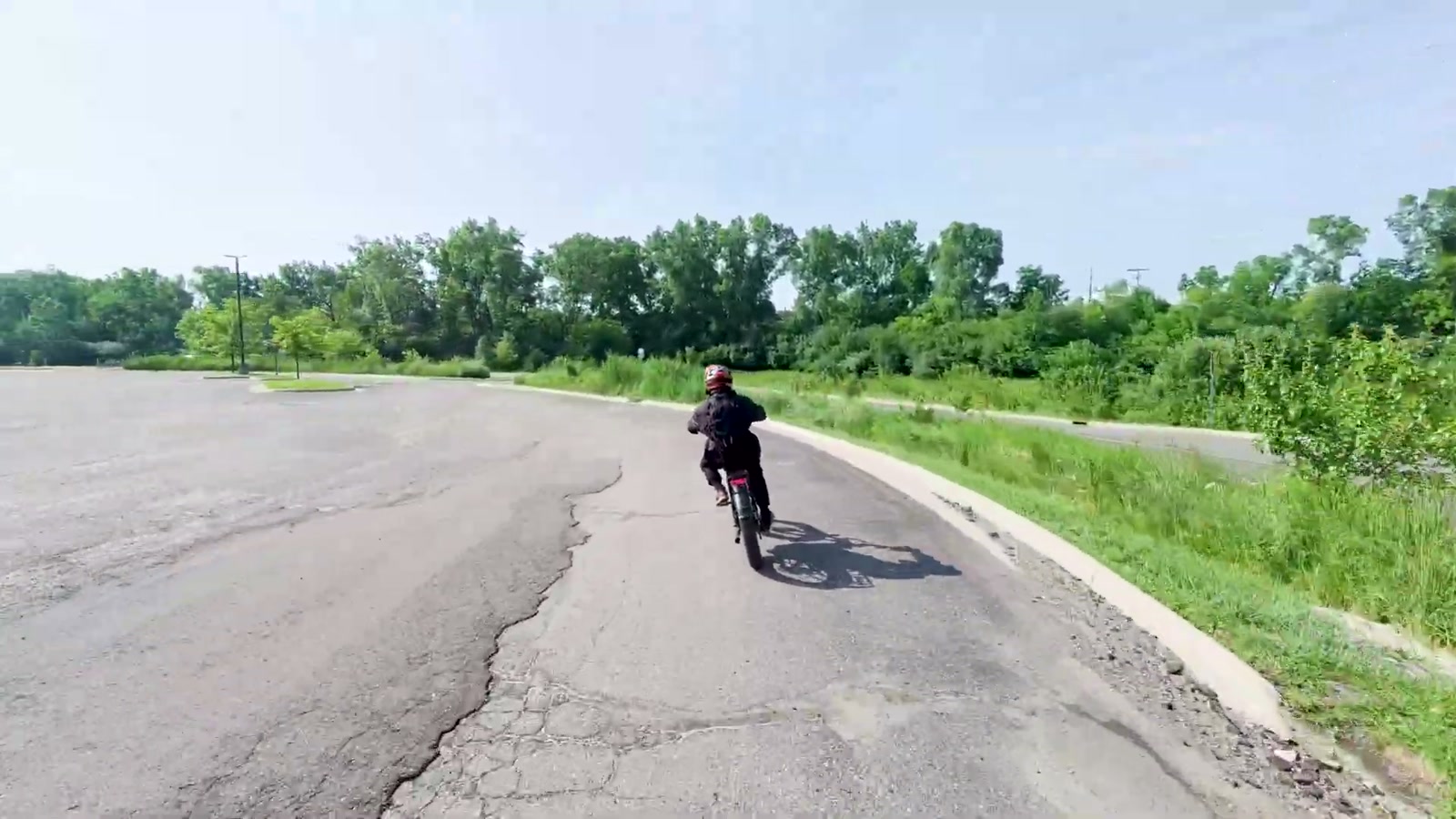
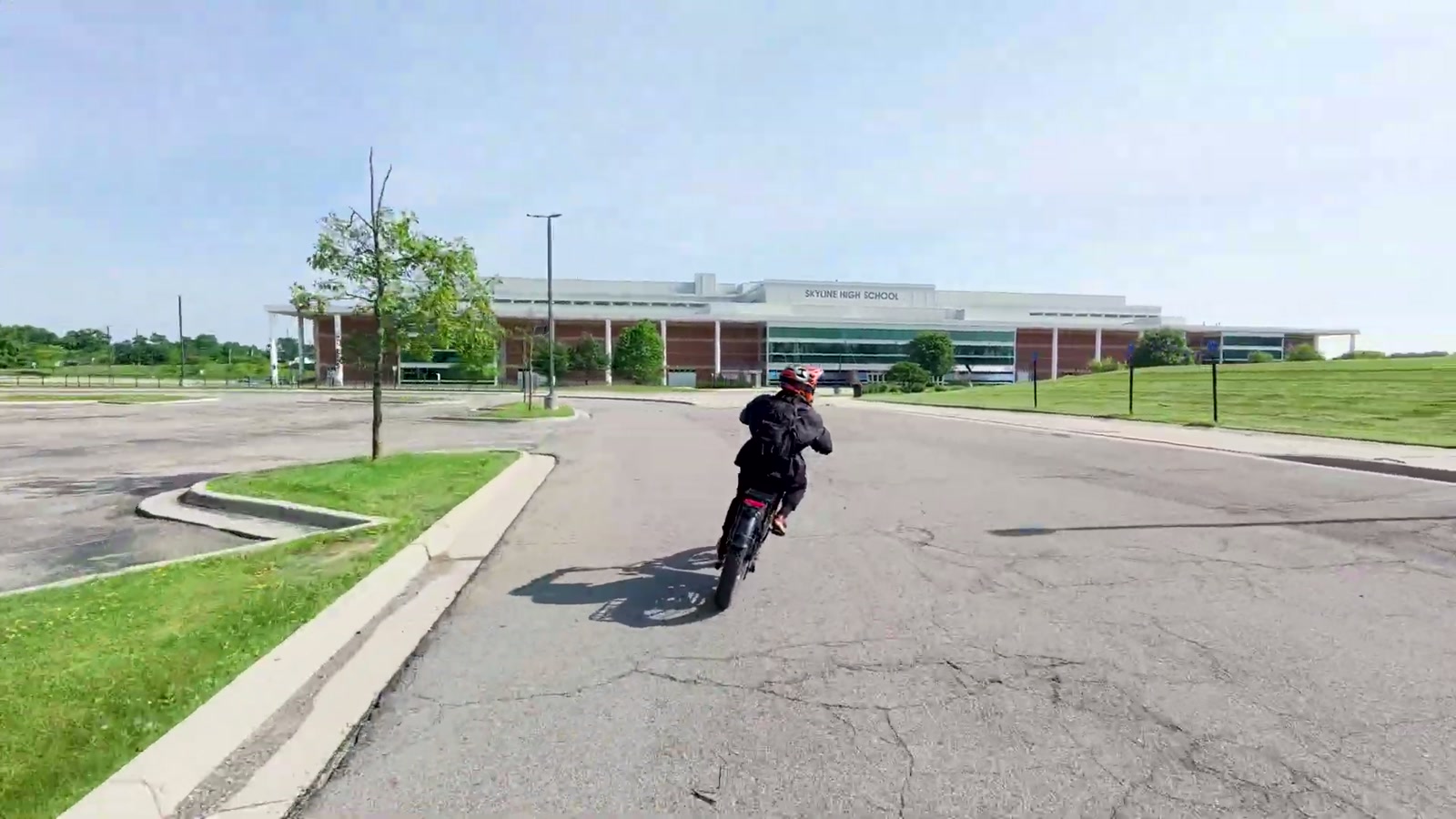
Riding over rough pavement—potholes, cracks, broken parking lot sections—the combination of big fat tires and full suspension does what you want it to do: it takes the edge off and keeps the bike composed.
Off-road on grass and light trail terrain, it was comfortable and predictable. It soaked up the chop better than I expected.
That said, I still think a better rear shock could take it from “good” to “great” over truly rough terrain. It’s comfortable, but there’s room to improve if you’re the type who rides aggressively off-road.
Handling: Big Wheels Help More Than You’d Think
I’m a fan of 26-inch fat tires for exactly this kind of bike.
Compared to a lot of 20-inch fat tire eBikes, the Ranger Air feels more stable when you’re rolling over bigger imperfections, curbs, and transitions from pavement to grass.
The other underrated benefit: pedal clearance.
With smaller-wheel fat bikes, pedals can feel close to the ground, and in turns it’s easier to clip a pedal. The larger 26-inch setup helps reduce that worry and makes the bike feel more natural in corners.
Real-World Use Cases: Where the Ranger Air Makes Sense
This is the kind of eBike I’d pick for places with:
Rough roads and lots of winter damage
Seasonal riding (snow, slush, wet trails)
Mixed terrain commutes (pavement + shortcuts)
Light off-road exploring where you still want comfort
I also like that it comes with an integrated rear rack. For commuting, that’s a huge quality-of-life feature. It’s the difference between riding with a sweaty backpack and just strapping your stuff to the bike.
If I owned this, I’d ride it mostly in dual-motor mode for everyday riding. Then I’d switch into single-motor mode (and lower assist levels) when I wanted a more relaxed pace, more exercise, or when riding smoother paths.
What We Like
Dual-motor setup delivers real, usable power—especially on hills and mixed terrain
Suspension and fat tires work together well on rough roads
Brakes feel strong and confidence-inspiring for a heavy, fast eBike
Integrated rear rack is genuinely practical for daily riding
Bright headlight without the oversized “moped light” look
Things To Consider
95 lb is a lot of bike to store, lift, or transport
Big overall size will fit taller riders better
Rear shock is good, but a higher-end shock would improve comfort on rough off-road hits
Dual-motor acceleration is intense if you’re new to high-power eBikes
Final Thoughts
The Freesky Ranger Air M-540 is at its best when you treat it like a 2WD utility machine—not a lightweight bike replacement.
In dual-motor mode, it feels like it finally matches its own mass: quick acceleration, easy hill capability, and the kind of “point it where you want to go” confidence that makes rough roads and light off-road riding feel fun instead of annoying.
I’d recommend it to riders who want a powerful, full-size fat tire eBike for broken pavement, mixed terrain, and commuting with some cargo—especially if you’ve got the storage space to live with a 95 lb bike.
If you need something easy to carry, easy to rack, or more compact for city life, this isn’t the move. The Ranger Air is a big bike with big-bike demands.