
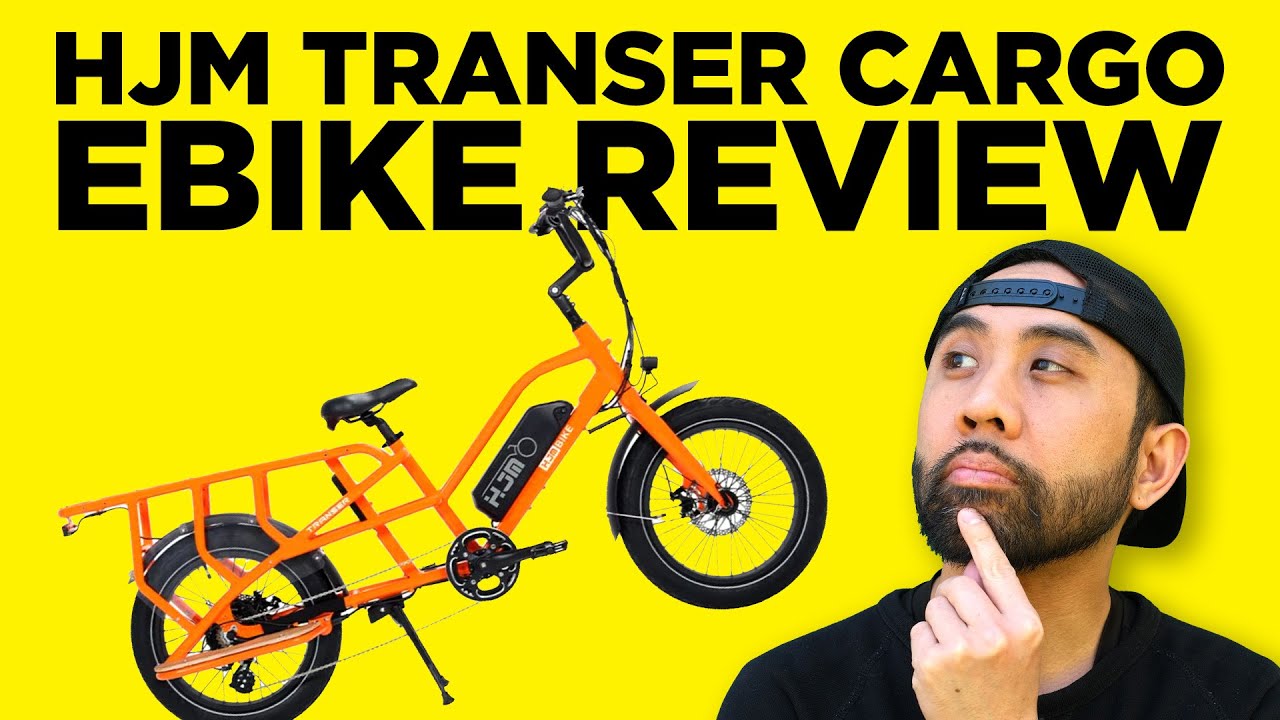
HJM Transer Cargo E-Bike Review: A Chill, Practical Hauler That Makes Car-Lite Life Easier
March 25, 2022
Some links in this article may be affiliate links. If you buy through them, we may earn a small commission at no extra cost to you.
Cargo e-bikes are one of the most realistic ways to replace short car trips—grocery runs, picking up gear, or just commuting while carrying more than what a backpack can handle. I spent time unboxing, assembling, and riding the HJM Transer Cargo Electric Bike, and it’s a surprisingly approachable hauler with a few clear trade-offs you’ll want to understand up front.
Read more: Transer Cargo Electric Bike

It’s long, bright orange, very utility-minded, and it rides calmer than I expected for something built to carry serious weight.
First look: long, low, and built to carry
The first thing you notice is the length. This is the longest e-bike I’ve ridden so far, and that extended rear cargo area makes it obvious what this bike wants to do: haul.
The step-through frame makes it easy to get on and off—especially important on a cargo bike, where you don’t want to do a high step-over with a loaded rack. The integrated rear rack/frame design also gives it that “one solid piece” feel that you want when you’re planning to carry passengers or heavy gear.
I also like that it’s clearly designed around accessories. There are mounting points and a big rear area meant for add-ons like seats, baskets, and containers.
Unboxing and assembly: mostly straightforward, with a couple speed bumps
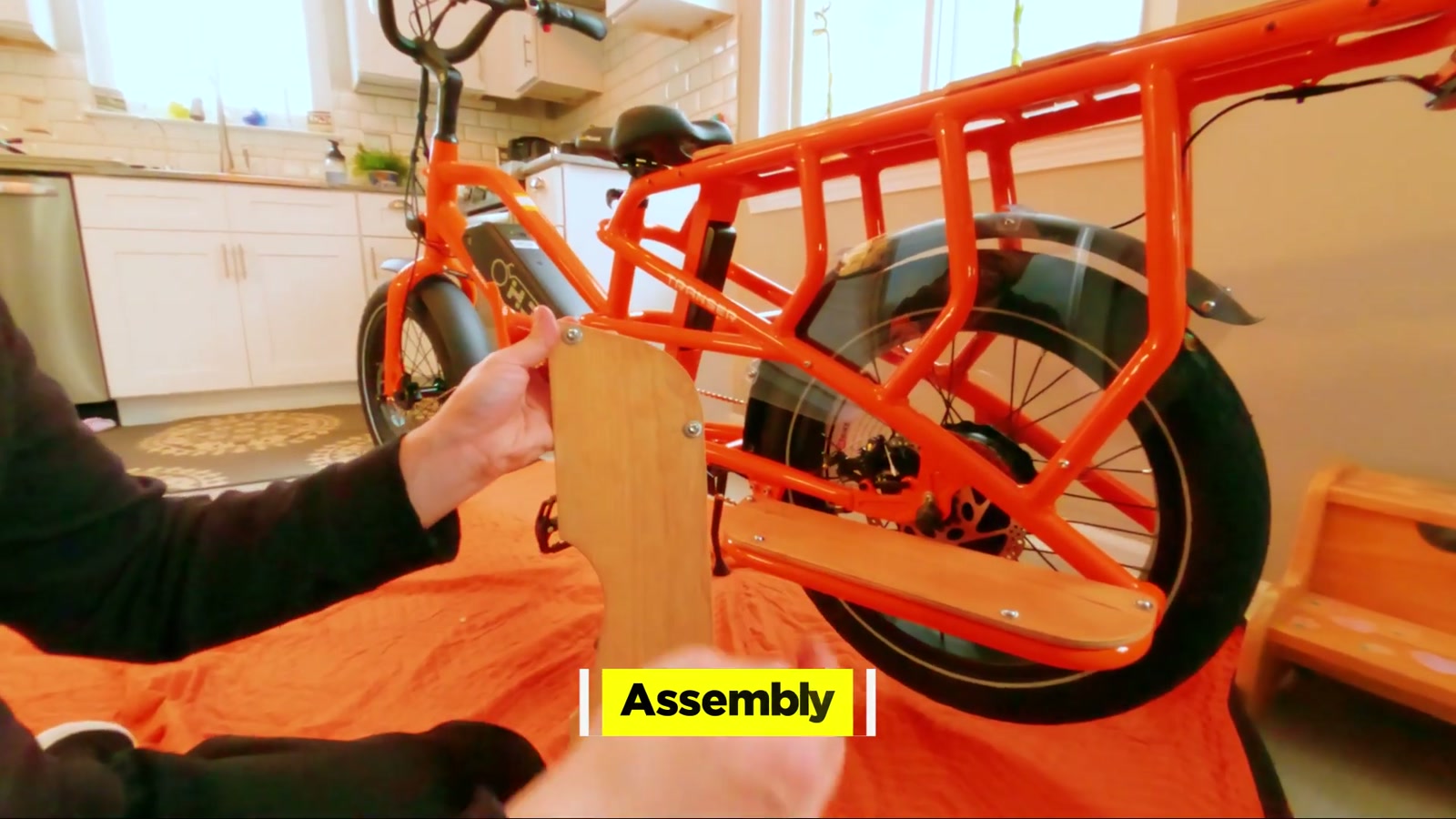
Overall assembly was manageable, but I hit two notable issues.
You’ll need a tool they don’t include
When removing the front fork plate during assembly, I needed a 14mm tool that wasn’t supplied. Not a dealbreaker, but it’s the kind of thing that can stop your build if you’re expecting a truly “everything in the box” experience.
The footrests were annoying to install
The passenger footrest hardware gave me the most trouble because the holes didn’t want to line up. I eventually got it done by removing the planks and pushing/stretching the bar so the bolts could seat properly. I’d recommend having help for that part.
Packaging/QC note
My bike arrived with some scratches that looked like shipping/transport damage. It’s unfortunate, and if you’re buying new you want that first impression to be clean. The good news is that HJM said they’re improving packaging and that customer service will help if issues show up.
Controls and utility features I actually used
This is a “practical features” bike, and that comes through in daily usability.
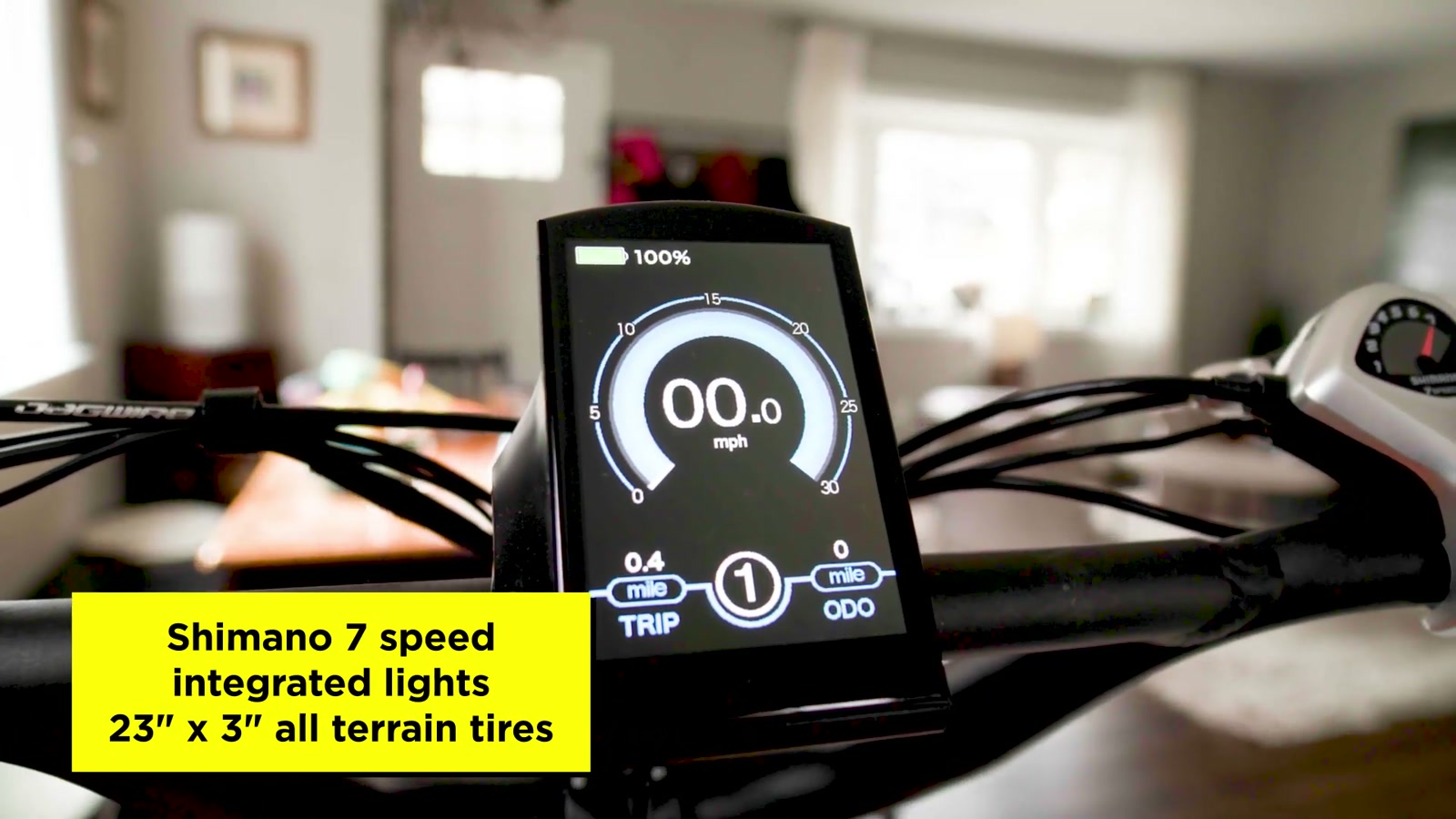
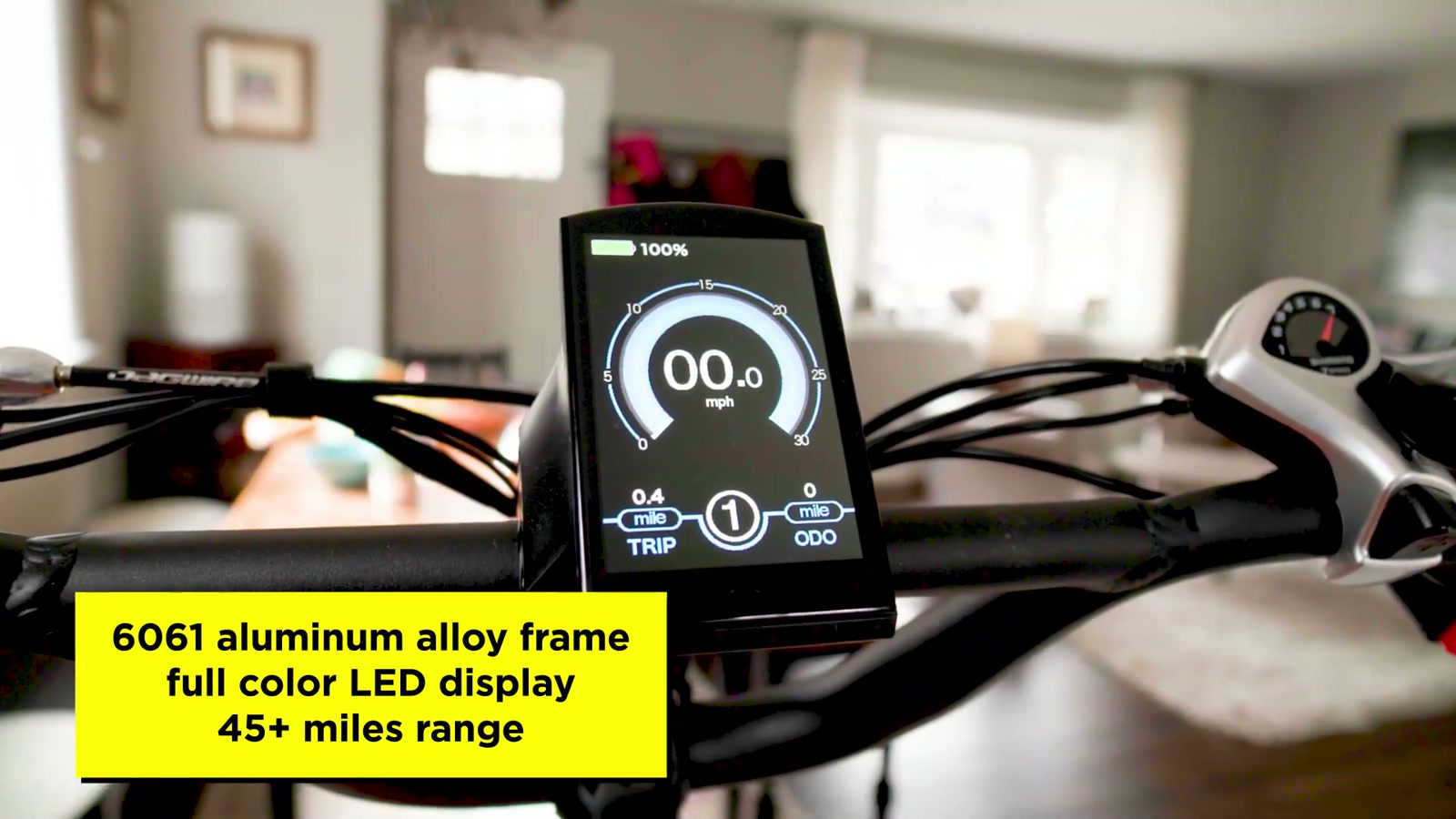
The display gives the basics you’d expect: battery, assist level, speed, and trip data.
The headlight control is simple once you know it: hold the plus button to toggle it.
There’s a half-twist throttle, and there’s also a button that can disable throttle-only riding.
Integrated lights and turn signals are built in, and the rear has left/right signaling.
The battery is removable, and there’s an option/idea of running additional battery capacity (HJM offers a version with an extra battery).
Ride feel: calm, steady, and different from a normal bike
Cargo bikes just feel different, and the Transer definitely does.
The balance takes a minute
Because of the long rear and the weight distribution, the turning feel and balance are something I had to adjust to. On regular bikes, the “center” is right under you. Here, I could feel that rear length influencing how the bike behaves in turns.
Throttle vs pedal assist
This is more of a pedal-assist bike in real life.
Throttle-only is smooth and easy, but it didn’t feel like the main way this bike wants to be ridden.
Pedal assist felt quicker getting up to speed and made the bike feel more natural.
There’s also a spring mechanism at the steering column that seemed to encourage the front wheel to track forward. It felt unusual at first, but it added to the “stable, utility vehicle” vibe.
Real-world speed and the assist level I kept coming back to
The bike tops out at 20 mph, and in pedal assist at max level I was able to cruise at that limit while pedaling.
But I didn’t love riding it pinned at max assist the whole time.
Pedal assist level 3 was the sweet spot
Level 3 felt like the best match for the Transer’s personality. I was cruising around the mid-teens mph range and it felt controlled and stable—exactly what you want if you’ve got groceries, tools, or a passenger on the back.
At the highest power level, I noticed the battery reading dipping more aggressively under load (voltage sag). That doesn’t mean it’s unusable—it just pushed me toward riding it a bit more conservatively, which honestly matches what a cargo bike is for anyway.
Braking: fine… until you’re hauling real weight
It comes with mechanical disc brakes (Tektro). For casual riding they’re okay, but braking power and stopping distance were the main places I wanted more.
If you’re planning to regularly carry heavy cargo (or especially passengers), I’d seriously consider upgrading to hydraulic brakes for stronger, more confident stops.
Comfort: capable for city streets, not pretending to be a suspension bike
The 20 x 3" tires help take the edge off rough pavement. On normal streets and typical city bumps, it’s totally rideable. But when I hit rough patches, I still felt the bumps—especially the rear impacts reverberating forward.
This isn’t the bike I’d choose for real off-road riding. It’s much happier doing urban and neighborhood duty.
The stock seat is plush enough for shorter rides, but it didn’t strike me as an “all-day comfort” saddle. If you’re doing longer distances, a seat swap is an easy quality-of-life upgrade.
Motor and power: “just enough” in a good way
This is a 750W cargo e-bike, and in practice it felt like the right baseline for a bike of this size. It’s not a high-torque, punchy setup that snaps your head back—but it’s steady and calm.
It’s also quiet (direct drive hub), and for steeper hills you should expect to add pedal input.
Range expectations: depends how you ride it
Range is always situational, but the big takeaway is simple: this bike rewards riding it like a cargo bike.
If you cruise at moderate assist levels and keep speeds sensible, it’s far more practical than hammering throttle-only at max power. And because it’s a larger cargo platform, battery capacity matters more—so if you know you’ll do longer trips or heavier loads, the extra-battery option makes a lot of sense.
What We Like
Easy step-through frame that makes a cargo bike feel accessible
Integrated rear rack/frame design that feels purpose-built for hauling
Pedal assist feels quick and natural; level 3 is a great everyday setting
Utility-focused features like integrated lights and turn signals

Calm, stable ride that suits errands and neighborhood cruising
Things To Consider
Assembly may require a 14mm tool that isn’t included
Passenger footrest install was frustrating due to alignment issues
Mechanical brakes are acceptable unloaded, but I’d want hydraulics for heavy hauling
Voltage sag shows up at maximum assist; the bike feels best ridden more moderately
Scratches from shipping/QC are worth inspecting immediately on delivery
Final Thoughts
The HJM Transer is a simple, practical cargo e-bike that fits the “car-lite” lifestyle better than most standard commuter e-bikes. It’s not trying to be a high-performance rocket—its best trait is how chill and manageable it feels while giving you a large platform to actually carry stuff.
If you want a budget-friendlier entry into cargo biking, the Transer makes a strong case, especially if you ride it primarily in pedal assist and treat it like the steady urban hauler it is. If your plan involves heavy loads or frequent passenger duty, I’d budget for better brakes and consider the version with extra battery capacity.