

Lectric XPress Lite Review: A Lightweight Commuter Ebike That Nails the Basics
November 4, 2026
Some links in this article may be affiliate links. If you buy through them, we may earn a small commission at no extra cost to you.
The Lectric XPress Lite surprised me for a simple reason: it feels like a regular bike first, and an ebike second.

A lot of budget-friendly commuter ebikes can feel jumpy, over-boosted, or like the motor is making decisions for you. The XPress Lite doesn’t ride that way. The pedal assist comes on smoothly and predictably, and the whole setup feels tuned for real city riding instead of spec-sheet bragging.
This is Lectric’s lightweight commuter-style ebike, and after putting it through acceleration runs, top-speed testing, braking checks, and some “shouldn’t really be doing this” off-pavement riding, I came away thinking the XPress Lite is exactly what many commuters actually need.
First Impressions: Clean commuter vibes (and a great color)
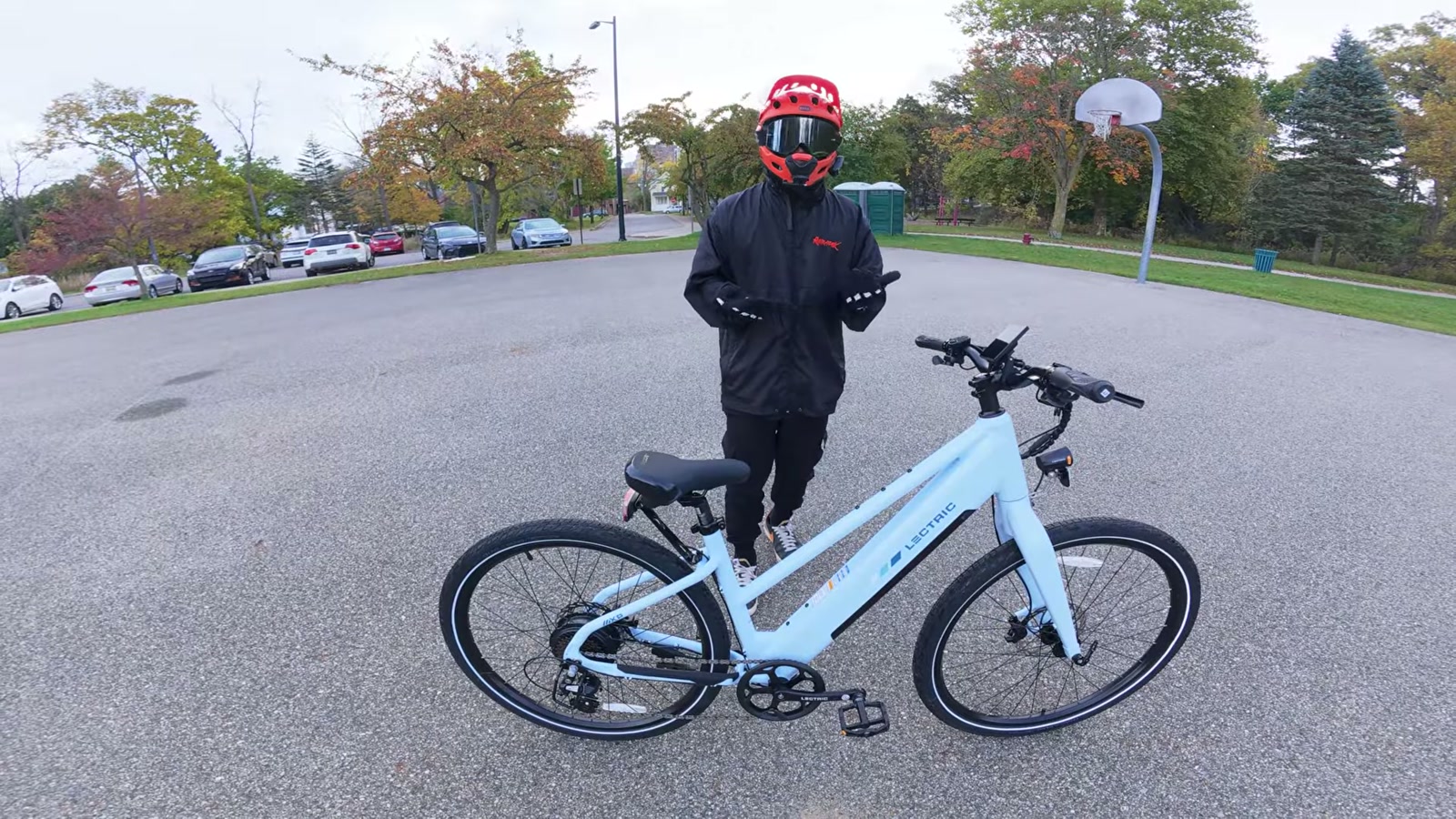
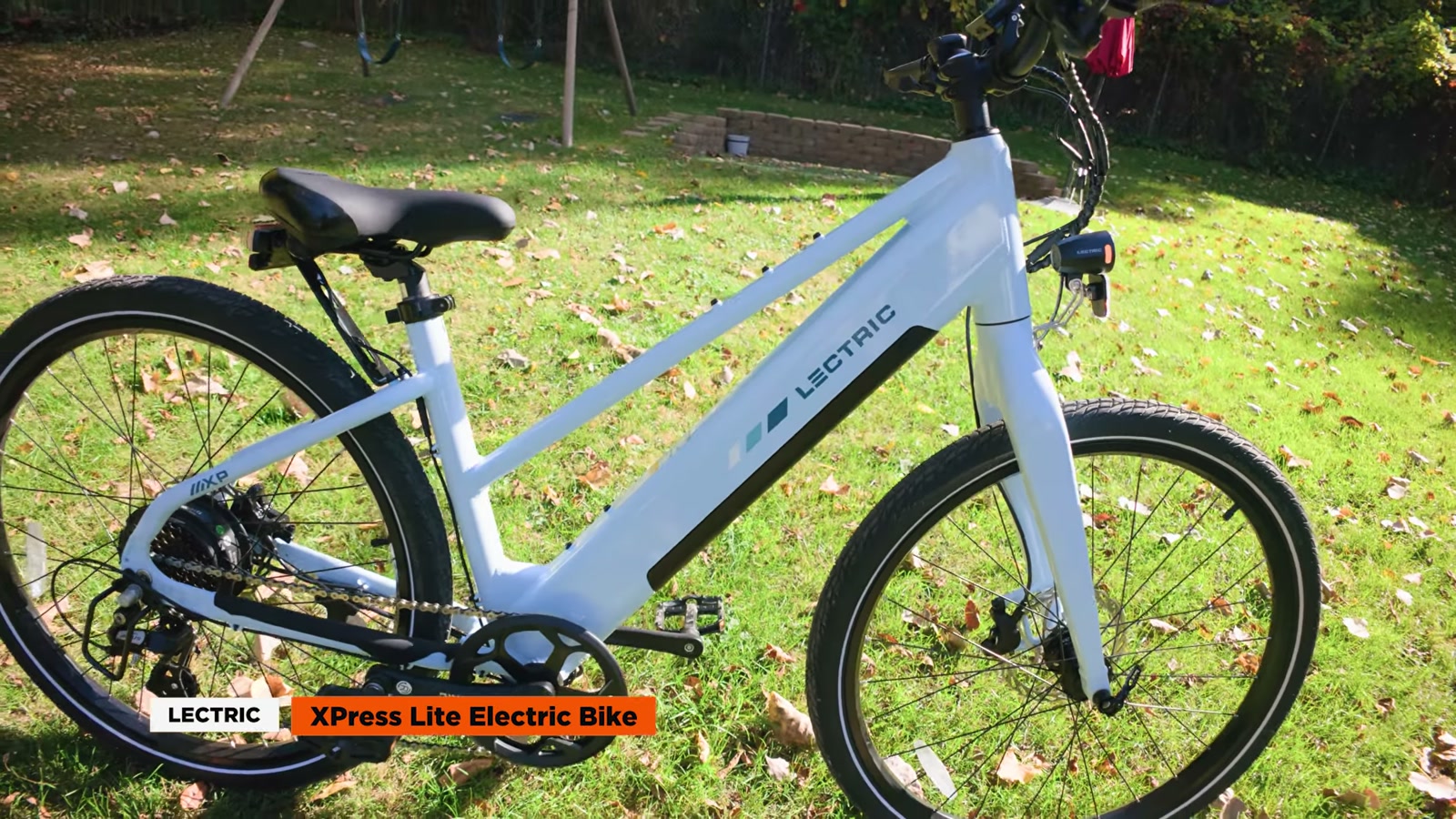
The first thing I noticed was the Glacier Blue color. It’s bold, highly visible, and honestly just looks good. Even the fork matches, which gives the bike a cohesive, clean look that stands out in a sea of matte black commuters.
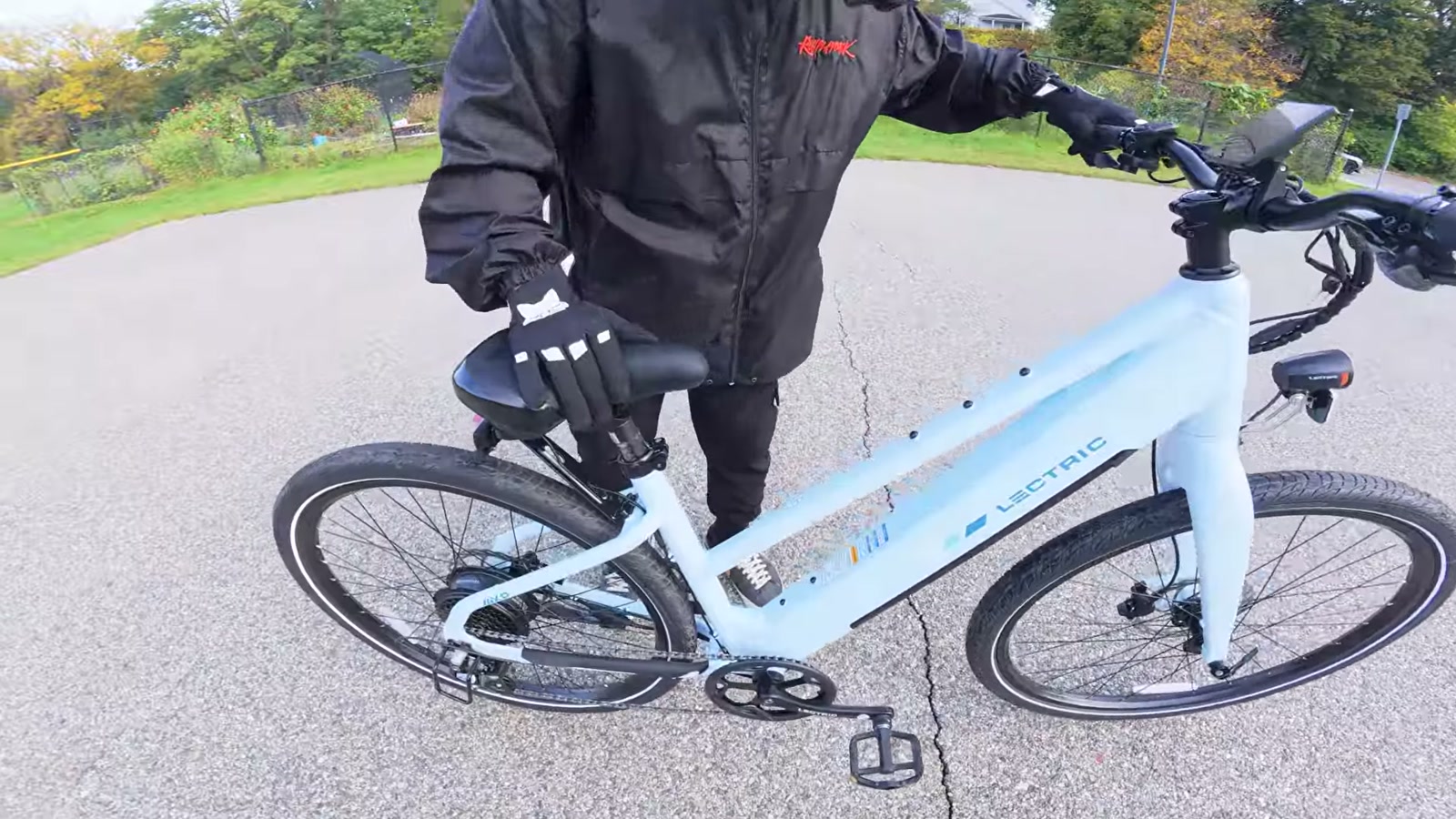
The frame is what I’d call a mid-step. It’s not a full step-through cruiser, but it’s also not a tall, intimidating step-over. That middle ground makes it easier to mount and more approachable for a wider range of riders.
In terms of day-to-day handling, the weight matters. This bike comes in at about 45.6 pounds without the battery, and that’s a big part of why it feels manageable. Lifting it to reposition in a garage, rolling it through tight spaces, or just maneuvering at low speed feels less like wrestling an ebike and more like moving a normal commuter.
The overall build feels practical: 27.5 x 1.95 street tires, an 8-speed Shimano drivetrain, hydraulic disc brakes, and integrated lights. Nothing flashy. Just the stuff you actually want to rely on.
Setup and controls: Simple, but surprisingly customizable
At the cockpit, the controls are straightforward: ergonomic rubber grips, an 8-speed shifter, and a left-mounted thumb throttle (a side-paddle style).
The display is center-mounted and removable, which I appreciate for two reasons:
If you ever damage it, replacing it is simpler.
If you lock the bike up in public, it’s one less thing to leave exposed.
Where the XPress Lite starts to feel more “thoughtful” than “basic” is in the menu.
I could adjust things like screen brightness, sleep settings, units, tire size, and bike classification (Class 1/2/3, including a California Class 3 option). And one of my favorite options on this bike is the ability to switch between torque and cadence sensor behavior.
That matters because it changes the personality of the entire ride.
Torque sensor mode gives you that natural, proportional assist based on how hard you pedal.
Cadence sensor mode is the more common “pedal and it goes” feel.
For a commuter bike like this, I strongly prefer torque sensing. It makes starts, slow-speed weaving, and stop-and-go riding feel intuitive instead of jerky.
Ride experience: The torque sensor is the star
I started riding in Eco mode with no throttle, just pedaling. The assist felt immediately dialed.
Each pedal stroke translated into a matching amount of motor support, which is exactly what I want in traffic or bike lanes. It didn’t surge. It didn’t lag. It felt like I was riding a normal bike that suddenly had very strong legs.
Moving up through the assist levels (Eco, Tour, Sport, Sport+, and Turbo), the power increase felt consistent and well-stepped:
Tour gave me more low-end push without feeling aggressive.
Sport and Sport+ ramped up the urgency, but still stayed controllable.
Turbo had the most punch, and the bike still didn’t feel like it was running away from me.
That’s the difference between raw power and usable power. The XPress Lite isn’t trying to impress you by being chaotic—it’s trying to be easy to live with.
Acceleration and top speed (GPS-tested)
I did acceleration/top speed runs in Turbo using throttle and pedal assist.
In my GPS testing, I saw around 27 mph, and the display showed as high as about 28.4 mph during a run. In the flatter direction, it settled around the mid-20s (roughly 25–26 mph), and uphill it still pushed into the mid-to-high 20s with assist.
For a lightweight commuter with a 500W rear hub motor (peaking at 864W), that’s solid. It has enough speed to flow with faster bike traffic, and enough power to feel confident when you need to get up to pace.
Throttle behavior: Responsive without being sketchy
The left thumb throttle is more responsive than I expected—in a good way.
Some throttles have that mushy delay that makes starts awkward. Others hit too hard and can throw your balance off. Here, the throttle felt calibrated “just right,” even in Turbo mode.
I also found myself not needing the throttle much. That’s a compliment. The pedal assist is so natural that pedaling feels like the best way to ride it.
Comfort and handling: Great on pavement, honest about everything else
On smooth pavement, the XPress Lite feels exactly where it belongs.
The geometry, the tire choice, and the overall weight make it easy to maneuver. It’s the kind of ebike I’d happily ride through city streets, bike lanes, and neighborhood cut-throughs.
But there’s no suspension—no suspension fork, no rear suspension—so the bike doesn’t pretend to be something it isn’t.
I took it onto grass and rougher surfaces just to see how it would behave. The result was predictable:
You feel the bumps. All of them.
Standing up helps, but it’s still not comfortable.
It’s doable in a pinch, but it’s not what I’d choose.
If your commute includes broken pavement, potholes, or lots of uneven surfaces, comfort will depend heavily on how smooth your route is—and how okay you are with feeling road texture.
Braking: Hydraulic discs feel confident
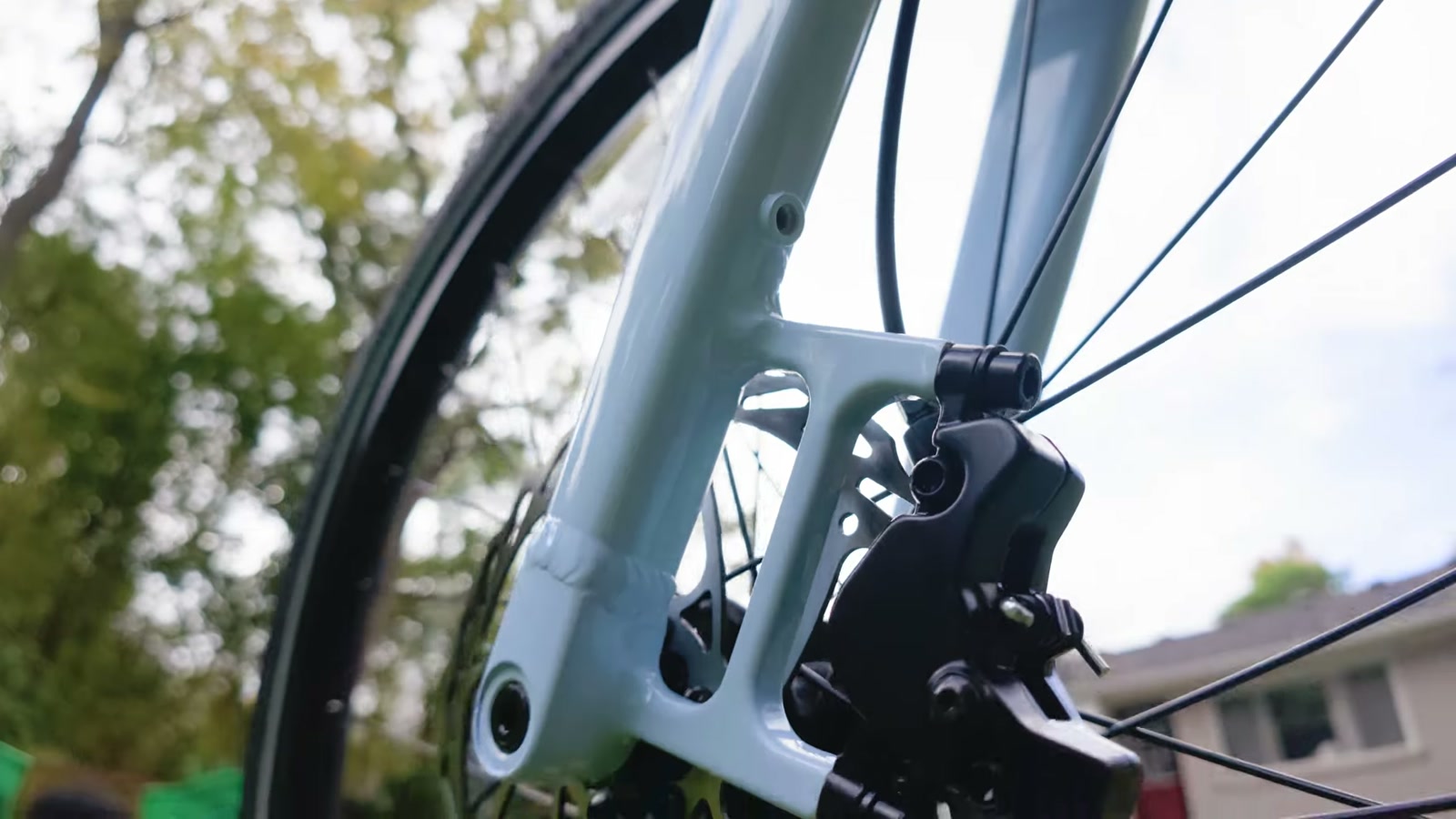
I did some quick speed pickups and brake tests, and the hydraulic disc brakes felt strong and controlled.
On commuter ebikes, good brakes are non-negotiable—especially if you’re riding near cars, intersections, and unpredictable pedestrians. The braking here felt solid and predictable.
The commuter features that actually matter
Integrated lighting and turn signals
The lighting package is better than I expected.
The tail light is large, bright, and includes turn signals and brake light functionality. For commuting—especially if you ride at dawn, dusk, or nighttime—that visibility boost is huge.
Up front, the headlight is small but bright, and it has side visibility thanks to an amber-colored lens effect that lets it be seen from the side. It’s not a separate signal light, but it does help you stand out at intersections.
Tires: Street-first and practical
The 27.5 x 1.95 street tires are clearly designed for pavement. They also include reflective sidewalls and slime puncture protection, which is exactly the kind of everyday practicality I want on a commuter.
No, they’re not “all-terrain.” But for city riding, they make sense.
The missing piece: fenders
This is my biggest real complaint: it doesn’t come with fenders.
If you sell a bike as a commuter, fenders should be part of the deal. Without them, puddles and wet roads will absolutely splash you—especially if you’re trying to ride to work and arrive looking presentable.
Fenders are available separately, and they’d be the first accessory I’d buy if I were using this bike for daily commuting.
Battery and range expectations: Built for short commutes
The removable battery is a 48V pack with about 7.5Ah (the spec callout later references 7.8Ah). Either way, the takeaway is the same: this is a smaller-capacity battery.
In real-world terms, that means I’d treat the XPress Lite as:
Ideal for short-to-medium commutes
Great if you can top off charging at work or at home
Less ideal for long, high-speed rides where you don’t want to think about range
The upside is the bike stays lighter and more maneuverable. The tradeoff is you’ll recharge more often if you ride hard or ride far.
Real-world use cases: Where the XPress Lite makes the most sense
City commuting and errands
This is the sweet spot.
It’s light enough to feel manageable, quick enough to keep up, and the torque sensor makes constant speed changes feel natural. Add fenders and you’ve got a very practical daily ride.
Fitness-plus riding (where you still want to pedal)
Because the assist is so smooth, it’s easy to ride this like a bike—not like a scooter. I found myself enjoying pedaling in the mid assist levels and just letting the motor smooth out the effort.
Light “cut-through” off pavement (only when needed)
Grass, uneven shortcuts, or a brief stretch of rough terrain? You can get through it.
But without suspension, I wouldn’t buy this bike for trails or regular off-road use.
What We Like
Smooth, natural pedal assist that feels genuinely well tuned
Torque sensor behavior makes it ride more like a traditional bike
Lightweight feel for an ebike (about 45.6 lbs without the battery)
GPS top speed around 27 mph in my testing (with the display showing up to about 28 mph)
Bright integrated lighting, plus rear turn signals and brake light function
Removable display with an easy, clear settings menu
Hydraulic disc brakes feel confident
Things To Consider
Smaller battery capacity means less range and more frequent charging for longer rides
No front or rear suspension, so rough pavement and off-road riding feel harsh
No fenders included, which is a miss for a commuter-focused ebike
Street tires are best on pavement, not mixed terrain
Final Thoughts
The Lectric XPress Lite is the kind of ebike I like recommending to people who want something simple, practical, and easy to ride—especially if you’re commuting in a city and you care more about a natural ride feel than oversized specs.
The torque sensor tuning is the headline here. It makes the assist feel intuitive, and that’s what turns an ebike from “powerful” into “pleasant.” Add in the lightweight handling, solid brakes, and genuinely useful lighting (including turn signals), and it comes together as a commuter that feels thoughtfully designed.
If your rides are mostly pavement and your distances are reasonable—or you can recharge along the way—the XPress Lite makes a lot of sense.
If you need long range, regularly ride rough roads, or want a bike that doubles as a trail machine, I’d look at something with more battery capacity and some suspension.