
Raev Bullet GTX (2026) Review: Dual Batteries, Smooth Power, and a Surprisingly Comfy Ride
September 18, 2026
Some links in this article may be affiliate links. If you buy through them, we may earn a small commission at no extra cost to you.
The 2026 Raev Bullet GTX is the kind of moped-style e-bike that makes you stop caring about spec-sheet racing and start thinking about how it actually feels to live with. It’s big, it’s heavy, and it looks like it belongs in the same conversation as the classic moped-inspired builds a lot of us got into this hobby with.
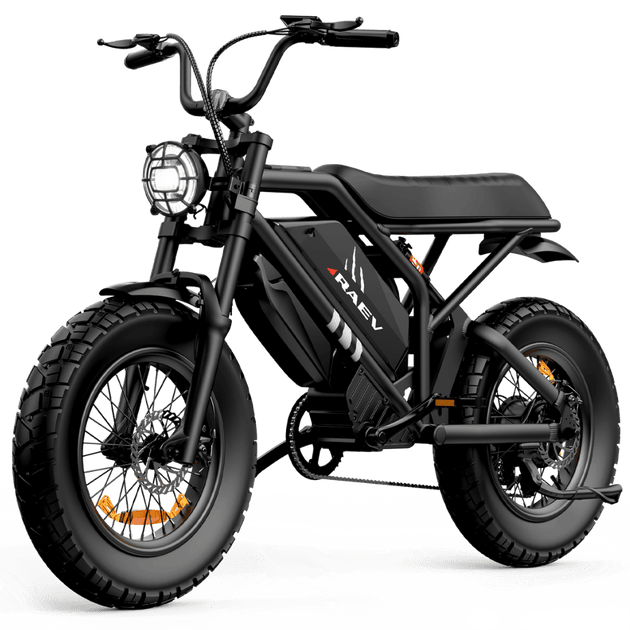
But what surprised me most wasn’t the 1,500W peak number or the dual-battery setup. It was how dialed-in the ride felt once I got rolling—especially for something that comes in around 85 pounds.
If you’re shopping for a moped-style electric bike that’s more about comfort, balance, and everyday usability than chasing 35+ mph, the Raev Bullet GTX is a really interesting option.
First Impressions
Out of the box, the packaging was solid and assembly was straightforward. No drama, no damage, and nothing about it felt flimsy.
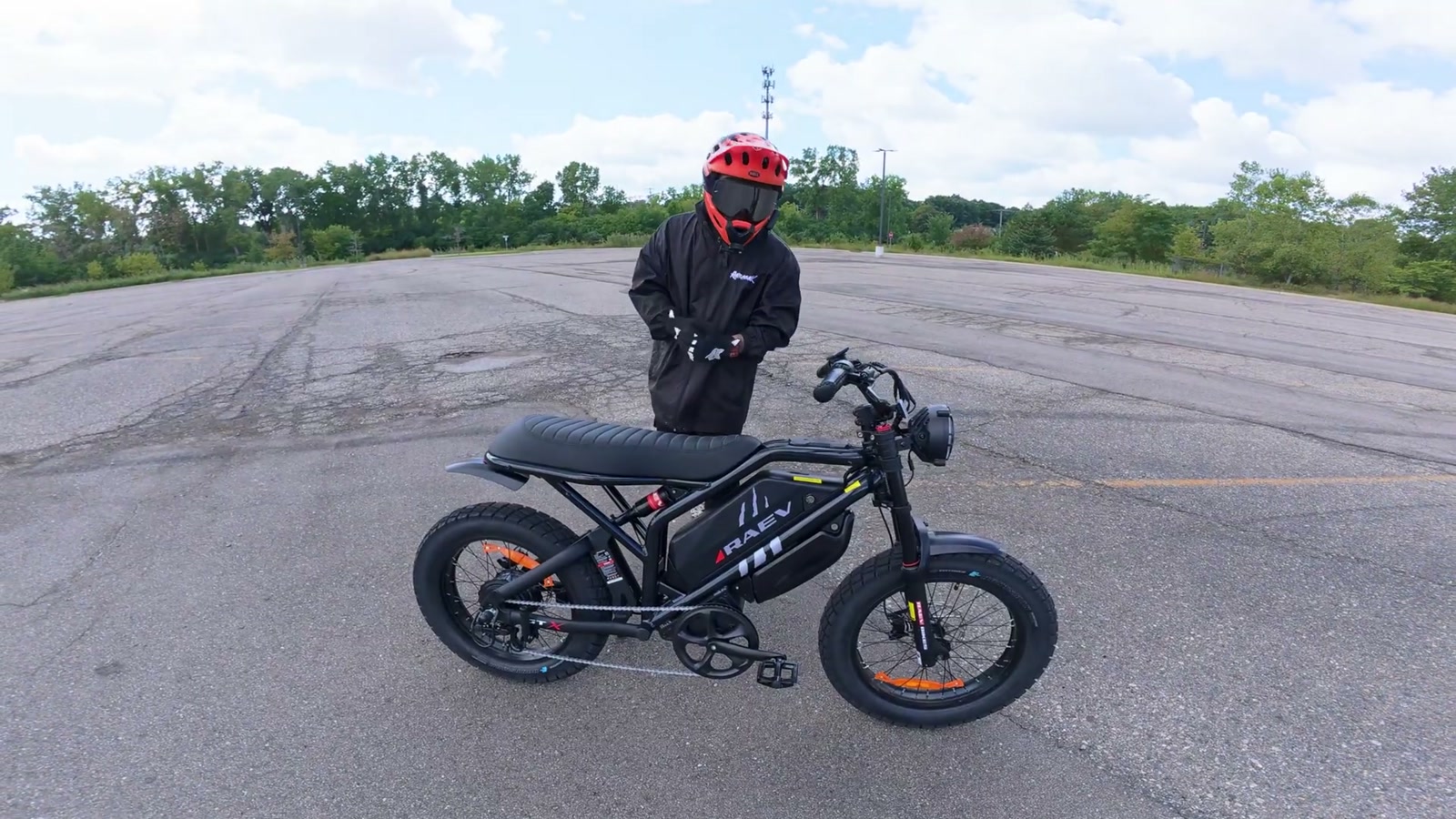
Visually, it’s very much a moped-style e-bike, but it’s one of those designs where the changes are subtle. The stance is planted, the saddle looks like a real seat (not an afterthought), and the bike has a “finished product” vibe.
The first thing I noticed when I started looking it over: Raev clearly cares about the rider contact points and the basics—seat, tires, brakes, suspension. Those are the things you feel on every ride, and they matter more than flashy features.
Build and Design Details That Actually Matter
The saddle is legitimately good
The long moto-style saddle is one of the highlights. It’s narrow up front and wider in the rear, which worked well for me as a shorter rider, and it’s shaped in a way that feels natural whether I’m scooting forward for control or sliding back to relax.
The ribbed, grippy material also feels like something I wouldn’t rush to reupholster or replace. A lot of moped-style bikes almost assume you’re going to swap the seat immediately. Here, I wouldn’t.
Passenger-ready touches
The seat length plus the foldable passenger pegs make it feel genuinely passenger-capable. I like when brands include details like that because it matches how people actually use this style of bike—short trips, cruising, maybe giving a friend a lift around the neighborhood.
Fat tires with a tread that makes sense
It rolls on 20x4 Vee Huntsman tires with a dual-sport tread. I’m a fan of this style of tread because it’s not trying too hard to be aggressive off-road, but it still has enough shape to handle dirt, grass, and rough paths without feeling sketchy.
On pavement, it felt composed. On light off-road (more on that later), it had plenty of grip for what this bike is.
Brakes that feel like they belong on a heavy bike
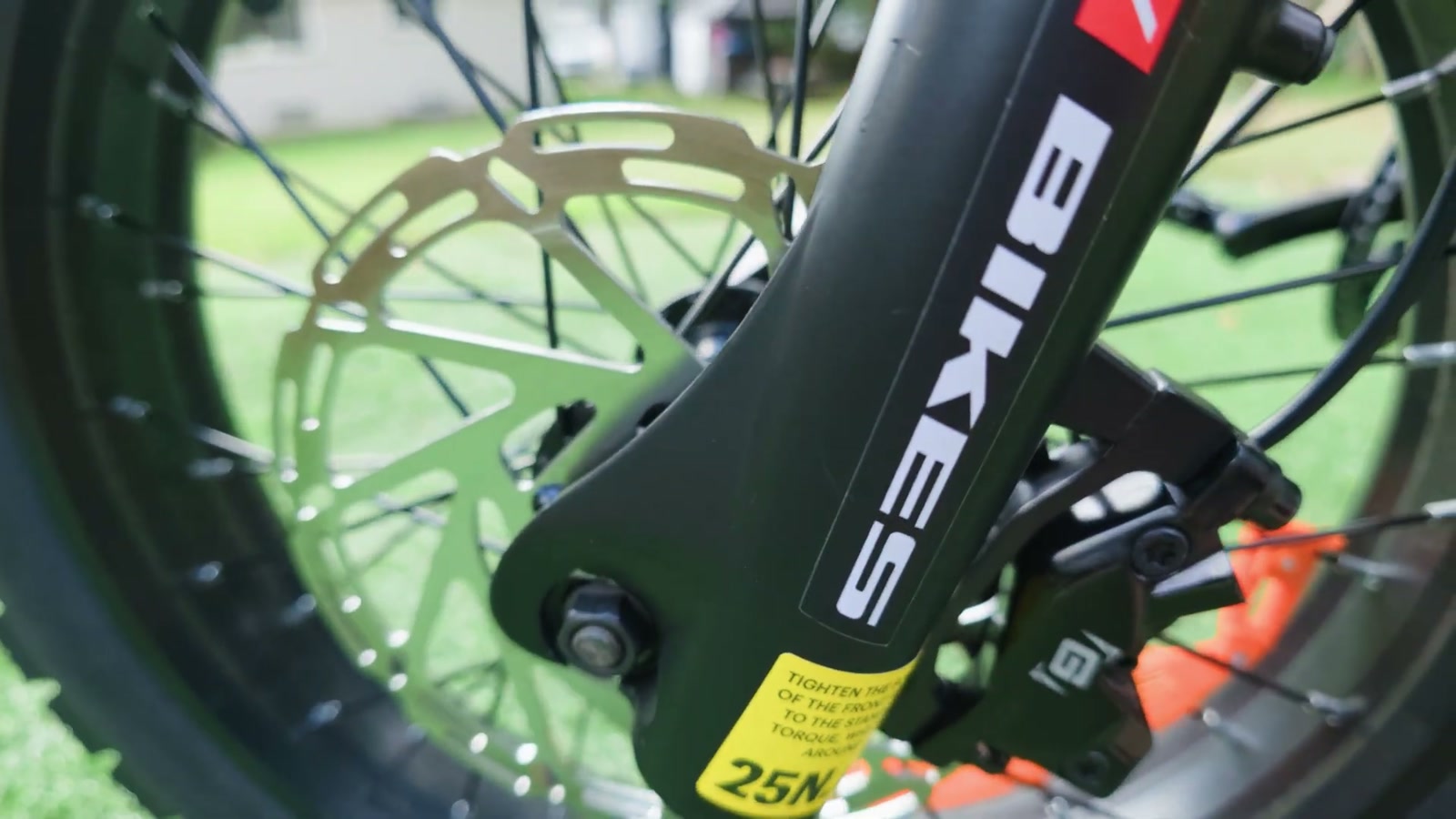
Four-piston hydraulic brakes with 180 mm rotors is the kind of setup I want to see on a bike in this weight class. And in real riding, they backed it up—hard stops felt confident, and I was able to lock it up when I wanted to.
Suspension that takes the edge off
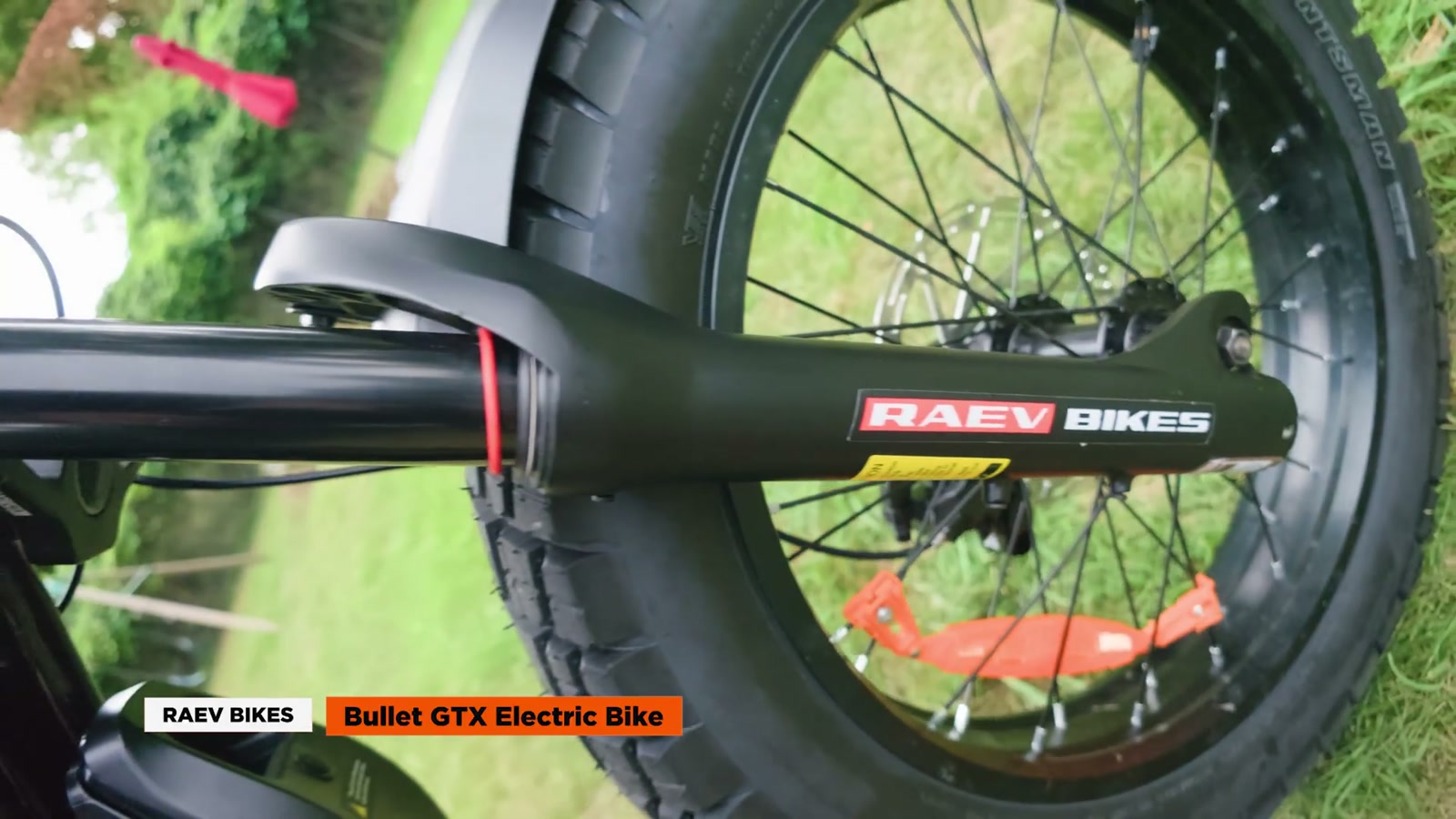
Up front there’s a hydraulic fork with 60 mm of travel, plus compression and preload adjustment. In the rear, Raev uses an upgraded dual-chamber rear air shock.
On the road, the suspension didn’t feel like decoration. It made a noticeable difference on cracks, rough pavement, and potholes—exactly the stuff that can make heavy moped-style e-bikes feel punishing if they’re under-suspended.
Dual Batteries: The Best Kind of “Range Anxiety” Fix
The Bullet GTX runs a dual-battery setup with both batteries removable and using separate keys.
Main battery: 52V 25Ah
Secondary battery: 52V 8Ah
Total: 33Ah
What I like about this approach is that it feels practical. If you’re commuting or doing longer neighborhood cruising, having 33Ah on tap should give you real flexibility depending on how you ride.
And because this bike is speed-limited (more on that below), it’s not constantly trying to push into higher speeds where range can disappear fast.
Controls, Display, and a Note on Speed Limiting
The control layout is simple: a basic display, five pedal assist levels, a headlight switch, and a right-hand thumb throttle.
I’ll be honest: I would’ve preferred a half-twist or full-twist throttle on a bike with this moped vibe. Thumb throttles work fine, and this one was tuned well, but a twist throttle just matches the style and ergonomics better.
There’s also a built-in digital horn that’s loud enough to be useful.
About unlocking the speed
I tried the usual menu methods that often work on similar displays, and I couldn’t find a way to unlock top speed on the 2026 GTX. From what I could tell, it’s intentionally locked down compared to some previous versions.
In practice, that means you’re riding the bike Raev intended—not a version you “hack” into something else.
Ride Experience: Where the Bullet GTX Wins
This bike is all about the ride. Not in an “it’s sporty and nimble” way—more in a “this is comfortable and predictable and I don’t feel like I’m fighting it” way.
Acceleration and throttle feel
The throttle response is smooth and easy to modulate. That matters a lot on moped-style e-bikes because a lot of them feel either too jumpy or too laggy.
Here, it felt tuned. Rolling on power from a stop didn’t feel awkward, and adjusting speed in a parking lot or on mixed surfaces was straightforward.
One thing I liked: I could use throttle and pedal assist at the same time. That made it easy to add a little extra push when I wanted without changing my whole riding rhythm.
Real-world top speed
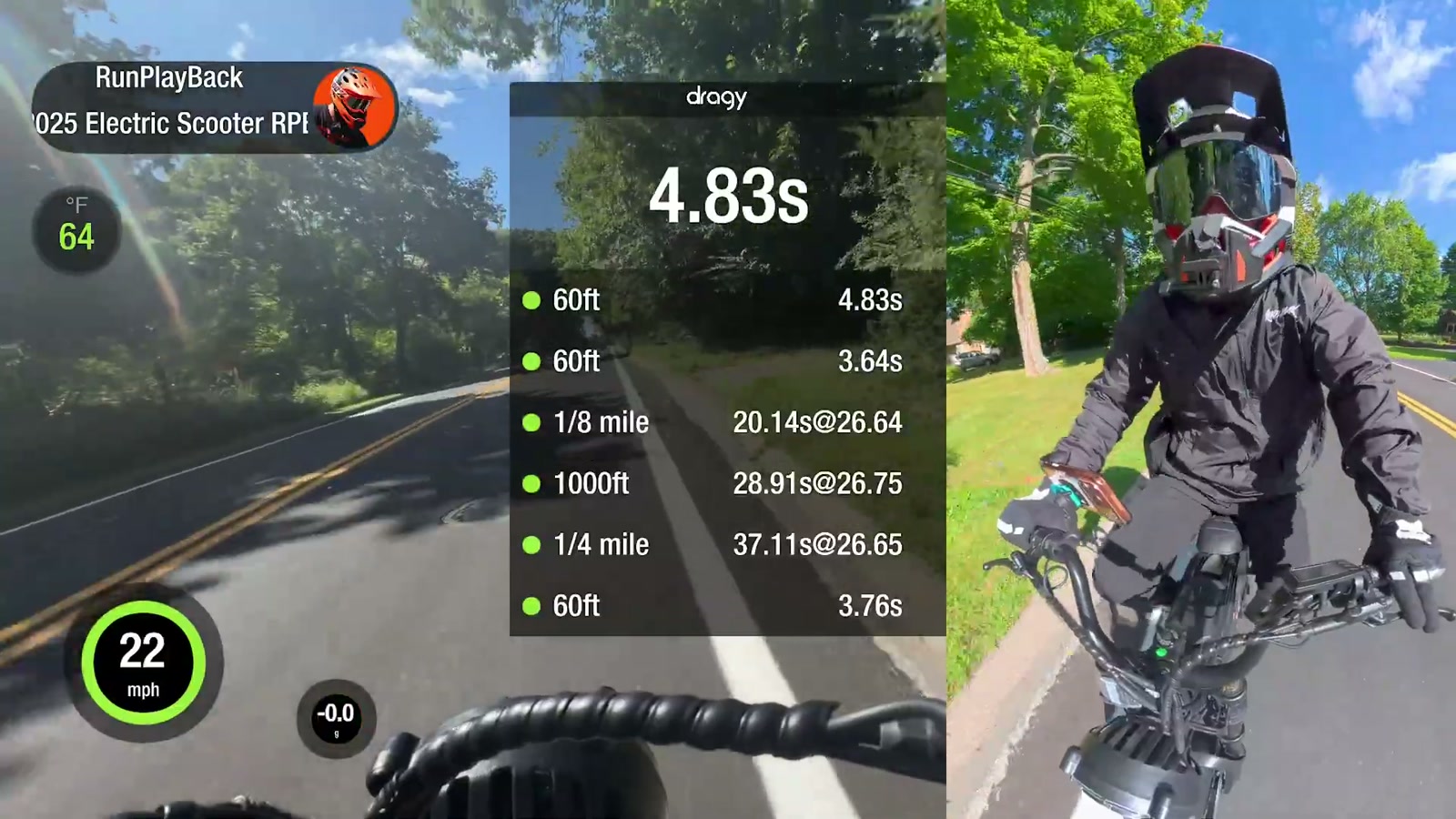
In my testing, I topped out around 26 mph on GPS while the display showed 28 mph. That’s pretty common—many displays read a bit optimistic.
If you’re expecting a high-speed moped-style rocket, this isn’t that. But if you want something that can cruise at e-bike speeds without feeling stressed, it fits the mission.
Uphill performance
Going uphill, I was seeing around 20 mph with some pedaling. For a heavy bike, that’s respectable, and it felt like it had enough power for real-world hills and typical commuting routes.
Comfort is the real selling point
The combo of fat tires, suspension, and that saddle made this a genuinely comfortable ride.
I ran it over rough pavement, cracks, and pothole-y sections, and it kept things from feeling harsh. Instead of bracing for impacts, I could settle in and just ride.
This is the kind of comfort that actually changes how you use the bike. It makes longer rides more appealing, and it makes everyday errands feel less like a chore.
Handling and the “big bike” feel
You feel the size and the tire width, especially in turns.
This isn’t a bike that wants razor-sharp, tight cornering. I naturally took wider turns and leaned more than I would on a lighter, narrower e-bike. The steering doesn’t feel abrupt, and that’s partly because those 4-inch tires want a little more input.
I also appreciated how balanced it felt. With the larger battery centered in the frame and the smaller battery underneath, weight distribution felt thoughtful. It didn’t feel weirdly front-heavy or tail-heavy—just solid and planted.
Braking performance
The brakes were a highlight. I could get hard stops without drama, and the bike felt controlled under braking. On a heavy bike, that’s not optional—it’s essential.
Light Off-Road: Not a Dirt Bike, But Not Scared of Grass
I took it onto grass and up a hill to see if it would feel miserable.
It didn’t.
The Bullet GTX handled grass transitions well, climbed without feeling underpowered, and stayed comfortable doing it. I wouldn’t buy this bike for rocky, technical terrain—and it definitely feels clunky if you start treating it like something you want to jump.
But for what most people actually mean when they say “light off-road” (parks, packed dirt paths, grassy shortcuts, rough parking lots), it felt confident.
Real-World Use Cases
Neighborhood cruising and bike paths
This is where the Bullet GTX makes the most sense. It cruises comfortably at the speeds you actually use on bike infrastructure, and it doesn’t feel like it’s constantly trying to run away from you.
Commuting (with realistic expectations)
For commuting in neighborhoods, surface streets, and bike lanes, it’s a great match—especially because the ride is so comfortable.
If your commute is on faster roads (35–40 mph traffic), the 26–27 mph real-world top speed might feel slow relative to cars. That’s not a dealbreaker for everyone, but it’s something I’d think through.
Two-up short rides
The passenger pegs and long saddle invite it. I wouldn’t call it a replacement for a scooter, but for short, casual rides, it’s set up in a way that makes sense.
What We Like
Extremely comfortable saddle, plus suspension and fat tires that actually smooth out rough pavement
Smooth, well-tuned throttle response that’s easy to modulate
Strong stopping power from the four-piston hydraulic brakes
Dual-battery setup with removable batteries (33Ah total) for longer rides
Balanced feel for such a large, heavy moped-style e-bike
Things To Consider
Real-world top speed was about 26–27 mph, and I couldn’t find a way to unlock speed on the 2026 model
At around 85 lbs, it’s heavy, and it rides like a heavy bike in tight turns
Cadence-based pedal assist takes a couple revolutions to kick in, which can feel a little delayed from a stop
I’d personally prefer a twist throttle on a bike with this style
Final Thoughts
The 2026 Raev Bullet GTX feels like a moped-style e-bike that’s been tuned for how people actually ride: comfortable cruising, predictable handling, strong braking, and enough power to handle hills and daily routes without feeling stressed.
If you want a fast, unlockable speed machine, this probably isn’t your bike. The speed limiting seems intentional, and in my testing it settled into that 26–27 mph range.
But if your priority is comfort, real-world usability, and a planted ride that feels well-balanced despite the weight, the Bullet GTX is easy to like. It’s one of those bikes where the ride quality is the pitch—and after time in the saddle, I get it.