

Anatomy of a Scene: Building a Dystopian World With Class, Color, and a Single Lottery Ticket
February 8, 2020
Some links in this article may be affiliate links. If you buy through them, we may earn a small commission at no extra cost to you.
I love sci‑fi that feels close enough to our world that it’s uncomfortable. For Bespoke, I wanted the dystopia to look believable, not like a glossy future—because the real conflict isn’t flying cars. It’s wealth disparity, access, and the quiet ways people get boxed in.
Read more: Watch "Bespoke" on Amazon Prime

This article breaks down how I built the opening scene to communicate the world, introduce Ana and Matteo, and kick off the inciting incident with one small, painfully familiar object: a lottery ticket.
The Goal of the Opening: Make the World Feel Real
Act one needed to do a lot quickly:
Introduce the setting and the rules of the world.
Show who Ana and Matteo are without forcing exposition.
Establish what they want, what they can’t access, and why it matters.
Plant the inciting incident that pushes the story forward.
The big creative choice was making the “dystopian” part almost background noise. The future is present, but the power imbalance is the main event.
Location and Timing: Emptiness as a Character
I shot the opening wide with Ana and Matteo waiting for a bus in a bleak city environment. The location is the Blake Transit bus station in downtown Ann Arbor, and it gave me exactly what I needed: hard lines, concrete, and a public-space vibe that already feels a little cold.
I filmed very early in the morning. Not because it’s romantic—because emptiness sells isolation. Fewer pedestrians and commuters meant the frame could breathe, and the city could feel abandoned without me having to dress the set with a million “future” props.
The result was a world that feels like it’s been drained: less movement, less warmth, less possibility.
Ana and Matteo: Visual Storytelling First
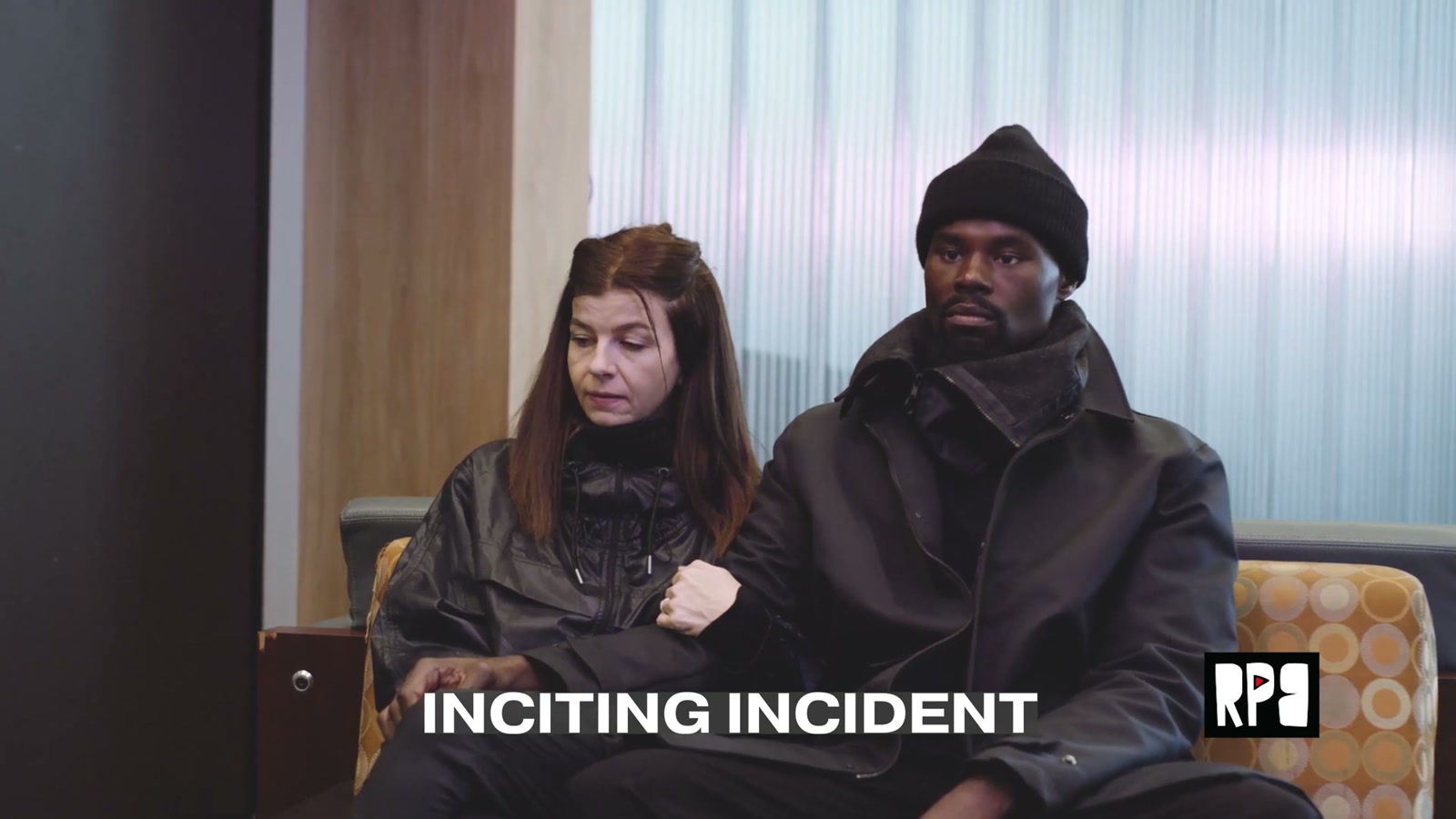
Ana and Matteo are introduced as an interracial couple, positioned as working-class, waiting. Their wardrobe is all black—monotone, stripped down, practical. I wanted them to look like people who don’t have extra options. No visual indulgence.
And then I placed something in the background that does a ton of heavy lifting.
The Bio Needle Ad: A Future That’s Only for Some People
Behind them is an advertisement for Bio Needle, a corporation that creates designer babies.
That single element tells you:
This world has advanced reproductive/genetic technology.
That tech is normalized enough to be advertised in public spaces.
The promise of “better” is being sold constantly.
And, most importantly: not everyone can afford it.
I wanted the ad to feel like a temptation—something Ana can’t ignore. Even if she’s trying to keep her face neutral, the idea of “starting a family” is being marketed right at her in the middle of an already harsh environment.
This is the dystopia: not that the technology exists, but that it’s distributed like luxury.
The Lottery Ticket: The Inciting Incident in Your Hands
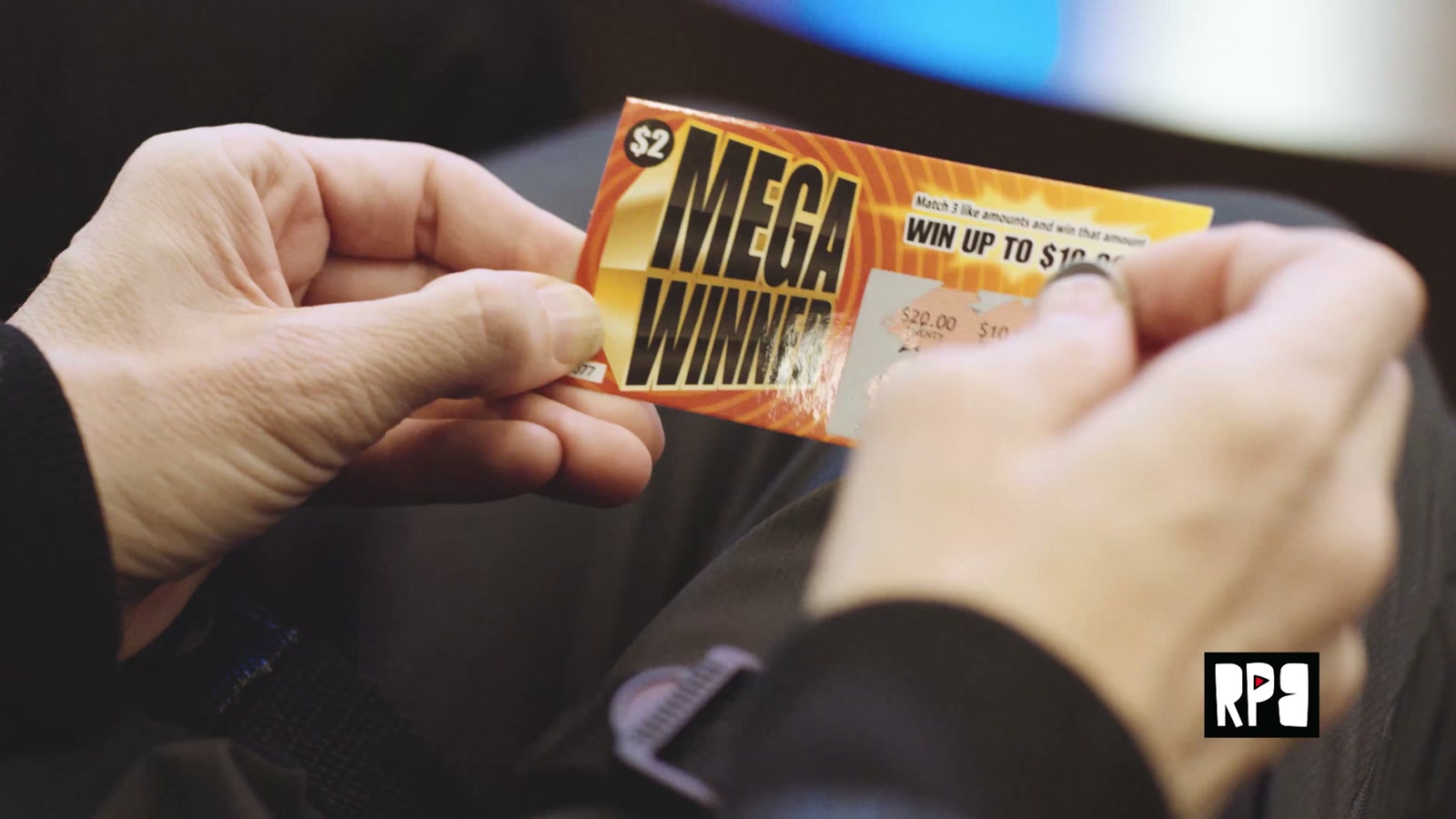
Then I cut to a close-up: a lottery ticket being scratched.
That’s the inciting incident seed. It’s simple and instantly readable, and it carries a ton of social meaning. The lottery isn’t just “a game” in this world—it's a pressure valve for people who feel locked out.
I built the moment around the idea that the lottery is heavily targeted toward the poor—often minorities, often people in financial trouble, sometimes addiction-adjacent—and that the hope it sells is a particular kind of hope: fast, unlikely, and desperate.
Matteo’s line about being more likely to get struck by lightning underlines it. It’s not just banter. It’s a coping mechanism.
This is what it looks like when the system doesn’t offer you realistic paths.
Charlie Enters: Pastels, Power, and a Look That Says Everything
Then I introduce Charlie.
He’s dressed in pastels. That’s not random styling—it’s a visual class marker. I wanted wealth to read immediately, even if you had the sound off.
The way he looks at Ana and Matteo matters too. It’s superiority without confrontation, the kind you can’t call out without sounding “sensitive.” That’s intentional. Class tension is often quiet, expressed through micro-behaviors and assumed entitlement.
Also: notice what wealthy people generally don’t do in this world. They don’t need the lottery fantasy. The contrast is part of the scene’s architecture.
Background Layers: The Conversation That Changes Everything
Next, Charlie’s pregnant wife, Josie, appears with a doctor. Their conversation starts as normal pregnancy talk—then slides into genetic editing.
The doctor predicting physical attributes isn’t a sci‑fi flourish. It’s a flex.
It reinforces that:
This tech is real and available.
There’s a consumer experience around pregnancy.
Expectations can be purchased.
In the background, Ana and Matteo listen. I staged their reactions to land in a complicated place: not melodrama, not wide-eyed awe—more like indifference layered with envy. Like they’ve seen this world for a long time, and it still stings.
That’s the emotional hinge of the opening.
Wardrobe as a Class System: Pastel vs. Black
I leaned on a simple palette rule:
Pastels = wealth.
Black/monotone = poor.
It’s blunt, but it works fast, and it keeps the storytelling visual. In a short film, clarity matters.
I also tucked in a subtle character wrinkle: a hint of flirtation between Josie and the doctor. That’s there to suggest shortcomings in Charlie—little fractures that complicate the “perfect life” surface.
The wealthy aren’t presented as cartoon villains. They’re just insulated.
What the Scene Ultimately Establishes
By the end of this opening sequence, I wanted the audience to feel like they understand the core problem without being spoon-fed:
The city has undergone an environmental disaster.
That disaster accelerated income and racial disparity.
Ana and Matteo sit on the wrong side of the divide.
There’s a medical procedure in play that they likely can’t afford.
The lottery ticket becomes a possible key to survival.
That’s the setup—and it launches the debate that drives the rest of the story: do you accept the hand you’re dealt, or do you use science to rewrite it?
What We Like
A grounded dystopia that feels uncomfortably plausible.
Location and early-morning timing create emptiness without expensive set dressing.
Visual class coding (wardrobe, behavior, background ads) communicates fast.
The lottery ticket is a simple prop with heavy emotional and social weight.
Layered blocking: foreground story + background conversation + reactive listening.
Things To Consider
The pastel/black wardrobe language is intentionally blunt; it trades subtlety for instant readability.
A lot of meaning is carried by background elements (like the Bio Needle ad). If viewers miss them, the scene relies more on inference.
The scene leans into real-world associations about poverty and the lottery; that’s the point, but it can land differently depending on personal experience.
Final Thoughts
This opening was built to do one thing: make the stakes personal before they’re plot.
If I can get you to feel the weight of a bus stop, a scratch ticket, and a corporate baby ad—then the sci‑fi doesn’t have to shout. The world is already telling you who gets choices and who gets consequences.