
How I Manage Single-Sided Deafness (SSD) Day to Day — and the Tech That Actually Helps
January 29, 2020
Some links in this article may be affiliate links. If you buy through them, we may earn a small commission at no extra cost to you.
I’ve lived my whole life with unilateral hearing loss, better known as single-sided deafness (SSD). I was born with no functional hearing in my left ear. It’s one of those conditions that can be almost invisible to other people, but it quietly shapes how I move through the world—especially in loud, social settings.
Read more: Apple Airpods Pro
This is what SSD feels like for me in real life, the little strategies I’ve developed without even thinking about it, and the tech I actually use when I need an assist.
SSD is a “hidden” disability until it isn’t
A lot of people don’t realize I have SSD unless I tell them. In a calm environment with one person talking to me from the right side, I can seem totally fine. That’s part of what makes it tricky—when things get difficult, it can look like I’m distracted, not paying attention, or not engaged.
Growing up, teachers would sometimes try to accommodate me (like seating placement), but it was easy for people to forget because I wasn’t wearing anything visible like a hearing aid.
The head shadow effect: the most exhausting part
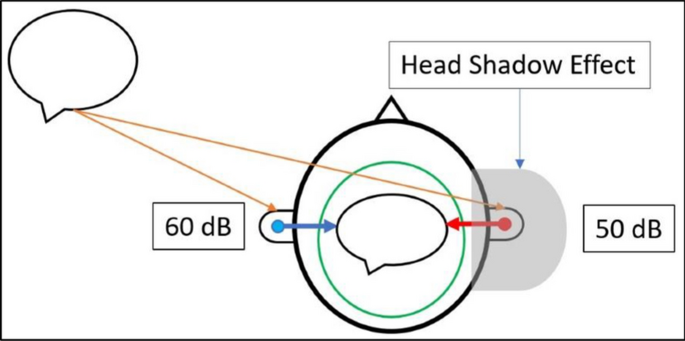
The biggest daily challenge for me is sound localization—what’s often described as the head shadow effect.
When you have two working ears, your brain can triangulate sound. You can tell who’s talking, where a noise came from, and you can separate voices better in a crowd.
With SSD, sound coming from my deaf side gets blocked and muffled by my head before it reaches my right ear. In busy environments, everything can collapse into a single wall of noise.
The best way I can describe it is like listening to a movie with a terrible audio mix: dialogue, music, and sound effects all smashed together at the same volume. I can tell sounds are happening, but picking out one voice—especially a new voice I don’t recognize—is where it gets overwhelming.
Restaurants and group hangouts: I plan my position like it’s a sport
Big tables and noisy restaurants are where SSD shows up the hardest.
If I can, I try to get there early so I can choose a seat that makes sense—ideally a corner spot where my right ear faces the group. That simple change can turn a frustrating dinner into something I can actually enjoy.
If I’m stuck with people talking on my left side, I can still participate, but it takes more work. And if the room is loud enough, my brain will sometimes “give up” on that side. I’ll still be aware something’s happening, but I’m less likely to jump in quickly because it’s harder to sustain the back-and-forth without constantly repositioning.
The weird upside: sleep is easier
There is one situation where SSD can honestly feel like a feature: sleeping.
If I want to block out noise, I just put my good ear on the pillow and the world gets quiet. It’s like an instant mute button.
How SSD shaped my personality (and why creative work feels different)
I’ve been labeled “the quiet one” plenty of times, especially in high school and college. Some of that is just who I am, but SSD absolutely influences how social settings feel—especially chaotic ones.
Where I’ve always felt most comfortable is in creative work. For me, filmmaking and creative collaboration are a different kind of communication. There’s usually a shared goal, a shared focus, and a structure that makes it feel less like trying to decode a noisy room. In those moments, I notice SSD less.
The tech I’ve researched (and what I actually use)
Over the years I’ve looked into a lot of options. Some sound promising, some are expensive, and some just don’t fit my lifestyle.
CROS-style hearing solutions (non-surgical)
The most practical non-surgical direction I’ve found is the idea behind CROS systems—devices designed to route sound from the non-hearing side over to the hearing ear.
I’ve looked into systems like the Phonak CROS line, and I’m also aware there are other manufacturers with similar approaches. The idea makes a ton of sense for SSD.
The frustrating part is price. It’s hard to ignore how inaccessible these solutions can be for a lot of people.
The “as seen on TV” amplifiers aren’t for me
I also went down the rabbit hole of personal amplifiers you can find online. Most of them feel targeted at a completely different user and lifestyle than mine, and they weren’t something I could realistically see myself relying on day to day.
The surprise win: AirPods Pro (accessibility + sanity in loud places)
The thing I’ve used the most in real life is Apple’s AirPods Pro.
Not because they “fix” SSD—but because they help with the situations that are hardest for me.
Here’s what’s been genuinely helpful:
Noise canceling that calms my brain
In loud environments—busy streets, large gatherings, noisy restaurants—active noise canceling can take the edge off in a way earplugs never did for me.
It’s not just reducing volume. It changes the whole feeling of the environment. When the noise floor drops, my stress drops with it. I feel less anxious and less mentally scattered.
If I’m not trying to hold a detailed conversation and I just need to be present without getting overwhelmed, one AirPod with noise canceling can be the difference between enjoying the moment and counting the minutes until I can leave.
Live Listen: useful, but situational
Apple also has an accessibility feature called Live Listen, where the iPhone can act as a microphone and send audio to the AirPods.
It can work, but socially it’s not always practical to put a phone in the middle of a conversation and ask someone to talk toward it. For me, it’s more of an occasional tool than something I use all the time.
A real wish: a CROS-like mode for AirPods
My dream feature is something Apple is absolutely capable of: a true SSD-focused mode that routes the left-side microphone signal to the right ear in a controlled way—something that behaves like a CROS system, but in a mainstream, over-the-counter form.
If that existed with adjustable levels and smart processing, it could be a game-changer for accessibility.
What We Like
Simple seating/positioning changes can dramatically improve group conversations
Noise canceling (specifically AirPods Pro) helps me stay calmer in loud environments
Apple’s accessibility features show how close we are to more affordable, mainstream help for SSD
SSD is invisible to others, but it’s manageable with the right habits and tools
Things To Consider
SSD can be misread as disinterest or distraction, especially in school or group settings
Loud, echoey spaces and multi-person conversations are still the hardest scenarios
Live Listen can help, but it’s not always socially convenient in the moment
Purpose-built CROS systems seem promising, but cost can be a major barrier
Final Thoughts
SSD isn’t something I’m ashamed of, but it is something I’ve had to learn to navigate. The biggest improvement in my quality of life hasn’t come from memorizing specs or chasing miracle cures—it’s come from understanding my patterns, setting myself up for success in group environments, and using tools that lower stress when sound gets chaotic.
If you’re living with SSD too, I hope this helps you feel a little more seen—and maybe gives you a couple practical ideas to try the next time a restaurant starts sounding like a wall of noise.