
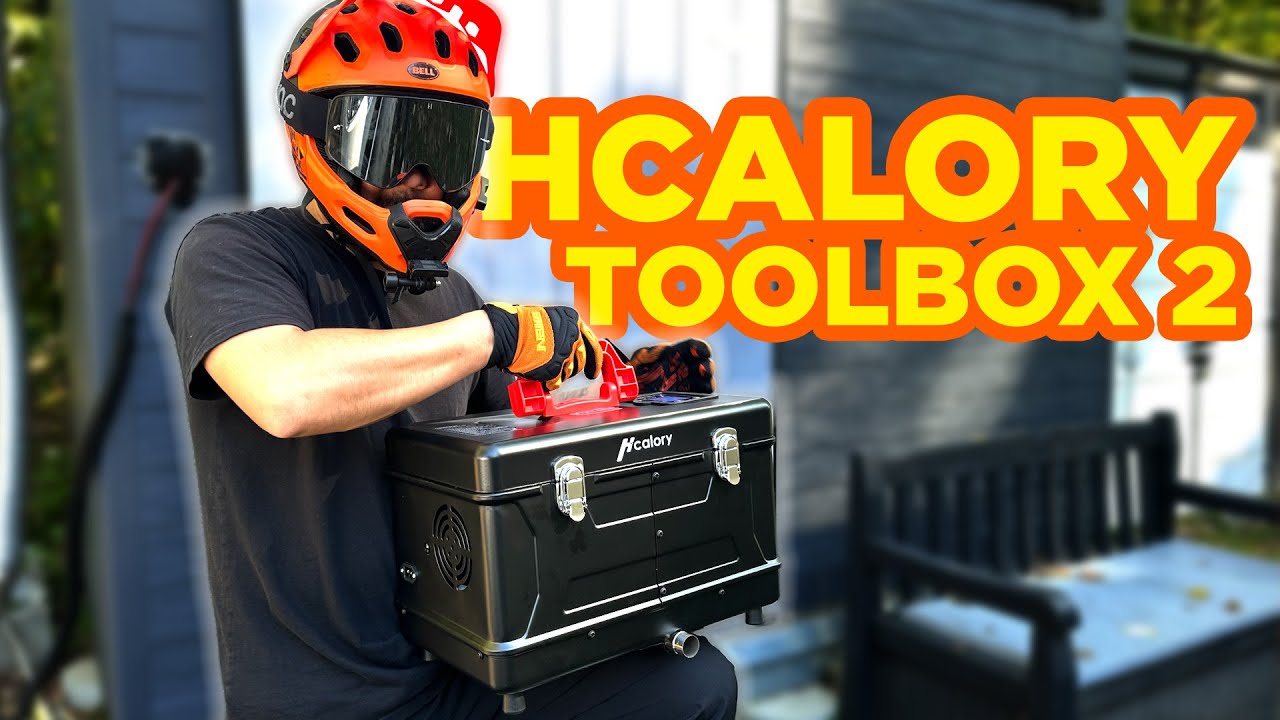
HCalory Toolbox 2 Diesel Heater: Off-Grid Shed Heat That Actually Works (With Solar-Friendly Power Draw)
September 27, 2025
Some links in this article may be affiliate links. If you buy through them, we may earn a small commission at no extra cost to you.
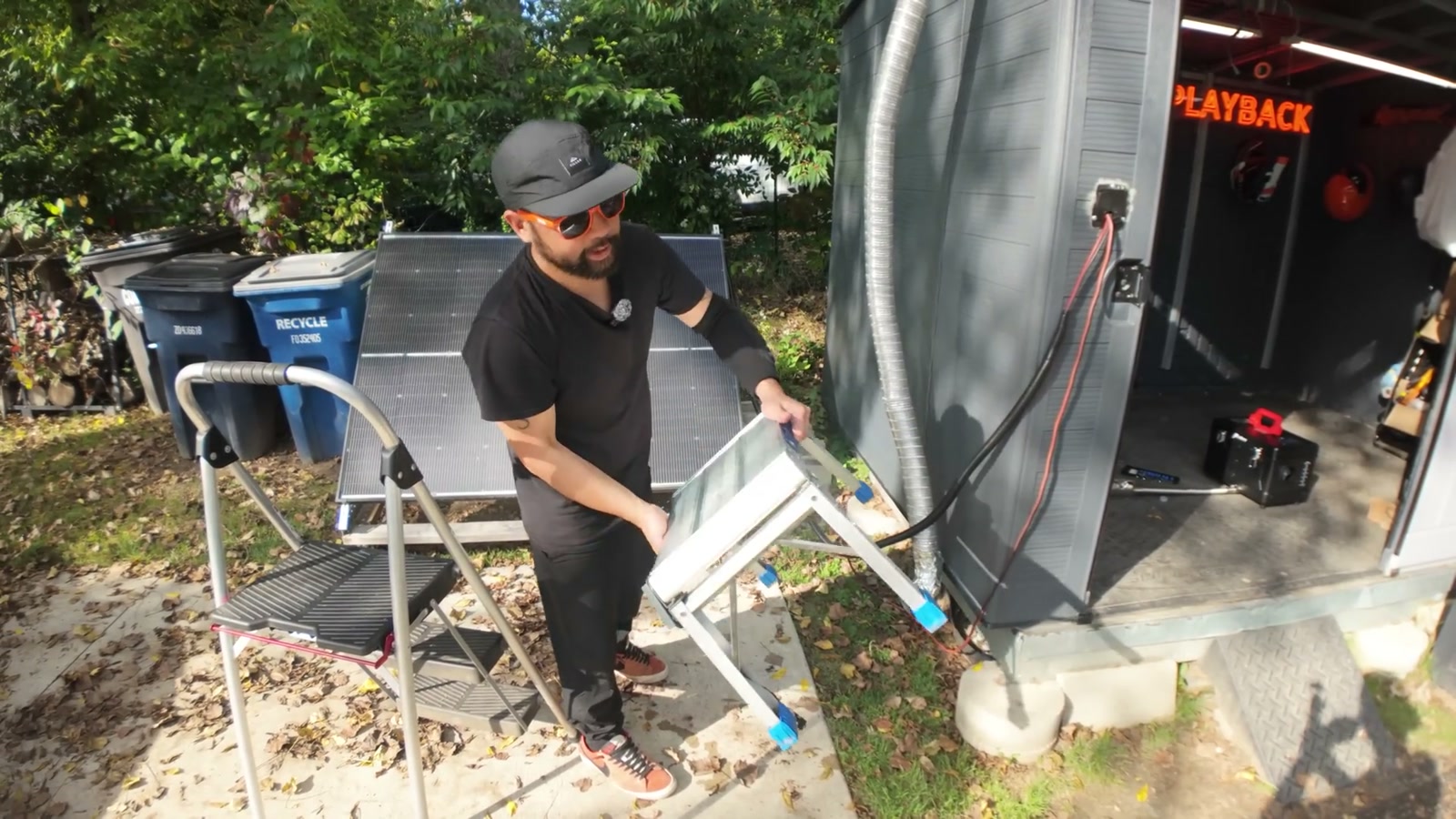
Winter in Michigan is brutal on garage projects—especially when your “garage” is a resin shed powered by solar. When temps drop, I still want to keep building, tuning, and wrenching on bikes without freezing my fingers off.
Read more: HCalory Toolbox 2 Diesel Heater (use promo ode RUNBACK20 for a discount) and Pecron E2000LFP Power Station

So I put the HCalory Toolbox 2 Diesel Heater into my off-grid solar shed setup, ran it through a real warm-up test, and paid attention to the stuff that matters: how annoying the install is, whether it’s loud, how quickly it actually warms the space, and whether the electrical draw is reasonable for a power station.
Why a diesel heater for a solar shed?
A resin shed bleeds heat fast, and electric space heaters are basically a prank if you’re relying on a battery power station. Diesel heaters make a lot more sense here: you’re using fuel for heat, and electricity mainly to run the fan, glow plug on startup, and the control electronics.
That’s exactly the kind of setup I’m after—comfortable workspace air without annihilating my battery.
Unboxing and first setup impressions
Right out of the box, the “toolbox” style design is the main appeal. Everything is contained in a portable enclosure: heater, fuel tank, and the connections you need to get moving.
It comes with the basics for getting heat where you want it and sending exhaust safely away:
Exhaust pipe and muffler hardware
Ducting for hot air
An AC power block for powering the unit
Controls that include app support and a key fob style remote
The big feature for me is control. I wanted something I could start easily (including remotely) and fine-tune without babysitting it.
Installing the exhaust (do this carefully)
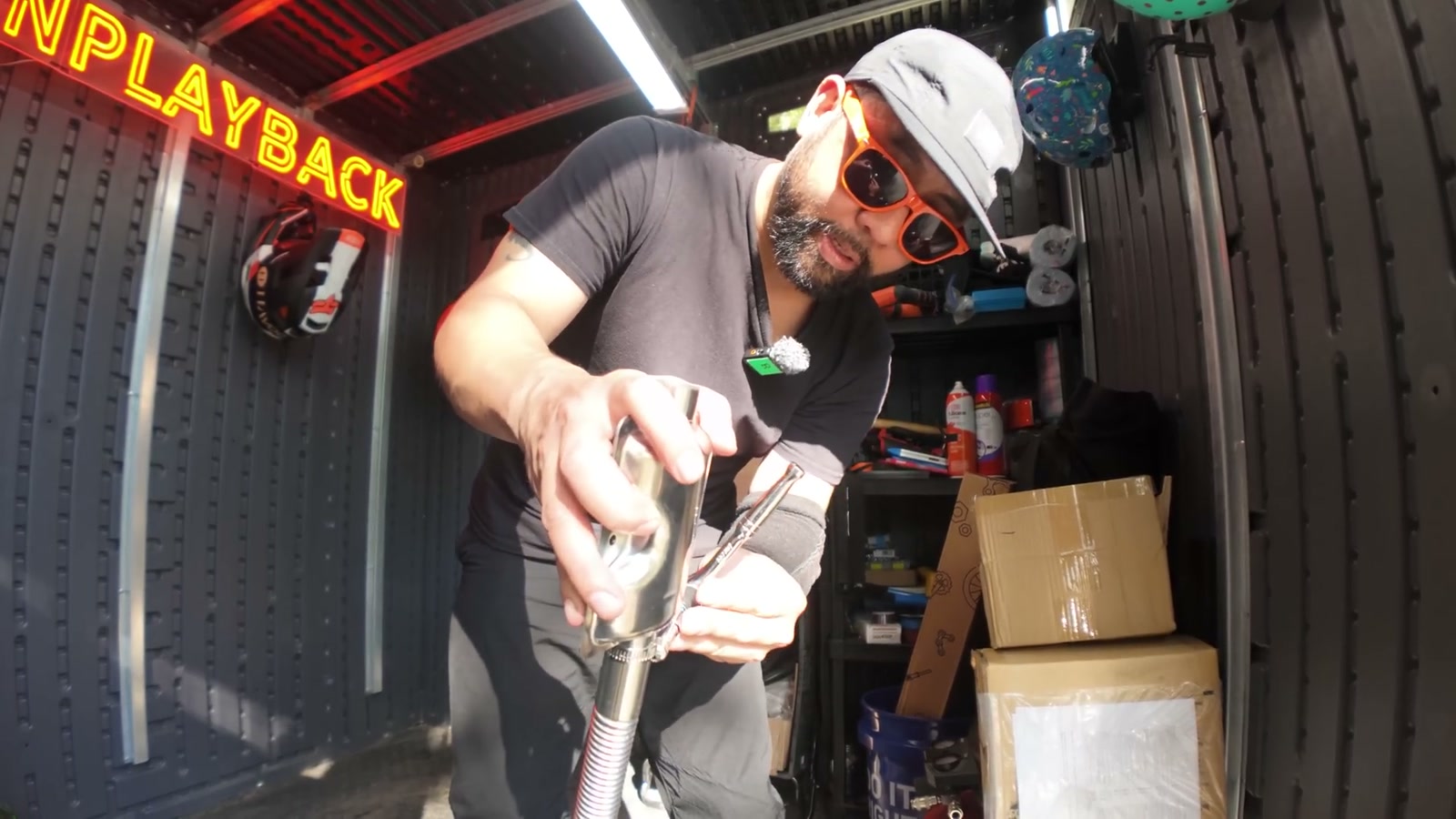
The first thing I tackled was the exhaust pipe and muffler.
A couple practical takeaways from doing it hands-on:
I straightened the exhaust pipe to fit my mounting direction.
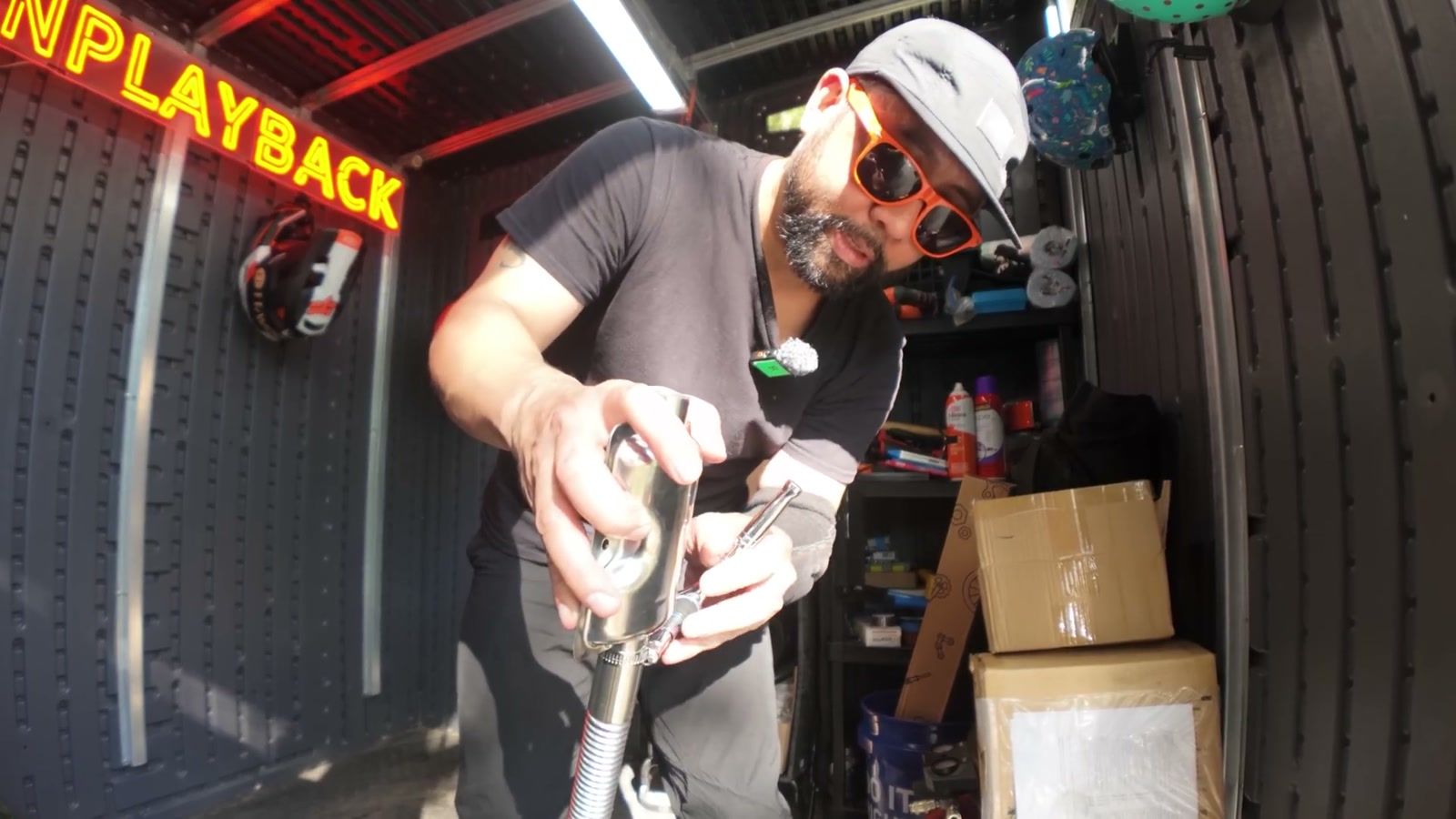
I tightened the clamp with a socket wrench instead of relying on a screwdriver. This is one of those “don’t be lazy” moments—exhaust parts loosening up is not the kind of surprise you want.
The muffler has a small drain hole, and I oriented that hole facing down so condensation can drip out instead of pooling and rusting the muffler.
That last detail is easy to miss, and it matters.
Ducting hot air into the shed (my simple, proven approach)
My shed already had a working heat path from last winter, so I stuck with what I know works.
I run hot air through a port I made in the top acrylic window area. Inside the shed, I use a simple vent/flange setup and flex ducting to route the heat where I want it.
It’s not the prettiest installation, but it’s effective.
I’ve tried different ducting, and honestly the cheap aluminum dryer duct from the hardware store is enough for a setup like this. I attached it to elbows, used clamps, and added aluminum tape in a couple spots to keep it from slipping.
Power and placement in an off-grid setup
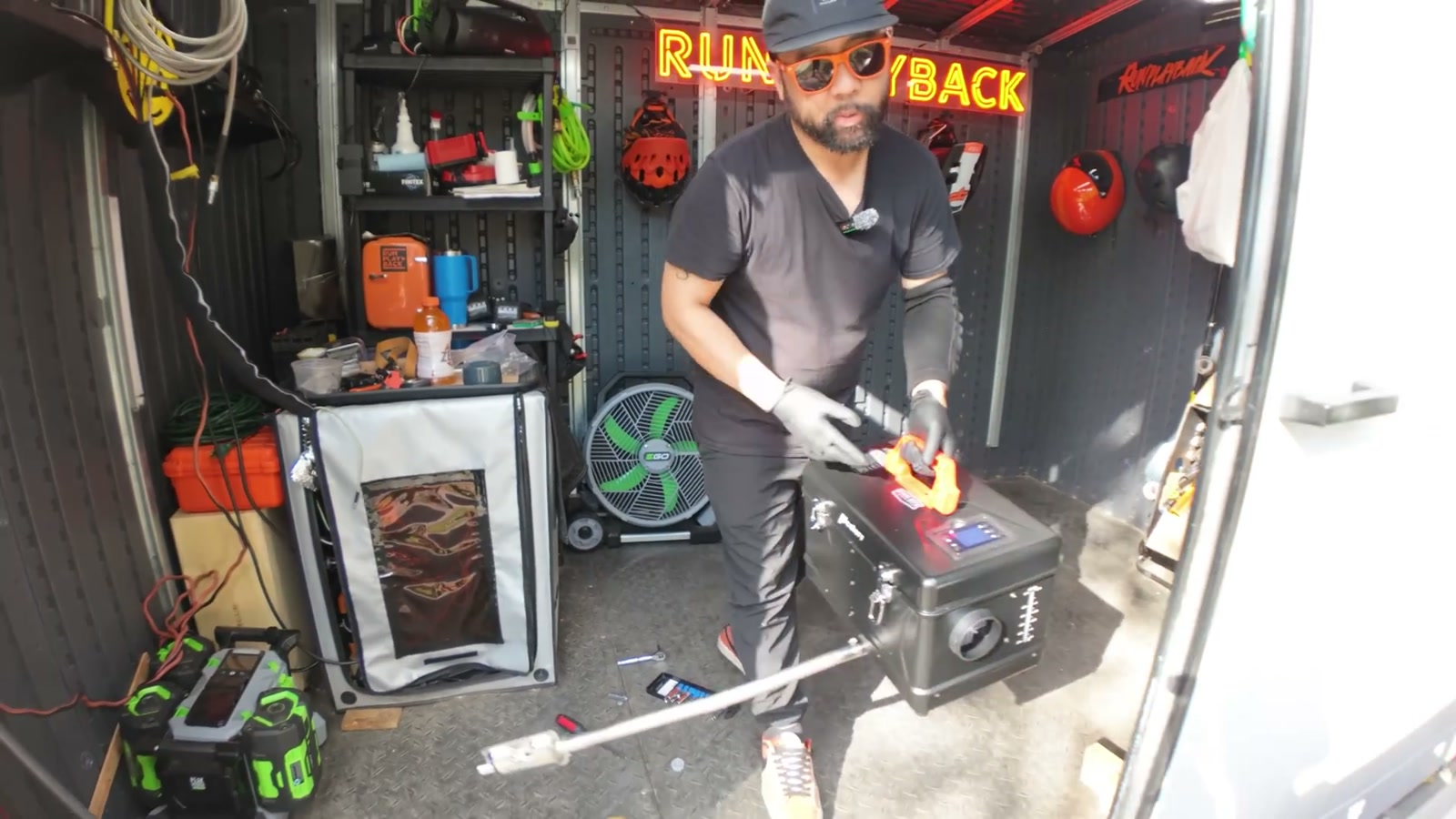
I like keeping the heater on an aluminum platform/stand so it’s not sitting directly on the ground.
Power-wise, the unit uses an AC power block. For my test, I temporarily ran an extension cord and left the power block outside—functional for testing, but not how I want to live long-term. If you’re doing this for real, plan a cleaner weather-protected way to keep that power brick out of the elements.
Fuel fill: small detail, big mess potential
Diesel can get messy fast, so I wore gloves while filling. The tank has an in-line fuel filter visible in the fill system, which I appreciate.
Once filled, the lid closes up cleanly and the whole toolbox form factor stays compact.
Startup and real-world power draw (solar-friendly)
On initial startup, I saw the heater pull about 112 watts. That makes sense—diesel heaters typically use more power at startup while they get going.
Once it settled into heating, I saw it drop way down. In my test, it was running at a low draw around 32 watts even at a high output setting.
For a solar power station setup, that low steady-state draw is the whole point. It’s the difference between “this is doable for hours” and “there goes my battery.”
App control + key fob: actually useful, not gimmicky
I connected to the HCalory app over Bluetooth. It prompts for a password during pairing; in my case, 0000 was the first thing that made sense to try.
Once connected, I could:
Adjust output levels
Switch control modes (gear-style levels vs temperature targeting)
Set automation scenes (for example: start at a lower temp and stop once the shed hits a higher temp)
The key fob remote worked for changing levels too, which is great when I’m bouncing between the shed and the rest of the yard.
This is the type of control that makes a diesel heater feel modern—especially when you’re trying to pre-warm a workspace before you step into it.
Heat output and shed comfort after a short run
After only a few minutes, the system was already pushing legitimately hot air.
I checked temps at different points, and the numbers climbed quickly. More importantly: walking into the shed, the space felt warm fast.
What surprised me was the sound level. It was noticeably quieter than other heaters I’ve run in this same spot. The toolbox enclosure seems to help keep things a little more civilized.
In a small resin shed that normally feels like a refrigerator in winter, that quick comfort shift is everything.
What We Like
Toolbox-style portability makes it easy to place and move
App control and remote operation are genuinely useful for a shed setup
Low steady power draw once it’s running is a great match for a solar power station
Heats a small shed quickly and effectively
Quieter than other heaters I’ve used in this same application
Things To Consider
The exhaust install needs real attention: clamp tightness and proper muffler drain-hole orientation matter
The included AC power block needs weather protection if you’re running outdoors
Ducting into a shed can be functional without being pretty—plan your routing and sealing so it’s secure
Diesel refueling can be messy; gloves and a careful fill routine help a lot
Final Thoughts
For my off-grid resin shed, the HCalory Toolbox 2 fits the job almost perfectly. It’s the rare piece of gear that feels like it was made for this exact use case: small space, winter heating, and power coming from a battery-based solar setup.
The combo of quick heat, low running wattage, and remote/app control makes it easy to keep the shed comfortable enough to actually work in—even when Michigan is doing its winter thing.
If you’re trying to keep an EV- and e-bike-adjacent workspace usable year-round without going full grid-tied electric heat, this is absolutely worth considering.