

Custom 72V Enduro eBike Build Review: QS205 + FarDriver Power, Stealth Bomber Vibes
June 26, 2026
Some links in this article may be affiliate links. If you buy through them, we may earn a small commission at no extra cost to you.
I’ve wanted a Stealth Bomber / Delfast-style enduro eBike for a long time—something that feels planted and comfortable like a small moto, but still has that quiet, smooth hub-motor character that makes an eBike fun. The problem is most prebuilt options in this category always come with at least one compromise: weird tuning, parts I’d immediately swap, or a build that looks good in photos but doesn’t feel refined when you’re actually riding.

So I finally did the thing: I built my own.
This custom 72V enduro eBike is centered around a QS205 hub motor, an Econic Cycles FarDriver controller, and a Powerful Lithium 72V battery—wrapped in an Enduroebike Garmata frameset with a moto seat. After a lot of waiting on shipments and a couple hiccups (including a wheel plan that didn’t pan out), I ended up with the exact kind of ride I’ve been chasing: smooth throttle, serious torque when I want it, and a chassis that feels sturdy enough to take abuse.
This isn’t a “go buy this bike” review because it’s not a production bike. It’s a real-world report on what this specific combination of parts feels like to live with—and what I’d recommend if you’re thinking about building something similar.
The build philosophy: pick parts that ride well together
I didn’t set out to build the most powerful bike on paper. I wanted something that feels balanced.
That’s why I leaned into a torque-focused motor (QS205 5T) and a tune that stays smooth at low speed. It’s also why I cared as much about comfort—seat, bar height, suspension setup—as I did about speed.
And honestly? That approach paid off immediately on the first ride.
First impressions: heavy, tough, and surprisingly clean
The first thing you notice with the Garmata frame is that it looks like it means business. The second thing you notice is that it’s heavy.
It’s a steel frame, and you feel that when you move it around the garage. But the upside is exactly what you’d expect: it feels durable and confidence-inspiring, like it’s built to take the kind of riding people actually do on these bikes.
The frame layout is also practical:
The battery access panels on the side make the bike feel more “moto” than “bicycle.”
The seat comes off with a bolt, and once it’s off you’ve got clean access to the controller, wiring, step-down, and connectors.
The dropouts and integrated torque-arm setup made the QS205 install feel like it belonged there.
Visually, I’m really happy with how tidy the wiring turned out. A number plate up front hides a lot, and routing the phase wires under the swingarm keeps things looking intentional instead of DIY-chaotic.
Comfort and fit: the short shock trick works
I’m a shorter rider (30-inch inseam), so I went with a shorter 190mm rear shock. That one choice basically made this whole build make sense for me.
I can flat-foot the bike.
That changes everything—especially on a heavier enduro-style build—because it makes slow-speed maneuvering, stoplights, and awkward parking lot situations way less stressful. And if you’re taller, the frame gives you options: you can go with a taller shock, and there are alternate mounting points that can lift the ride height.
Up top, I used a direct stem mount and a 31.8 handlebar with a 90mm rise. Between the bar height and the wide moto seat, the riding position ends up feeling like a compact mini-moto—upright, comfortable, and in control.
The seat itself is wide and genuinely comfortable. The cover grip is “fine”—it reminds me of a stock Sur Ron seat—but it’s also an easy swap if you want something grippier.
Suspension: great value, but setup matters
Up front I’m running the RFLOXA Hawk31 Pro fork, which I already trust from other builds. For the money, it’s a quality fork with the adjustments you actually care about.
On my first off-road-ish rip (more like a busted parking lot + gravel + potholes situation), it was doing its job, but I did notice it felt a little soft at first. A quick adjustment tightened it up and the fork immediately felt more supportive.
That’s a theme with a build like this: the parts can be great, but the setup is what makes it feel dialed.
Wheels and tires: Shinko SR241 is still the cheat code
I went with Shinko SR241 trials tires front and rear (17 x 2.75). I’ve run these before, and I still love them for this category.
They’re not lightweight, but they’re the kind of tire that makes a bike like this more usable:
On pavement, they’re predictable and stable.
Off-road, they hook up well enough for casual trail riding and hardpack.
The DOT-ish moto vibe matches the whole point of the build.
I’m also running moto-style tubes, which matters when you’re dealing with higher speed and higher power than a typical bicycle setup.
Wheel-wise, the rear ended up being a 17x3 rim from AliExpress after my original plan (lacing the motor to a Sur Ron rim) fell apart due to spoke sourcing. It was annoying at the time, but it got the build moving again.
Drivetrain: pedals are here… but this isn’t a pedal bike
This build has pedals, but there’s no pedal assist sensor—so pedaling doesn’t drive the experience the way it does on a normal eBike.
For me, the pedals are more about foot positioning than propulsion. Sometimes it’s nice to change foot angle and posture depending on what I’m doing.
To avoid pedal strikes on a lowered bike, I used short 152mm crank arms, paired with a 44T chainring and a 16T freewheel. I also ended up adding a chain tensioner that bolts into the dropouts, and it was immediately worth it: better chain tension, safer, less sketch.
Lighting and small street touches
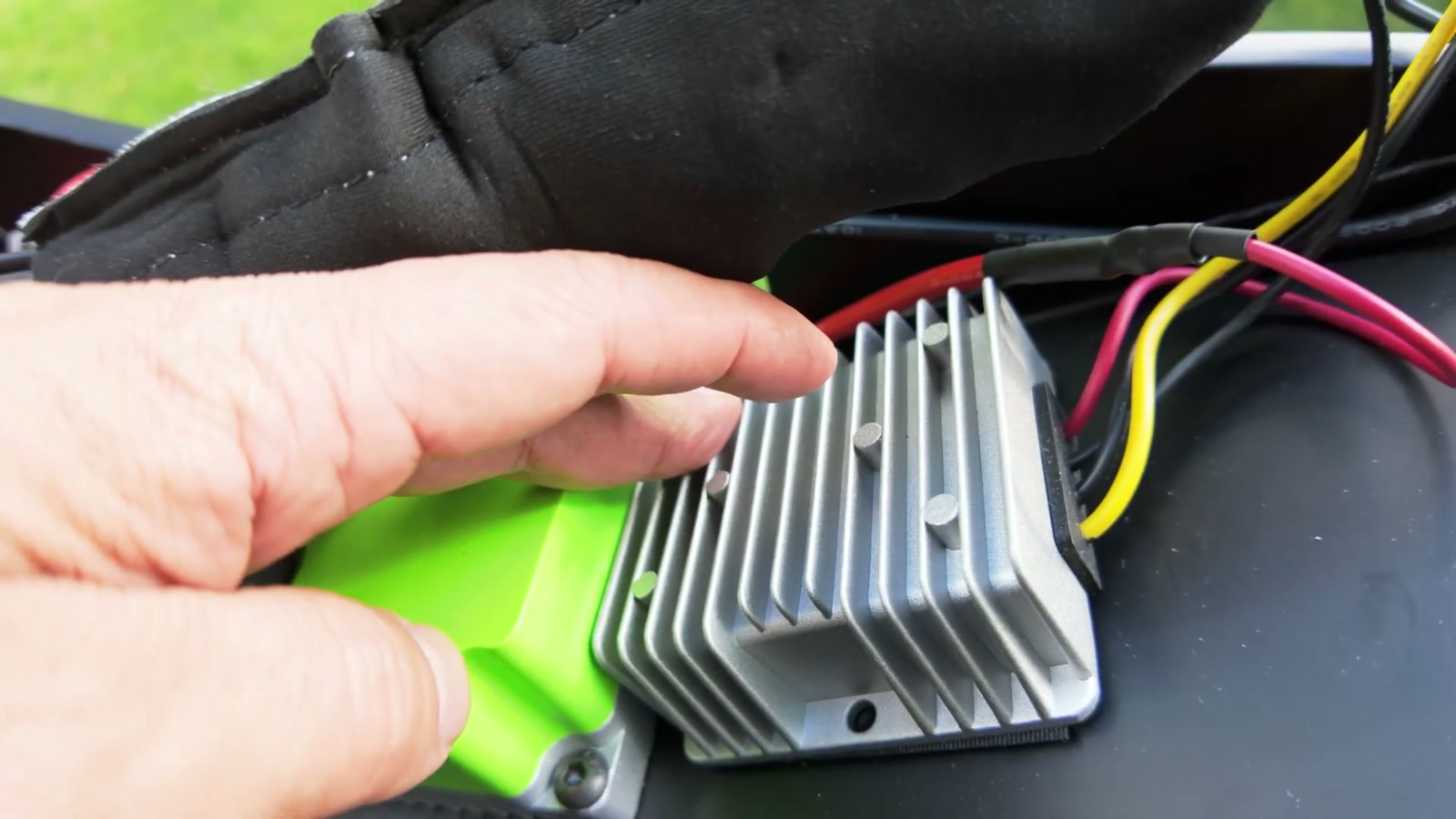
I wired in a simple lighting setup using a 12V step-down converter to run:
A Sur Ron-style headlight
A compact rear tail light (super bright)
The tail light isn’t tied to the brake lever yet, so it doesn’t brighten when I brake, but it’s always on at full brightness—and it’s hard to miss.
I also added a bar-end mirror. If I’m going to ride this near traffic at all, I want at least the basics covered.
The control center: Econic Cycles FarDriver + the app that actually works
The controller is a FarDriver 72300 from Econic Cycles, and mounting it wasn’t perfectly plug-and-play—the holes didn’t align with the frame, so I drilled larger holes to make it work. Not a big deal, but worth knowing.
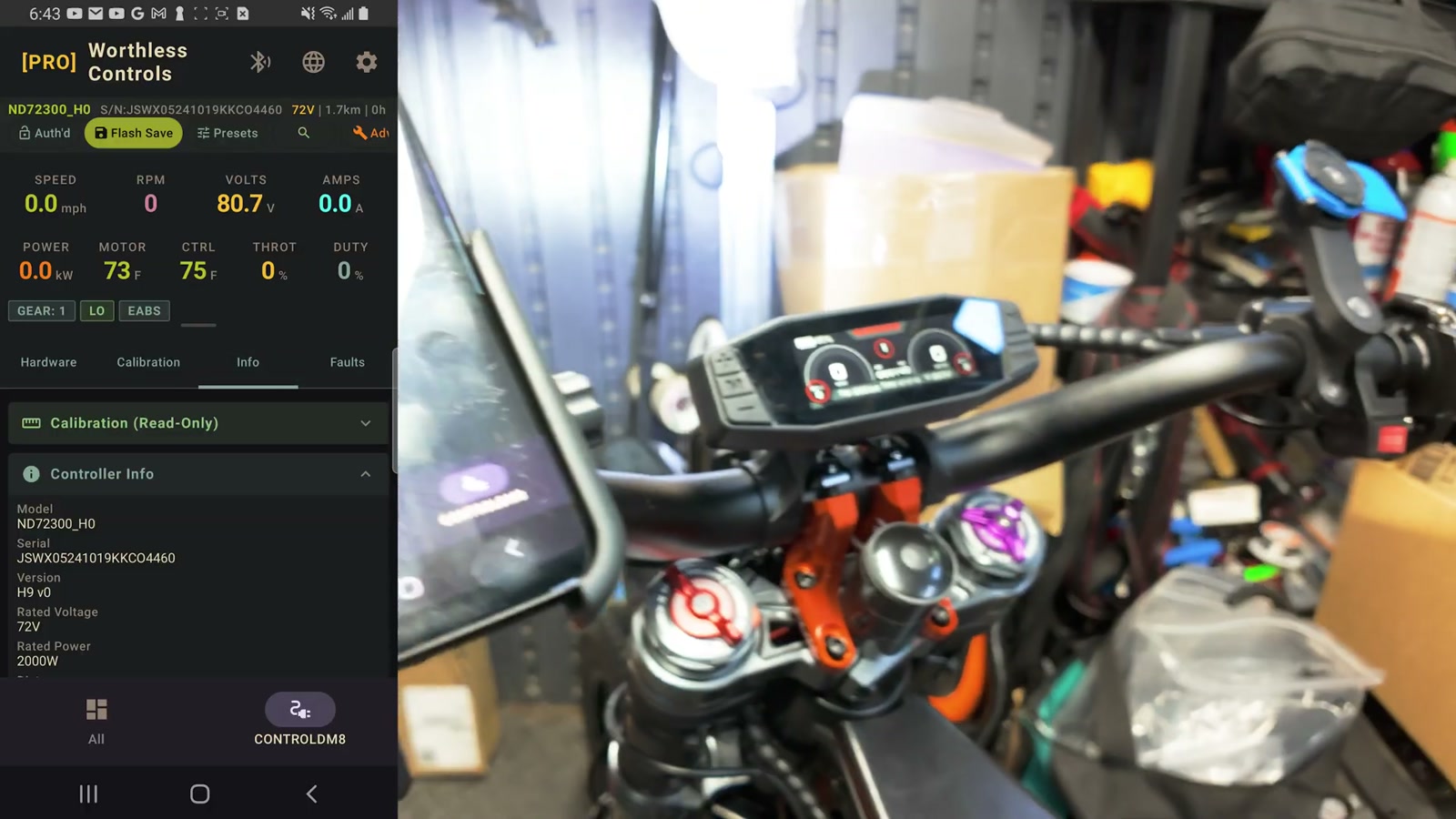
For tuning, I stopped fighting the traditional FarDriver app. It was giving me issues, and I wasn’t alone. I switched to an Android app called Worthless Controls, and it connected easily without the usual nonsense. It also made the tuning process feel more intuitive once I got into it. In fact Ryan Goodyear from Econic Cycles was able to tune it for us through the app's remote tuning feature.
The big win here is that I could get the wheel and speed calibration correct for a 17-inch Shinko setup, and the GPS speed matched what the app was showing.
One small annoyance: the display (a compact Chaojie 3.13-inch) is stuck in kilometers per hour until a firmware update. Voltage and battery percentage were reading correctly, though, which matters more day-to-day.
Ride experience: smooth, quiet, and way more nimble than it looks
The ride is the whole reason to build something like this—and this is where the QS205 hub motor shines.
Power delivery that feels “expensive”
On power level one, the bike already feels quick. But what I noticed immediately wasn’t raw speed—it was how smooth it feels at low speed.
Even creeping around, the throttle response is controlled and predictable. The tune makes the whole bike feel balanced, even though it’s a heavy steel frame with a big 72V battery.
That’s the magic of a good hub-motor setup when it’s tuned right: it’s quiet, it’s smooth, and it doesn’t feel like it’s constantly trying to rip your arms off unless you ask it to.
No regen (and I’m happy about it)
I’m running it without regen, which means when I roll off the throttle, it coasts.
I love that. It lets me modulate speed with actual coasting momentum, and it also makes the bike feel more natural when I’m lightly pedaling for position.
Three ride modes that actually make sense
Power level one is usable and fun. It still has speed on tap (honestly, more than most people need).
Power level two feels like the sweet spot for most riding—quick, responsive, and fast enough that you need to pay attention.
Power level three is the “okay, this is a lot” mode. The torque hits hard, and in tighter spaces I found myself backing down to mode two because three can feel like overkill unless you’ve got room.
Torque over top speed
Because this is a 5T motor, it’s built more for torque than chasing the highest possible top speed. That’s exactly what I wanted.
It still gets moving very quickly, and even in a parking lot I ran out of space fast. For an enduro-style eBike that might see hills, quick bursts, and occasional off-road, this kind of torque-focused setup just makes more sense.
Handling: stable, but not a dead-feeling tank
This is not a lightweight bike, but it doesn’t ride like a clumsy brick.
The tune helps, the wheel/tire combo helps, and the geometry feels steady. Once I started rolling, it felt more nimble than it had any right to.
On rough pavement and gravel, the suspension did its job and the bike tracked predictably.
Braking: good, with the usual “it’s still a heavy bike” reality
I’m running a Magura MT5 on one end and a basic 4-piston Zoom hydraulic brake on the other, both with 203mm rotors.
They work. The bike stops. But it’s also a reminder that these are still bicycle-style brakes trying to manage a heavier, faster platform.
For how I ride, it’s fine. If you’re going to push higher speeds regularly, ride in traffic, or ride long steep descents, I’d put brake upgrades higher on the list.
Wheelies and play riding: effortless lift
This build is extremely easy to wheelie.
Even in the lower power mode, it comes up smoothly and predictably. With the battery placement and the hub motor setup, it doesn’t feel overly heavy up front when you’re trying to lift.
One interesting downside: pedals can feel weird for stunt-style riding because your feet aren’t locked into the same stance you’d have on pegs. If you’re coming from Sur Ron-style peg bikes, it takes adjustment.
Real-world use: the perfect “short hop” commuter (with caveats)
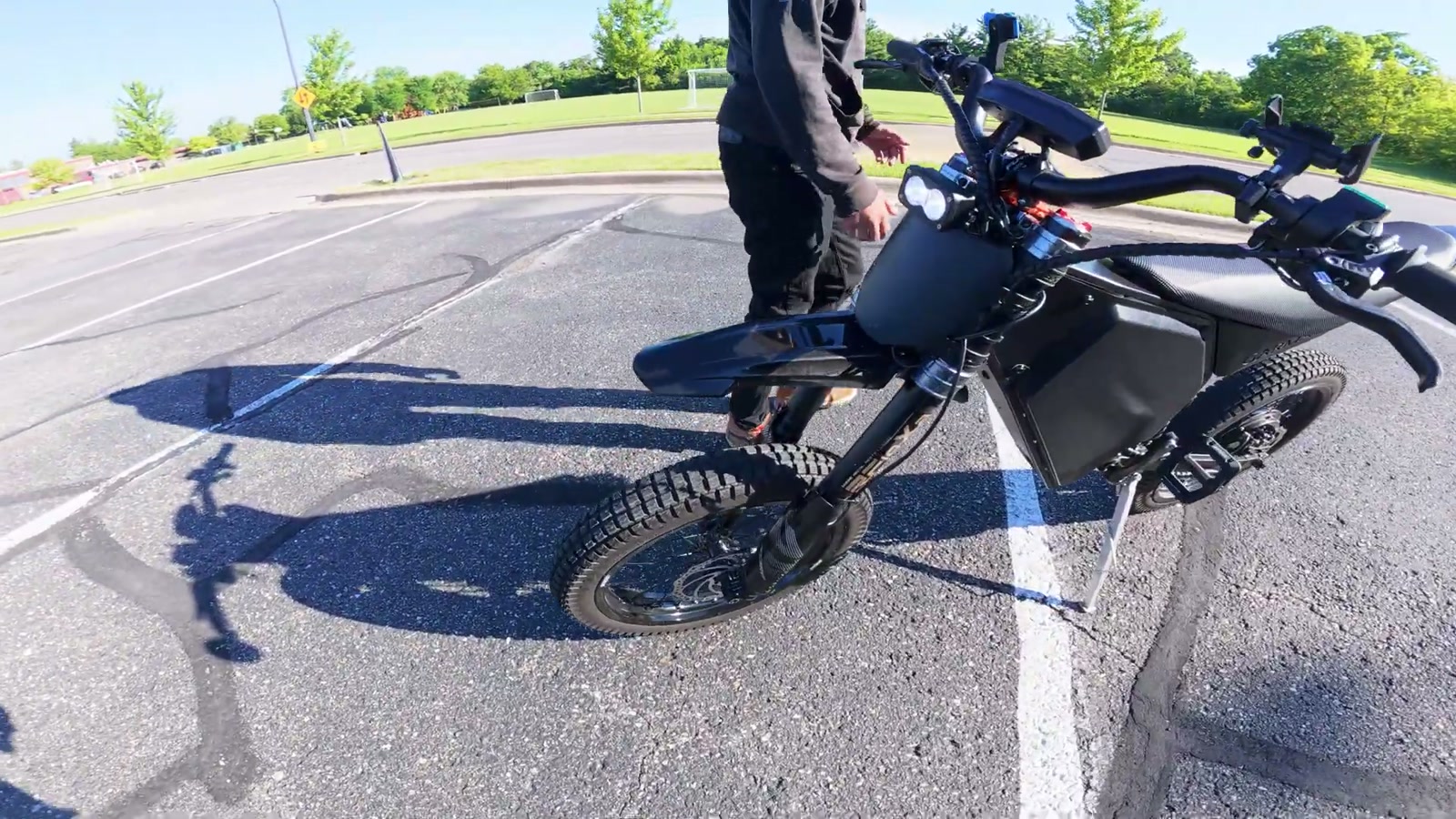
The way I’d describe it is simple: it’s a near-perfect short-distance commuter and fun machine.
If I need to move around town, hop between spots, or ride a mix of broken pavement and back paths, it’s ideal. It’s comfortable, it’s quick, and it feels refined.
But there are real caveats:
This kind of build is not automatically street legal.
Depending on your city/state, you may need to register it as a moped and add things like signals.
I wouldn’t ride this on dedicated MTB trails. It’s not the right tool, and it’s not worth being that person.
What We Like
Smooth throttle tuning that makes the bike feel refined, not sketchy
QS205 5T torque feels perfect for real riding, not just speed runs
The Garmata frame is strong, clean-looking, and everything fit well
Comfortable moto seat and upright cockpit make it easy to ride longer
Lighting setup is simple and effective for visibility
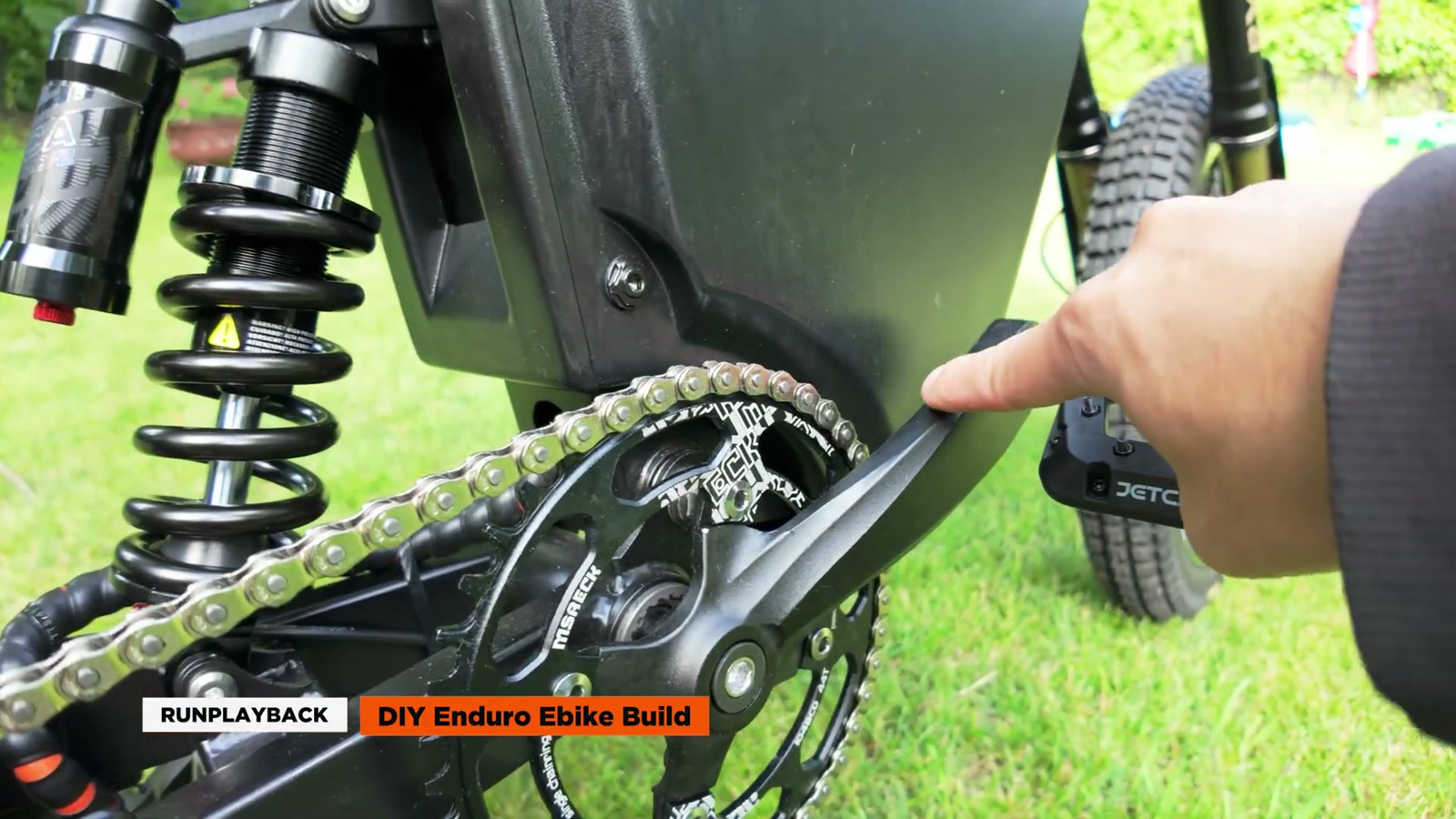
Chain tensioner solved the drivetrain slack problem immediately
Things To Consider
Building a DIY enduro eBike takes time, patience, and mechanical confidence
Parts sourcing (especially motor/wheel stuff) can cause long delays
It’s heavy, and braking performance is still limited by bike brake realities
Pedals can feel awkward if your goal is stunt riding (pegs feel more natural)
Street legality depends entirely on where you live and how you configure it
Final Thoughts
This custom 72V enduro eBike ended up being exactly what I wanted: a stealth bomber-style hub motor build that feels fast, quiet, and genuinely dialed.
The biggest surprise wasn’t top speed—it was how smooth and balanced the bike feels from a standstill, and how usable the power is across all three modes. The torque-focused QS205 5T makes the bike feel eager without feeling reckless, and with the FarDriver tune sorted, it rides like a cohesive machine instead of a pile of parts.
If you’re the kind of rider who wants to choose every component, tune the feel to your preferences, and end up with something more premium than most off-the-shelf builds, a DIY enduro eBike like this is worth the effort.
If you want something you can unbox and ride tomorrow with zero wrenching, this probably isn’t your lane.
But if you’ve been chasing that “Onyx / X2 Pro vibe, but built my way” feeling? This is it.